Applied Nephrology Master Series
Chapter 16
Special Populations and Difficult PD Prescriptions
Older Adults | Frailty | Assisted PD | Diabetes | Obesity | Heart Failure | Cirrhosis/Ascites | Multimorbidity
| CHAPTER MISSION Turn “special population” from a list of contraindications into a design problem: identify the clinical goal, the patient-specific constraint, the support that can replace unsafe tasks, the prescription lever that addresses the physiology, and the reassessment endpoint that proves the plan is both effective and sustainable. |
|---|
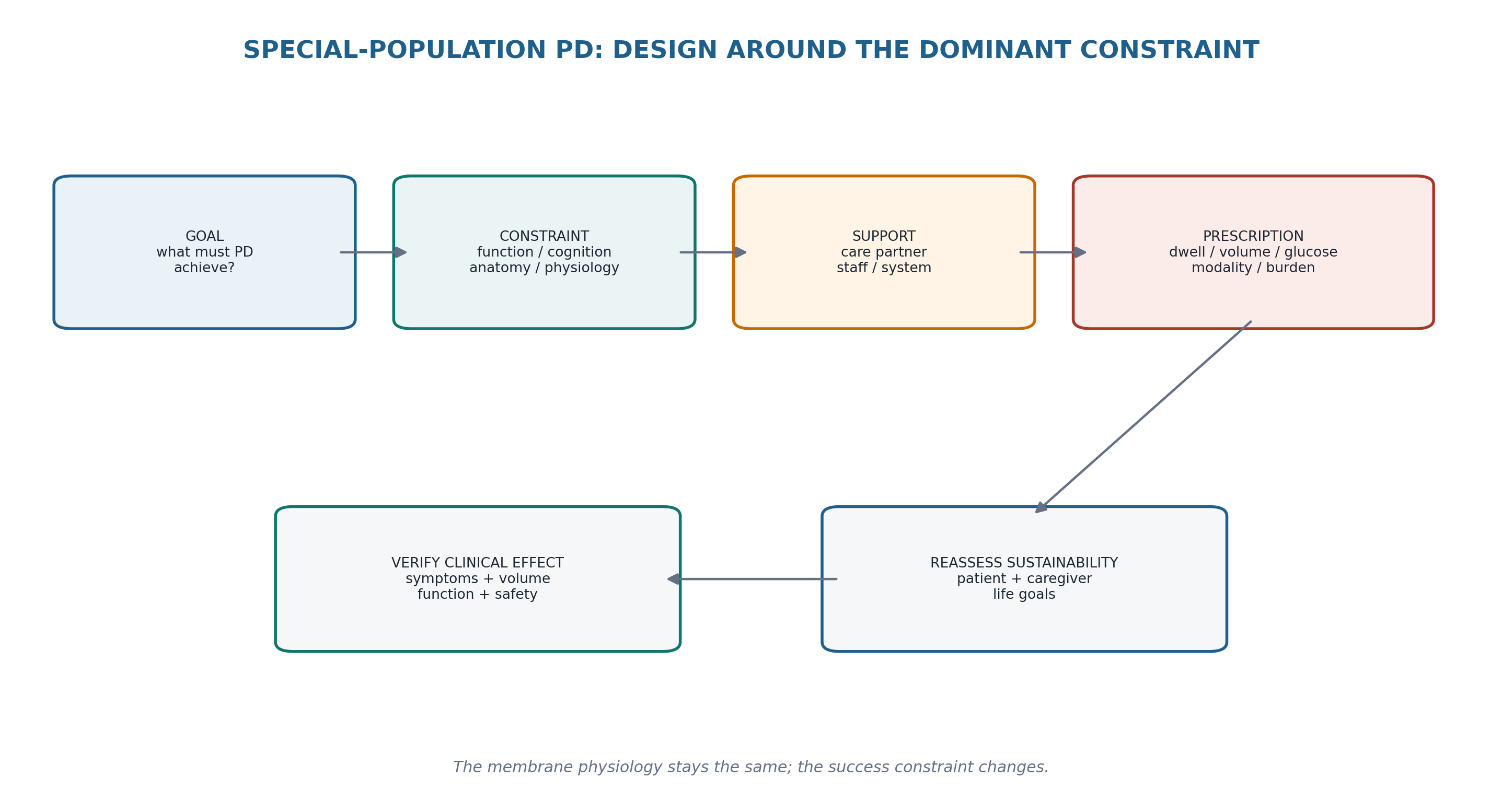
| MASTER PRINCIPLE Do not ask whether a patient “fits PD.” Ask what PD must accomplish, what threatens safe delivery, and whether anatomy, assistance, prescription or goals can be redesigned around that constraint. |
|---|
0. One-page chapter map
Table 16.1 — The eight decisions that govern difficult PD prescriptions.
| Decision | Core question | Bedside output |
|---|---|---|
| 1. Goal | What matters most now: survival, symptom control, home time, decongestion, independence or metabolic stability? | Named treatment goal |
| 2. Constraint | What is the dominant barrier: frailty, cognition, vision/dexterity, obesity/anatomy, glucose burden, hypotension or ascites? | Constraint phenotype |
| 3. Capability | Which PD tasks can the patient perform safely? | Task-by-task capability map |
| 4. Support | Which missing tasks can a care partner, staff member or system safely supply? | Assistance plan |
| 5. Physiology | What does this patient need from dwell time, UF, sodium removal, RKF and glucose exposure? | Mechanism-based prescription |
| 6. Burden | What treatment workload, sleep disruption, caregiver load or risk is acceptable? | Sustainability boundary |
| 7. Safety | What red flag would make the current plan unsafe or ineffective? | Escalation/transition trigger |
| 8. Verify | Did symptoms, volume, function, safety and life goals improve? | Clinical reassessment |
Learning outcomes
Use a goal–constraint–support–prescription framework rather than treating age, obesity, diabetes, frailty, heart failure or cirrhosis as automatic modality exclusions.
Assess frailty, cognition, functional capacity and home-task capability separately in older adults.
Use assisted PD to replace unsafe tasks while preserving autonomy when reliable support exists.
Balance glycemic burden against ultrafiltration and sodium-volume control in diabetes.
Treat obesity primarily as an access, body-composition, pressure and prescription-planning problem rather than a PD contraindication.
Use PD in heart failure as a gentle decongestion strategy while acknowledging the very-low-certainty evidence base.
Assess cirrhosis/ascites through hemodynamic, infection, nutrition, abdominal-wall and transplant considerations rather than historical bias alone.
Simplify prescriptions for multimorbidity when additional dialysis burden does not improve patient-important outcomes.
Define explicit triggers for reassessment, assistance escalation or planned modality transition.
| EVIDENCE POSTURE ISPD 2020 goal-directed PD recommendations and person-centered prescribing govern the chapter. The 2025 ISPD training position paper supports individualized patient/care-partner education and competency assessment. KDIGO 2022 remains the current finalized diabetes-in-CKD guideline in 2026; it specifically notes that HbA1c is less reliable in dialysis, while its numeric HbA1c target recommendation applies to CKD not treated with dialysis. Evidence for assisted PD, obesity, heart-failure PD and cirrhosis/ascites is largely observational, implementation-based or systematic review of nonrandomized studies; recommendations in these areas are therefore framed as supported practice or lower-certainty expert practice rather than universal rules. [1–18] |
|---|
1. Core concept: special populations are not exceptions to physiology
The same peritoneal membrane, osmotic gradients, sodium-water balance, catheter mechanics and residual kidney function govern PD in every adult. What changes in a “special population” is the constraint that determines whether the therapy can be delivered safely and whether its benefits are worth the workload. In a frail patient the limiting variable may be transfers and aseptic technique; in diabetes it may be glucose burden; in obesity, exit-site visibility and abdominal pressure; in heart failure, decongestion without hypotension; in cirrhosis, ascites, infection, malnutrition and hemodynamic fragility. [1–4]
Table 16.2 — Population label → real clinical problem.
| Population label | The real constraint | Do not reduce it to |
|---|---|---|
| Older/frail | Function, cognition, falls, caregiver capacity, symptom priorities | Chronological age |
| Reduced vision/dexterity/cognition | Specific unsafe PD tasks | “Cannot do home dialysis” |
| Diabetes | Glucose exposure, hypoglycemia risk, vision/dexterity, infection and vascular disease | HbA1c alone |
| Obesity | Exit-site geometry, pressure, body composition, metabolic burden | BMI veto |
| Heart failure | Sodium-water removal, hemodynamic tolerance, RKF and prognosis | Net UF number alone |
| Cirrhosis/ascites | Effective arterial volume, ascites, infection, nutrition, leaks/hernias, transplant plan | Historical contraindication |
| Multimorbidity | Competing goals, polypharmacy, treatment burden and limited reserve | More dialysis is always better |
| BEDSIDE TRANSLATION The first adaptation is usually not a new bag strength. It is a better definition of what is limiting success. |
|---|
2. The universal framework: GOAL → CONSTRAINT → SUPPORT → PRESCRIPTION → VERIFY
A useful difficult-prescription review starts with the patient goal and then separates four kinds of constraint: task capability, anatomy, physiology and system support. This prevents a correct technical prescription from becoming an unusable treatment plan. ISPD goal-directed care explicitly broadens “adequacy” beyond small-solute clearance to symptoms, volume, nutrition, residual kidney function, quality of life and treatment burden. [1,2,19]
Table 16.3 — Constraint domains and their redesign levers.
| Constraint domain | Examples | Redesign lever |
|---|---|---|
| Task capability | Cannot lift bags, connect, read labels, respond to alarms | Assistance, APD, simplified routine, adaptive equipment |
| Cognition | Forgets sequence, contamination risk, delirium | Care-partner/staff delivery, teach-back, reduced complexity |
| Anatomy | Pannus, hernia risk, difficult exit-site visibility | Preoperative seated marking, extended catheter, pressure strategy |
| Physiology | Fast transport, low UF, hypotension, residual urine | Dwell architecture, icodextrin long dwell, diuretics if responsive, fill-volume adaptation |
| Metabolic | Hyperglycemia, obesity, glucose load | Glucose-sparing where volume-safe; diabetes treatment review |
| System | No transport, storage limits, caregiver fatigue, staff availability | Home support, assisted program, supply redesign, backup plan |
| Goals/prognosis | High treatment burden, limited prognosis, comfort focus | Incremental/palliative approach, planned transition, supportive care |
3. Older adults and frailty: measure reserve, not age
Older adults on PD are heterogeneous. Frailty, cognition, mobility, nutrition, sensory impairment and multimorbidity are more useful than age alone for identifying vulnerability. Contemporary reviews recommend frailty screening followed by comprehensive geriatric assessment when indicated, particularly at PD initiation and when function changes. Outcomes that matter may include home time, symptom burden, independence and avoidance of hospitalization rather than survival alone. [3,4,20]
Table 16.4 — Geriatric PD assessment.
| Domain | Question | Prescription/program consequence |
|---|---|---|
| Frailty | Is physiologic reserve low or declining? | Avoid unnecessary treatment burden; plan assistance and rehabilitation |
| Cognition | Can steps be learned, remembered and troubleshot? | Care-partner/staff task transfer; simplify regimen |
| Mobility/falls | Can the patient move safely around tubing/cycler at night? | Home setup, line management, APD placement, falls plan |
| Vision/hearing | Can labels, connections and alarms be perceived? | Adaptive equipment, assistance, standardized routine |
| Nutrition | Is there PEW/sarcopenia? | Cross-reference Chapter 15; avoid over-restriction |
| Symptoms | Which symptoms are dialysis-responsive? | Target prescription to symptom benefit |
| Goals | What does the patient want dialysis to preserve? | Define acceptable burden and transition threshold |
| PROGNOSIS RULE For a frail older adult, a numerically “stronger” prescription that reduces home time, worsens sleep, increases falls or overwhelms caregivers may be lower-quality dialysis. |
|---|
4. Assisted PD: capability is task-specific and support can be dynamic
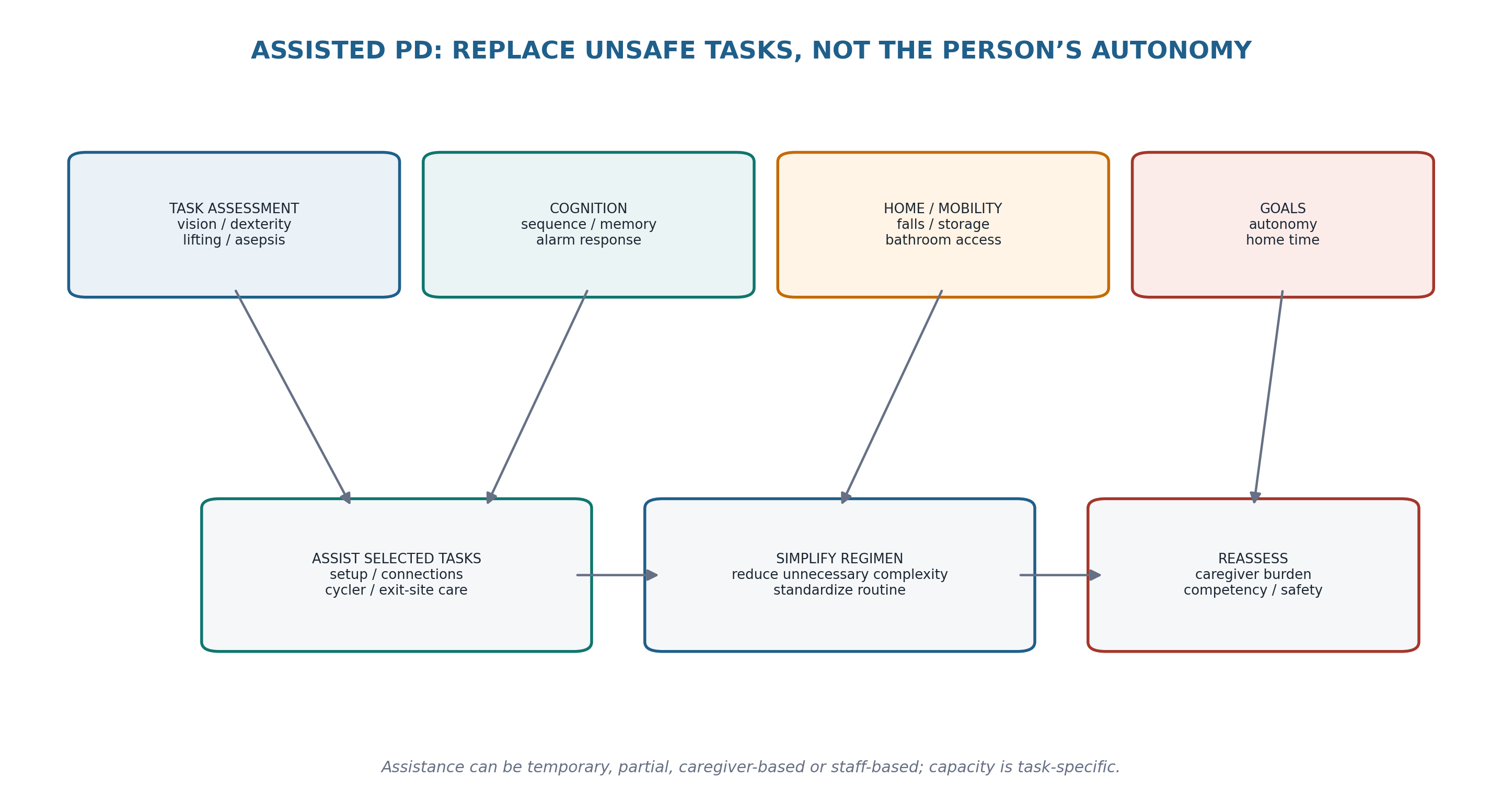
Assisted PD makes home treatment possible when self-care capacity is limited. In a multicenter cohort of incident PD patients aged 50 years or older, frailty, functional dependence and cognitive impairment were common, and 62% received assistance one month after starting PD. Contemporary European reviews and programs in Canada and the United States show that assisted PD can be implemented using different workforce models. A 2025 US multicenter staff-assisted program used short-term assistance largely for physical, cognitive and psychosocial barriers; most supported patients were subsequently discharged on PD without ongoing staff assistance. These data support feasibility, but they do not prove universal superiority over other modalities. [5–9]
Table 16.5 — Assisted PD: match assistance to the failed task.
| Unsafe or burdensome task | Possible support | Reassessment |
|---|---|---|
| Cycler setup | Care partner or trained staff | Can patient later assume part/all setup? |
| Connections/disconnections | Assisted exchanges | Technique safety and contamination events |
| Exit-site care | Care partner/staff | Site visibility, infection, caregiver competency |
| Bag lifting/storage | Delivery/setup assistance | Home ergonomics and injury risk |
| Alarm troubleshooting | Remote/care-partner support | Alarm frequency and sleep burden |
| Medication/recording | Simplified written/digital routine | Accuracy and cognitive change |
| All PD tasks | Full assisted PD | Goals, caregiver burden, program sustainability |
| ASSISTANCE RULE Do not label the whole patient “incapable” because one task is unsafe. Map tasks individually and replace only what needs replacing. |
|---|
5. Training when cognition or function is limited: competency, not attendance, is the endpoint
The 2025 ISPD training position paper emphasizes preparation, individualized teaching, appropriate nurse-trainer competency, return demonstration and post-training support. In patients with cognitive or physical limitations, the trained unit may be the patient–care-partner dyad rather than the patient alone. Training intensity and repetition should be determined by demonstrated competency, not by a fixed number of days. [10]
Table 16.6 — Training adaptations for reduced capacity.
| Barrier | Training adaptation | Safety check |
|---|---|---|
| Mild cognitive impairment | Short repeated sessions, consistent sequence, visual prompts | Teach-back and return demonstration |
| Low literacy | Pictorial/stepwise materials; minimal jargon | Demonstration rather than written test alone |
| Visual impairment | Large labels, tactile organization, assistance | Correct solution/connection identification |
| Dexterity/arthritis | Connection aids, APD, care-partner support | Aseptic technique without excessive hand strain |
| Hearing impairment | Visual alarm cues/care-partner plan | Alarm recognition and response |
| Fluctuating cognition | Care-partner-led treatment; delirium trigger plan | No unsupervised exchanges during unsafe periods |
6. Diabetes: dialysate glucose is both therapy and metabolic exposure
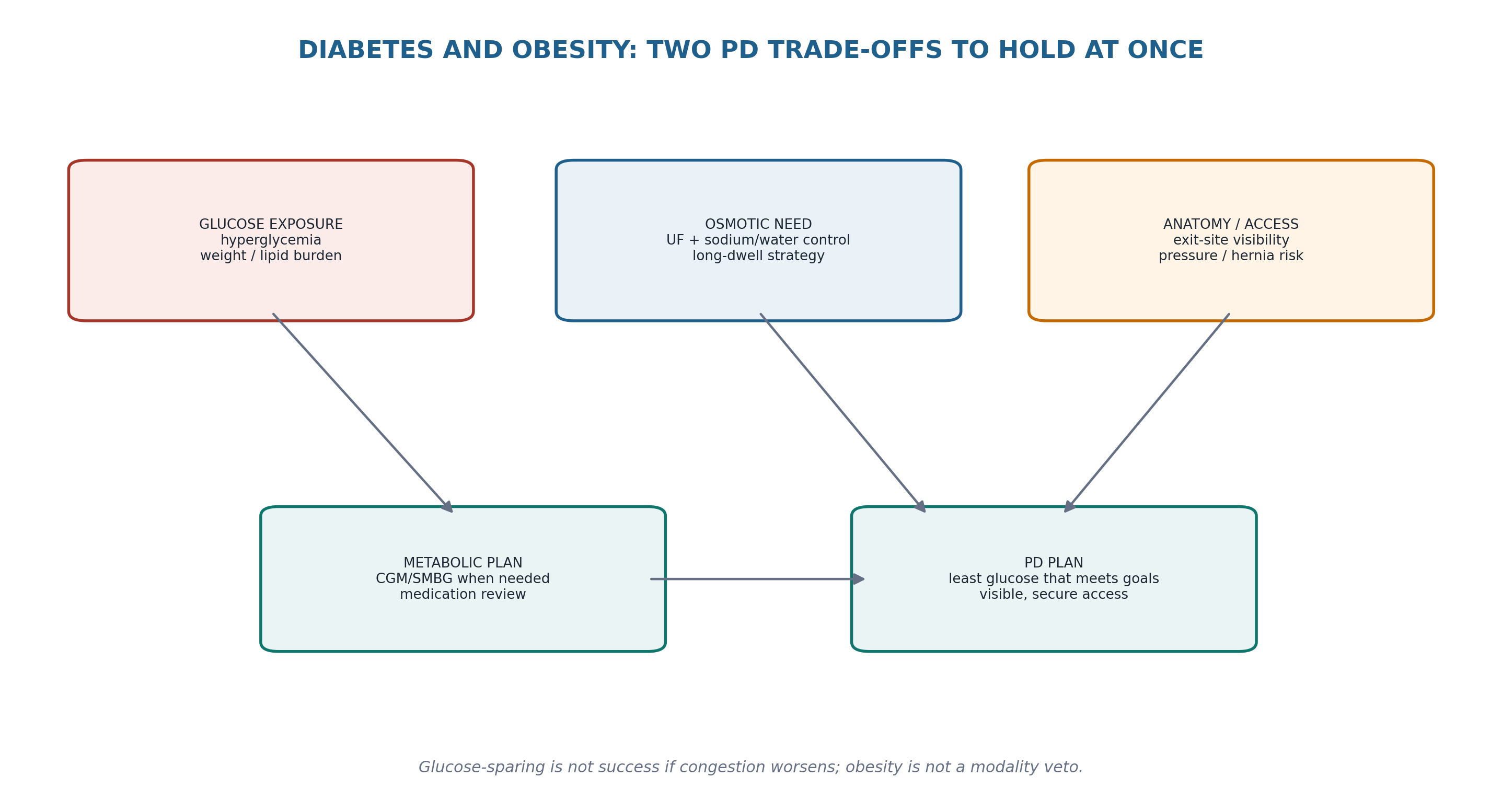
Glucose-based PD solutions can worsen hyperglycemia, glycemic variability, weight gain and dyslipidemia. At the same time, glucose is the osmotic agent that may be maintaining ultrafiltration. Therefore, the safe goal is not “remove glucose from the prescription”; it is to minimize unnecessary glucose exposure while preserving volume and sodium control. Icodextrin can reduce glucose exposure for the long dwell and may improve long-dwell ultrafiltration in appropriate patients, but a glucose-sparing prescription must be judged by both metabolic and volume outcomes. [11,12,21]
Table 16.7 — Diabetes: problem → mechanism → response.
| Problem | Mechanism | Response direction |
|---|---|---|
| Hyperglycemia after stronger bags | Absorbed dialysate glucose | Review osmotic need; reduce unnecessary high-glucose exposure; adjust diabetes therapy |
| Wide glucose variability | Exchange-related glucose absorption + reduced kidney clearance of drugs/insulin | Use SMBG/CGM when needed; coordinate with diabetes team |
| Volume overload after glucose-sparing | Insufficient osmotic UF / sodium removal | Do not accept metabolic improvement at cost of congestion |
| Recurrent hypoglycemia | Reduced insulin/drug clearance, variable intake or regimen change | Review insulin/agents and monitoring; avoid rigid targets |
| Vision/dexterity impairment | Diabetes complications impair technique | Assisted PD/adaptive training |
| Foot/vascular disease | Mobility and access burden | Home therapy may reduce travel but requires functional plan |
7. Glycemic monitoring in PD: HbA1c is useful but less reliable in dialysis
KDIGO 2022 recommends HbA1c for glycemic monitoring in diabetes and CKD but explicitly notes reduced accuracy and precision in advanced CKD, particularly in dialysis. CGM-derived glucose management indicators or direct SMBG/CGM can help when HbA1c conflicts with measured glucose or symptoms. Importantly, KDIGO’s numeric HbA1c target range of <6.5% to <8.0% applies to patients with CKD not treated with dialysis; it should not be copied into PD as a universal dialysis target. Individualization is essential. [13]
Table 16.8 — Glycemic tools in PD.
| Tool | What it adds | Limitation / caution |
|---|---|---|
| HbA1c | Longer-term trend | Lower reliability in dialysis; affected by anemia/ESA/RBC turnover |
| SMBG | Immediate treatment decisions | Sampling burden; may miss nocturnal/exchange-related patterns |
| CGM | Time-in-range, variability, hypoglycemia pattern | Cost/access; interpret with clinical context |
| Dialysate prescription log | Explains glucose exposure changes | Not a glucose measurement |
| Weight/volume trend | Detects trade-off from glucose-sparing | Fluid and adipose changes may coexist |
| ICODextrin SAFETY Patients using icodextrin must use glucose-monitoring methods that are compatible with icodextrin metabolites. Maltose can cause falsely elevated readings on certain nonspecific glucose meters and lead to dangerous insulin administration. Follow current product/device compatibility information. [22,23] |
|---|
8. Obesity: a technical planning problem, not a blanket contraindication
Contemporary evidence does not support obesity as an automatic contraindication to PD. A 2026 review emphasizes catheter and exit-site customization, adjusted interpretation of small-solute clearance, incremental prescribing where appropriate and glucose-sparing long-dwell strategies. A 2026 meta-analysis of 18 nonrandomized studies found heterogeneous associations: underweight status carried mortality risk, obesity was associated with higher peritonitis risk in pooled analyses, while transfer to HD and technique failure were not clearly different across BMI groups. These are associations, not reasons for automatic modality exclusion. [14,15]
Table 16.9 — Obesity: concern → planning response.
| Concern | Mechanism | Planning direction |
|---|---|---|
| Exit site hidden under pannus | Poor visibility and self-care | Mark while sitting/standing; consider extended/presternal configuration |
| Higher intraperitoneal pressure | Leak/hernia/reflux discomfort | Individualize fill volume and posture; cross-reference Chapter 12 |
| Kt/V denominator | Adipose tissue contains less water than lean tissue | Avoid scaling V directly to total body weight; use clinically appropriate body-water assumptions |
| Glucose calories | Weight/metabolic burden | Minimize unnecessary hypertonic glucose; use long-dwell strategy appropriately |
| Infection risk | Skin folds/exit-site care may complicate hygiene | Visible exit site, fixation and prevention bundle |
| Transplant pathway | Center-specific BMI criteria may apply | Do not confuse transplant eligibility with PD feasibility |
| DO NOT AUTOMATE BMI is not a prescription. Translate body habitus into exit-site geometry, pressure tolerance, body-water estimation, metabolic exposure and patient goals. |
|---|
9. Difficult access in obesity and altered body habitus
The 2019 ISPD access guideline supports individualized catheter selection and exit-site planning based on body habitus, scars, stomas, belt line and the patient’s ability to see and care for the site. Extended or presternal catheter configurations can move the exit site to a visible, accessible area when standard lower-abdominal positioning is unsuitable. The key test is functional: can the patient or care partner inspect and care for the exit site reliably? [16]
Table 16.10 — Exit-site planning in large or complex body habitus.
| Planning question | Why it matters | Direction |
|---|---|---|
| Can the patient see the site while seated? | Self-care and early infection recognition | Move site if visibility is poor |
| Is site under pannus/belt line? | Moisture, friction, traction | Alternative exit-site trajectory |
| Prior scars/hernia/ostomy? | Mechanical/infection interactions | Surgical/access-team planning |
| Can catheter be immobilized? | Reduces traction injury | Secure external segment |
| Will fill volume worsen pressure symptoms? | Leak/hernia/reflux risk | Individualized pressure-aware prescription |
10. Heart failure: the target is decongestion, not a heroic UF number
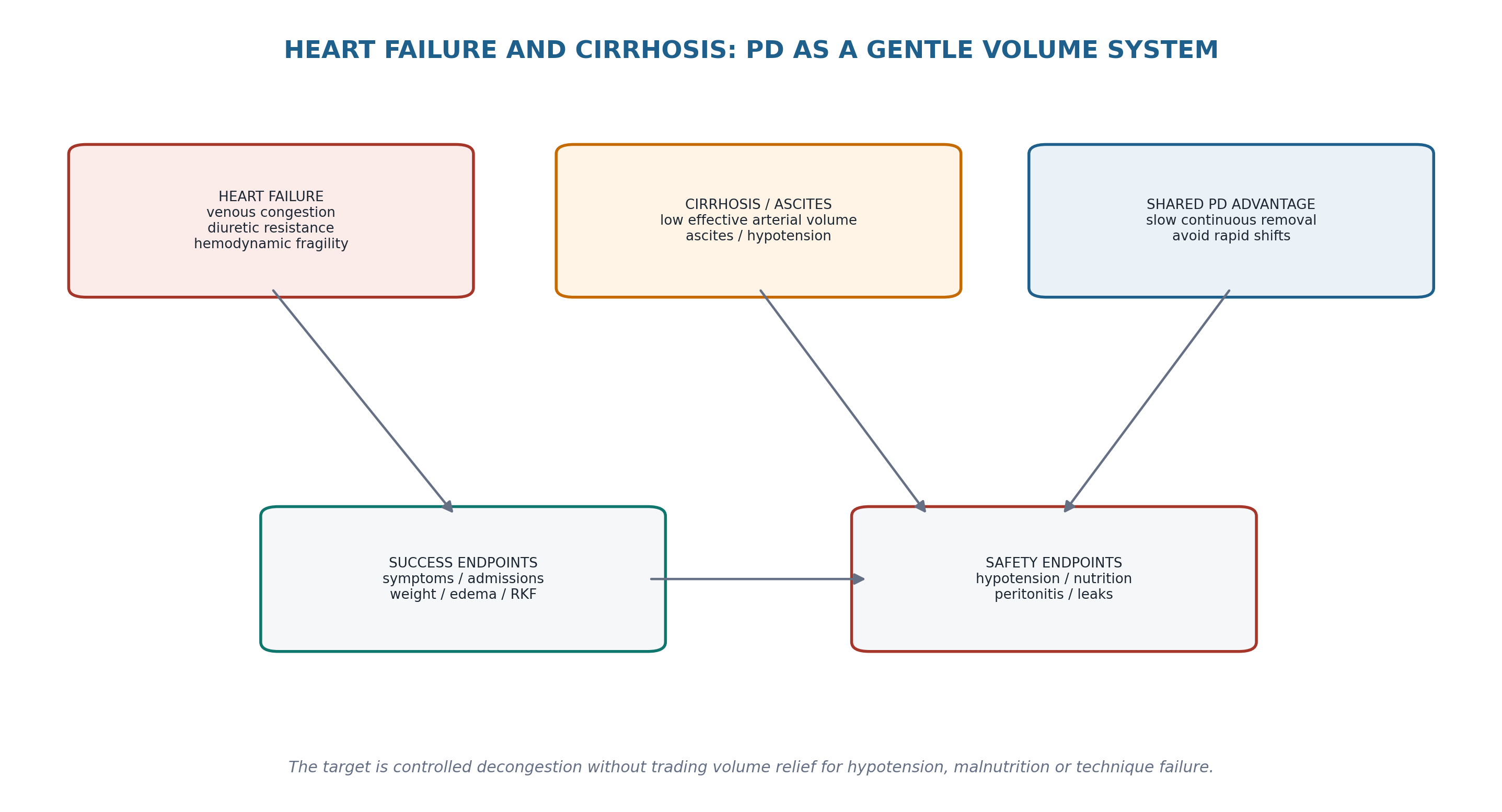
PD can provide slow, continuous ultrafiltration and sodium removal, which may be attractive in refractory congestion or hemodynamic intolerance of intermittent extracorporeal ultrafiltration. A 2023 systematic review/meta-analysis of 20 observational before-and-after studies (769 patients) reported improvements in NYHA class and hospitalization burden, but the certainty of evidence was very low and randomized comparative evidence is lacking. PD should therefore be presented as a supported decongestion strategy in selected patients, not as proven superior heart-failure therapy. [17,24]
Table 16.11 — Heart failure: what to monitor.
| Domain | Question | Why it matters |
|---|---|---|
| Congestion | Edema, orthopnea, JVP, lung findings, weight trend? | Defines therapeutic target |
| Sodium intake | Is thirst/weight gain driven by intake? | UF cannot compensate indefinitely for high sodium |
| Residual urine | How much diuretic-responsive output remains? | Continuous native sodium/water removal is valuable |
| Blood pressure | Can the patient tolerate decongestion? | Avoid organ hypoperfusion and RKF loss |
| PD UF | Is long-dwell/overall UF adequate? | Prescription lever but not outcome alone |
| Hospitalizations | Are congestion admissions falling? | Patient-important outcome |
| Nutrition/cachexia | Is decongestion worsening intake/lean mass? | Advanced HF may shift goals |
| EVIDENCE CALIBRATION Observational improvement after starting PD does not prove that PD is superior to optimized medical therapy, extracorporeal UF or HD. Use the evidence to support feasibility and symptom-oriented decongestion—not a mortality claim. |
|---|
11. Heart-failure prescription reasoning: protect RKF and sodium balance
For heart failure, the useful prescription is the least burdensome pattern that provides reliable sodium-water removal. If residual urine remains, diuretics can support volume control; PD then supplements rather than replaces native output. Long-dwell icodextrin may be helpful when sustained UF is required and glucose long-dwell UF is poor. Recurrent hypotension, loss of RKF, refractory dyspnea despite apparent UF or rapid nutritional decline should trigger diagnostic reassessment rather than simply intensifying osmotic therapy. Cross-reference Chapters 8 and 9. [1,17,21]
Table 16.12 — Heart-failure failure modes.
| Finding | Think | Next step |
|---|---|---|
| High UF but persistent edema | Sodium intake, right-sided HF, low urine, poor sodium removal | Reassess sodium balance and cardiac phenotype |
| Hypotension after stronger osmotic prescription | Over-removal / low effective arterial volume | Reduce intensity; protect perfusion/RKF |
| Falling urine output | RKF loss or overdiuresis/hypoperfusion | Search reversible causes; recalculate total removal |
| Dyspnea without edema | Pleural disease, anemia, lung disease, low output | Do not assume volume; targeted evaluation |
| Repeated admissions despite PD | Wrong phenotype, membrane limitation, progression of HF | Multidisciplinary review and transition/goals discussion |
12. Cirrhosis and ascites: PD can be feasible in selected patients
Cirrhosis with ascites has historically been viewed as unfavorable for PD because of infection, protein loss, leaks, hernias and malnutrition. Contemporary evidence is more nuanced. A 2025 systematic review/meta-analysis of 13 studies (15,089 patients) found no significant mortality difference between PD and HD among patients with cirrhosis; PD patients with cirrhosis had a modestly higher pooled peritonitis risk than PD patients without cirrhosis, while estimates for hernia and transfer to HD were imprecise. Observational data therefore support PD as a viable option in selected patients, especially when intermittent HD is limited by hemodynamic instability. [18,25]
Table 16.13 — Cirrhosis/ascites: benefit–risk map.
| Potential advantage | Potential risk | Clinical safeguard |
|---|---|---|
| Gentle continuous treatment | Chronic hypotension / low effective arterial volume | Slow adjustments; close BP/perfusion monitoring |
| Regular ascites drainage | Protein loss / malnutrition | Nutrition surveillance; avoid assuming albumin decline is “just PD” |
| Avoids vascular access anticoagulation burden | Peritonitis / SBP diagnostic overlap | Low threshold for effluent studies and infection assessment |
| Home therapy | Leaks/hernias from abdominal pressure | Pressure-aware fill strategy; surgical review when needed |
| Stable decongestion | Electrolyte/volume instability | Frequent early reassessment |
| Bridge within transplant pathway | Complex liver-kidney candidacy | Coordinate hepatology/transplant team |
13. Ascites changes the starting and monitoring logic
There is no single evidence-based universal fill-volume schedule for cirrhosis/ascites. Expert practice generally favors individualized, progressive intraperitoneal volumes and careful drainage rather than abrupt high-pressure therapy, with close monitoring for leaks, hernias, hypotension, abdominal discomfort and nutrition decline. The ascites itself can make the initial drained volume large; do not interpret every high drain as PD-generated UF. [18,25]
Table 16.14 — Cirrhosis/ascites monitoring.
| Parameter | Interpretation | Action direction |
|---|---|---|
| Pre/post-exchange weight and symptoms | Net volume trajectory | Avoid rapid depletion |
| Blood pressure/perfusion | Effective arterial volume tolerance | Reduce intensity if symptomatic hypotension |
| Serum albumin/nutrition trajectory | Risk marker + intake/loss/inflammation | Cross-reference Chapter 15 |
| Effluent symptoms/cell count when indicated | Peritonitis vs noninfectious ascitic process | Follow Chapter 10 diagnostic pathway |
| Abdominal wall/hernia | Pressure complication | Cross-reference Chapter 12 |
| Transplant status | Changes long-term modality objective | Coordinate liver/kidney team |
| ASCITES RULE The question is not “Can cirrhosis receive PD?” It is whether a selected patient can achieve stable decongestion and home treatment without unacceptable infection, pressure, nutrition or hemodynamic cost. |
|---|
14. Reduced physical or cognitive capacity: redesign the workflow before changing modality
Physical and cognitive barriers are often workflow problems. A patient may be unable to carry bags but perfectly able to connect; able to run a cycler but unable to manage exit-site care; or cognitively intact but unable to read small labels. The assessment should therefore be task-by-task. New cognitive impairment while on PD is particularly important because it can convert a previously safe routine into contamination or dosing risk. [5–10]
Table 16.15 — Task-level capability map.
| Task | Capability test | If unsafe |
|---|---|---|
| Hand hygiene/asepsis | Can patient perform sequence consistently? | Care partner/staff assistance |
| Solution identification | Can patient read/recognize correct bag? | Large labels/standardized plan/assistance |
| Connection technique | Can hands perform connection without contamination? | Assistive device or helper |
| Cycler programming | Can patient select correct program and respond to alarms? | Preset program + helper/remote support |
| Exit-site care | Can site be seen/reached and treated? | Care partner/staff; access redesign if needed |
| Record symptoms/weights | Can trend data be captured reliably? | Simplified log or digital support |
| Emergency response | Does patient know when/how to call? | Written escalation plan + care partner |
15. Multimorbidity and limited reserve: simplify when complexity stops adding value
In multimorbidity, adding exchanges can improve a clearance metric while worsening sleep, fatigue, caregiver load, glucose exposure or treatment completion. The ISPD goal-directed framework supports shared decisions about incremental or less burdensome prescriptions when clinical goals are met, and re-escalation when symptoms, volume or biochemistry deteriorate. For palliative or limited-prognosis patients, PD may be used primarily to manage symptoms and maintain home time rather than to maximize numerical dialysis targets. [1–3,19]
Table 16.16 — When simplification is reasonable.
| Situation | What can be simplified | What must remain safe |
|---|---|---|
| Substantial RKF + stable clinical state | Exchange number/total burden where appropriate | Symptoms, volume, biochemistry and agreed clearance framework |
| Frailty + treatment fatigue | Connections, regimen complexity, monitoring burden | Asepsis, medication safety, fluid control |
| Cognitive decline | Patient-performed tasks | Reliable assisted delivery |
| Palliative goals | Intensity aimed at numbers alone | Symptom relief and avoidance of distressing complications |
| Caregiver burnout | Unpaid task load | Continuity via professional assistance or modality transition |
| BURDEN RULE A prescription that the patient or caregiver cannot reliably complete is not “adequate” because it looks strong on paper. |
|---|
16. Difficult prescription matrix: match the lever to the constraint
Table 16.17 — Population → dominant target → useful levers → common error.
| Population | Dominant target | Useful levers | Common error |
|---|---|---|---|
| Older/frail | Home time, symptoms, safety | Assistance, simplification, APD/CAPD selection, RKF preservation | Treating age as contraindication |
| Diabetes | Volume + glycemic stability | Limit unnecessary glucose, icodextrin long dwell, CGM/SMBG when needed | Improving HbA1c while worsening congestion |
| Obesity | Access visibility + pressure + metabolic burden | Extended catheter, seated marking, pressure-aware fills, appropriate V estimation | Scaling prescription to total body weight alone |
| Heart failure | Gentle sodium-water removal | Diuretics if responsive, dwell/UF strategy, icodextrin when appropriate | Chasing UF number despite hypotension |
| Cirrhosis/ascites | Stable volume without hemodynamic/nutritional harm | Progressive low-pressure adaptation, infection/nutrition monitoring | Automatic PD exclusion |
| Multimorbidity | Benefit-to-burden ratio | Incremental/palliative design, assistance, transition plan | Adding treatment without patient-important benefit |
17. Reassessment: special populations are dynamic, not fixed labels
Frailty can worsen or improve; caregivers become unavailable; residual kidney function falls; diabetes control changes after prescription changes; obesity may improve or worsen; heart failure and cirrhosis progress. Therefore, every difficult prescription needs a planned reassessment trigger. A once-safe home plan can become unsafe without any change in the membrane. [1,3,4,10]
Table 16.18 — Re-decision triggers.
| Trigger | Why it matters | Required review |
|---|---|---|
| New delirium/cognitive decline | Technique and medication safety | Competency + assistance |
| Fall or functional decline | Cycler/tubing and self-care risk | Home/geriatric assessment |
| Caregiver illness/burnout | Supportability failure | Respite/staff assistance/transition |
| Falling urine output | Prescription adequacy changes | Chapter 7/8 reassessment |
| Repeated glucose escalation | Metabolic + membrane burden | Volume/sodium and prescription review |
| New hernia/leak | Pressure intolerance | Chapter 12 pathway |
| Recurrent admission despite PD | Treatment target not met | Phenotype reset + goals discussion |
| Change in transplant/prognosis goals | Different time horizon | Shared decision-making and modality plan |
18. Major clinical algorithms
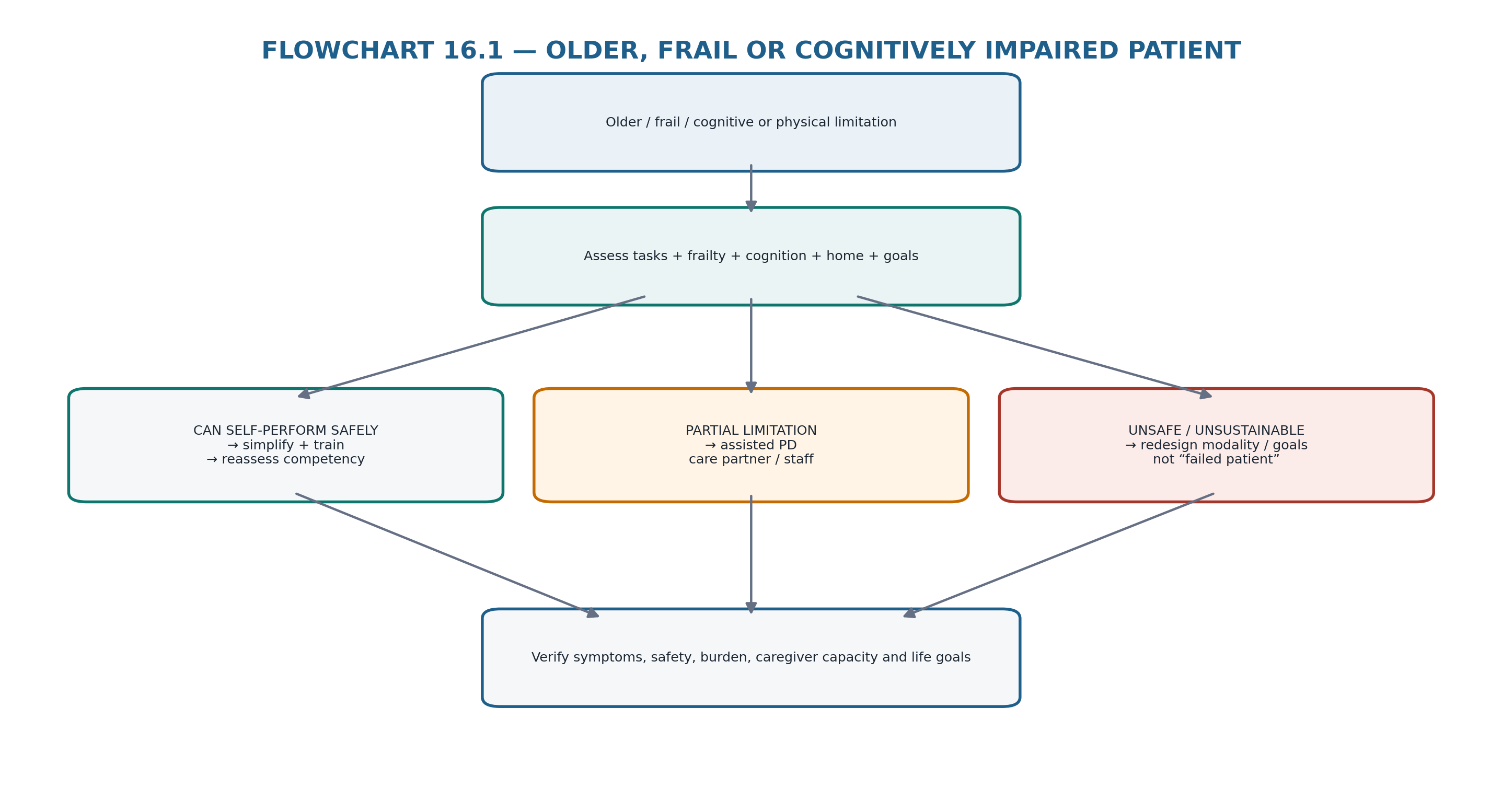
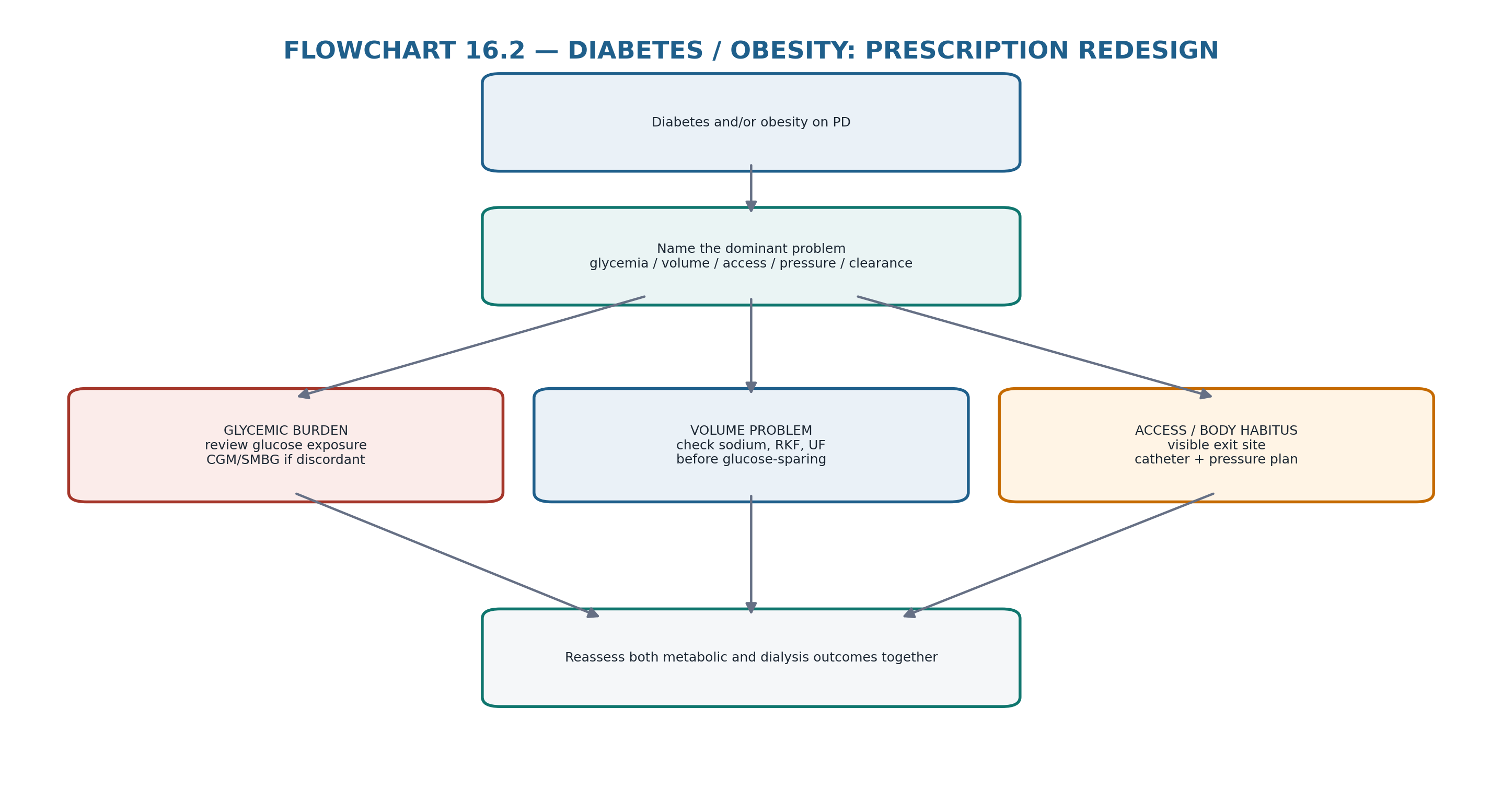
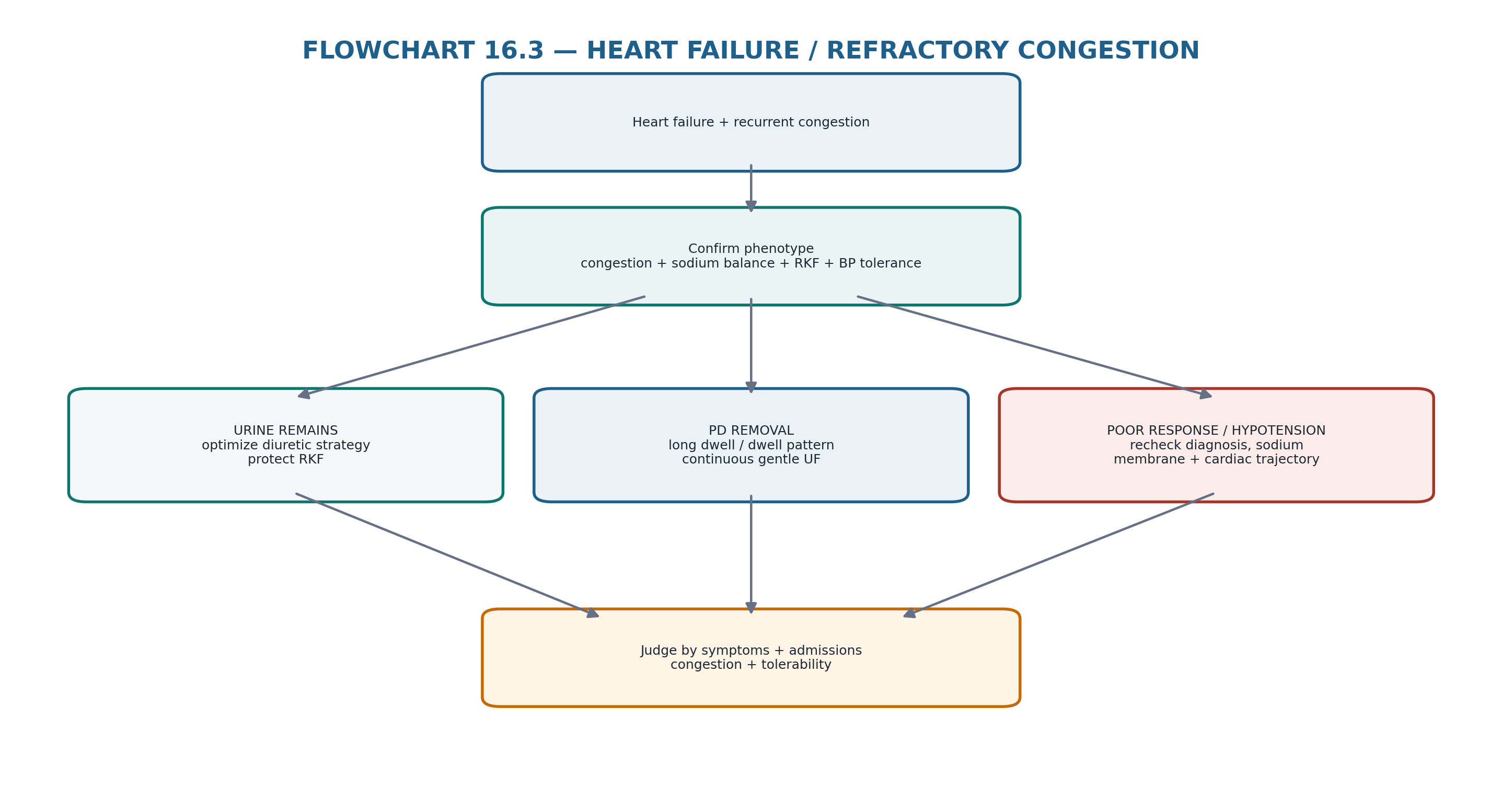
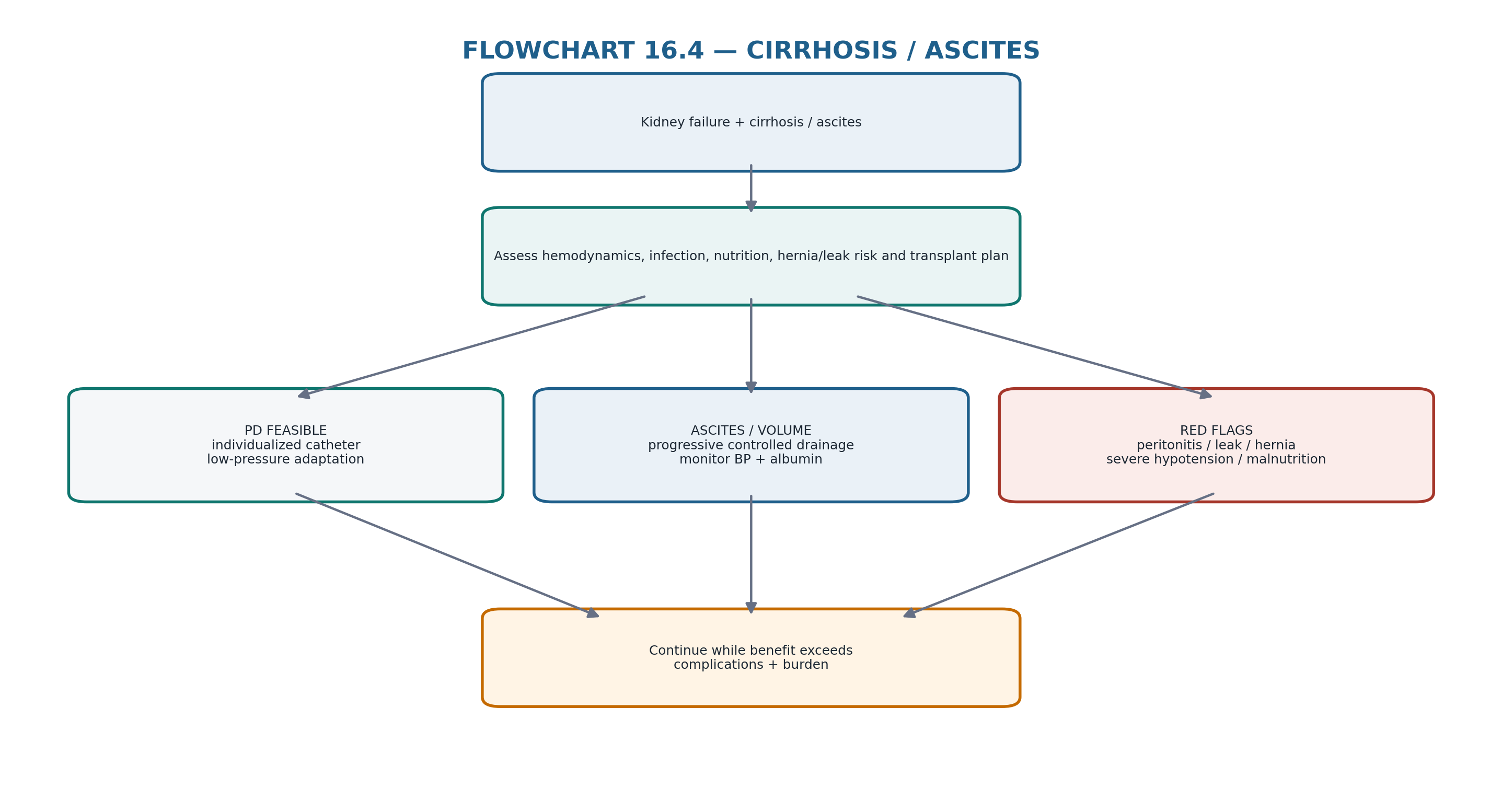
19. Retention tables: pattern recognition
Table 16.19 — If you see this, think this first.
| Finding | First hypothesis | Immediate action |
|---|---|---|
| Older patient misses steps but wants home therapy | Task/cognitive support gap | Competency assessment + assisted PD plan |
| Caregiver suddenly overwhelmed | Support failure, not membrane failure | Respite/professional assistance/backup modality |
| HbA1c improves after glucose-sparing but edema worsens | UF/sodium trade-off | Reassess volume and osmotic prescription |
| Obese patient cannot see exit site | Access geometry problem | Access-team review; alternative exit site |
| High Kt/V requirement seems impossible in obesity | V-estimation/body-water issue plus true dose need | Check collection and denominator assumptions before escalation |
| HF patient has high UF but recurrent admissions | Wrong decongestion phenotype / sodium problem | Reassess cardiac + sodium + RKF context |
| Cirrhosis patient tolerates HD poorly | Hemodynamic fragility | Consider PD feasibility rather than excluding automatically |
| Cirrhosis patient loses albumin after PD start | Losses, inflammation, intake, dilution | Full nutrition/infection/volume assessment |
| New cognitive impairment on established PD | Technique safety changed | Retraining/assistance immediately |
Table 16.20 — What not to confuse.
| Do not confuse | With | Correction |
|---|---|---|
| Chronological age | Frailty | Assess reserve/function directly |
| Needs assistance | PD contraindication | Assisted PD may solve task barrier |
| Low HbA1c | Safe glycemia | Dialysis HbA1c may be unreliable; hypoglycemia matters |
| Glucose-sparing | Better PD automatically | Volume control must remain adequate |
| High BMI | High urea distribution volume | Adipose water content is lower; interpret V carefully |
| PD for HF | Proven mortality therapy | Evidence is observational/very low certainty |
| Ascites | Absolute contraindication | Selected patients can receive PD |
| More exchanges | Higher-quality care | Burden and completion determine delivered therapy |
20. Clinical pearls
1. The best “special-population” prescription begins with the dominant constraint, not the diagnostic label.
2. Frailty and cognition are dynamic; reassess after hospitalization, falls or functional change.
3. Assisted PD is a delivery model—not evidence that the patient has failed self-care.
4. Training ends with demonstrated competency, not a predetermined number of training days.
5. In diabetes, every glucose bag is both an osmotic prescription and a metabolic exposure.
6. KDIGO’s numeric HbA1c target recommendation does not apply to dialysis patients; HbA1c is less reliable on dialysis.
7. Glucose-sparing that causes congestion is not a successful prescription.
8. Obesity is primarily an access/pressure/body-composition problem, not a PD prohibition.
9. If the exit site cannot be seen or reached, redesign it before expecting perfect self-care.
10. In heart failure, judge success by congestion, symptoms and hospital burden—not UF volume alone.
11. Cirrhosis/ascites requires nutrition and infection surveillance from day one.
12. High initial drain volumes in ascites do not equal dialysis-generated ultrafiltration.
13. Caregiver capacity is a clinical variable and should be monitored like residual kidney function.
14. Planned transition is adaptation to changing physiology or life circumstances—not treatment failure.
21. Common pitfalls — and the correction
Table 16.21 — High-frequency errors in special-population PD.
| Pitfall | Why it fails | Correction |
|---|---|---|
| “Too old for PD” | Age poorly captures function or preference | Assess frailty, cognition, home and goals |
| Training only the patient despite unsafe tasks | Creates contamination and burnout risk | Train the actual patient–care-partner unit |
| Using HbA1c as the sole diabetes metric | Lower reliability in dialysis; misses variability/hypoglycemia | Use direct glucose data when needed |
| Reducing dialysate glucose without checking volume | Can trade metabolic gain for congestion | Reassess UF/sodium/weight/BP |
| Placing exit site under pannus | Makes self-care difficult | Seated preoperative marking/extended catheter |
| Prescribing to total body weight in obesity | Overstates V and can drive excessive burden | Use appropriate body-water assumptions + clinical goals |
| Calling PD “heart-failure treatment” with high-certainty language | Evidence is observational and biased | Describe decongestion benefit with evidence calibration |
| Excluding cirrhosis automatically | Ignores contemporary feasibility evidence | Individualized liver–kidney risk-benefit review |
| Ignoring caregiver burnout | Support collapse causes technique failure | Reassess caregiver burden and provide backup |
| Adding exchanges after every abnormal number | May worsen burden and noncompletion | Name mechanism and patient-important goal first |
22. Mini-cases: decisions, not trivia
| Case 1 — Frailty without cognitive impairment An 82-year-old with ESKD, slow gait and weak grip wants home dialysis to avoid three weekly hospital trips. Cognition is intact, but she cannot lift bags and has arthritis in both hands. BEST NEXT STEP The limiting variable is task function, not understanding or preference. Map which tasks are unsafe, consider APD/assisted setup and train the patient–care-partner unit rather than excluding PD. |
|---|
| Case 2 — New cognitive decline A previously independent PD patient develops recurrent contamination events after a hospitalization. Family reports new memory problems. BEST NEXT STEP Treat this as a change in technique safety. Reassess cognition and competency now; move unsafe tasks to assisted delivery while investigating reversible delirium/cognitive causes. |
|---|
| Case 3 — Diabetes trade-off A diabetic APD patient is switched to a glucose-sparing long-dwell strategy. CGM improves, but weight and edema rise over two weeks. BEST NEXT STEP The metabolic outcome improved while volume control failed. Reassess long-dwell UF, sodium intake, RKF and the complete osmotic prescription rather than declaring success from CGM alone. |
|---|
| Case 4 — Obesity and hidden exit site A patient with severe central obesity can perform all PD steps but cannot see a standard lower-abdominal exit site while sitting. BEST NEXT STEP This is an access-design problem. Re-mark the exit site in the functional position and consider an extended/presternal configuration rather than rejecting PD. |
|---|
| Case 5 — Heart failure and high UF A patient with advanced HF on PD reports 1.2 L daily UF but has recurrent right-sided congestion and hospital admissions. BEST NEXT STEP Net UF is not the endpoint. Reassess sodium intake/removal, residual urine, right-heart physiology, membrane function and whether the cardiac disease has progressed beyond what the current plan can control. |
|---|
| Case 6 — Cirrhosis with hemodynamic intolerance of HD A patient with cirrhosis, recurrent ascites and kidney failure develops severe intradialytic hypotension on HD. BEST NEXT STEP PD is not automatically contraindicated. Assess infection, nutrition, abdominal wall, transplant pathway and home feasibility; if appropriate, use a carefully titrated low-pressure PD strategy with close monitoring. |
|---|
| Case 7 — Caregiver burnout A daughter has performed all exchanges for a frail parent for a year and now says she cannot continue. Clinical PD parameters are stable. BEST NEXT STEP This is technique-threatening support failure. Discuss respite/staff-assisted PD where available and a backup modality plan rather than increasing family pressure. |
|---|
| Case 8 — Multimorbidity and burden A frail patient with limited prognosis is clinically euvolemic and comfortable but spends most waking time performing exchanges to maintain a high clearance number. BEST NEXT STEP Revisit goals and the delivered clinical benefit. A less burdensome goal-directed prescription may be more appropriate if symptoms, volume and biochemistry remain acceptable. |
|---|
23. Active recall
MUST MEMORIZE
Table 16.22 — Core facts.
| Prompt | Answer |
|---|---|
| First question in special-population PD? | What must PD accomplish, and what constraint threatens success? |
| Frailty vs age? | Frailty/function—not chronological age—should drive adaptation. |
| Assisted PD? | Another person performs some or all PD tasks the patient cannot safely perform. |
| Training endpoint? | Demonstrated competency of the actual treatment unit (patient and/or care partner). |
| HbA1c in dialysis? | Useful trend but less reliable; direct glucose data may be needed. |
| KDIGO HbA1c <6.5–<8% target in PD? | No; that numeric recommendation is for CKD not treated with dialysis. |
| Diabetes prescription rule? | Balance glucose exposure against UF/sodium-volume control. |
| Obesity contraindication? | No; translate obesity into access, pressure, body-water and metabolic planning. |
| Heart-failure PD evidence? | Observational/very-low-certainty; may improve congestion/hospital burden in selected patients. |
| Cirrhosis/ascites contraindication? | No absolute exclusion; selected patients may receive PD with close monitoring. |
| Key cirrhosis risks? | Hypotension, infection, protein/nutrition loss, leak/hernia and liver prognosis. |
| Caregiver capacity? | A dynamic clinical variable requiring reassessment. |
| Best transition? | Planned before safety or sustainability collapses. |
USE AS REFERENCE
Exact diabetes medication selection and insulin dose adjustment in dialysis.
CGM device performance and target metrics for an individual patient.
Icodextrin product/device glucose-monitor compatibility.
Extended/presternal catheter selection and operative technique.
Heart-failure pharmacotherapy and device therapy.
Cirrhosis-specific ascites management, SBP prophylaxis and transplant criteria.
Local staff-assisted PD eligibility, staffing and reimbursement rules.
Formal frailty/CGA instruments used by the local geriatric-nephrology pathway.
Palliative-dialysis and supportive-care protocols.
24. Flashcards: spaced repetition
1. Q: What governs special-population PD? A: Goal → constraint → support → prescription → verify.
2. Q: Does old age exclude PD? A: No—assess frailty, cognition, function, home and goals.
3. Q: What is assisted PD? A: PD in which another person performs some or all unsafe/unmanageable tasks.
4. Q: Why map tasks separately? A: A patient may be unable to do one task but safe and independent with others.
5. Q: What is the training endpoint? A: Return-demonstrated competency, not time spent training.
6. Q: Main diabetes PD trade-off? A: Glucose burden versus osmotic UF/sodium control.
7. Q: Why can HbA1c mislead on dialysis? A: Anemia, ESA and altered RBC turnover reduce reliability.
8. Q: What if HbA1c conflicts with symptoms/glucose? A: Use SMBG/CGM/GMI as appropriate.
9. Q: KDIGO dialysis HbA1c numeric target? A: No universal dialysis-specific numeric target from the <6.5–<8% recommendation.
10. Q: Obesity and PD? A: Technical planning problem, not blanket contraindication.
11. Q: Obese patient cannot see exit site? A: Redesign exit-site location/consider extended catheter.
12. Q: Why avoid total-weight Kt/V scaling in obesity? A: Adipose tissue contains less water; V may be overestimated.
13. Q: HF PD target? A: Gentle sustained sodium-water removal with symptom and admission improvement.
14. Q: Quality of HF evidence? A: Very low; mainly observational before–after studies.
15. Q: Cirrhosis and PD? A: Feasible in selected patients; monitor infection, hypotension, nutrition and mechanical complications.
16. Q: High drain in ascites equals UF? A: No—pre-existing ascites contributes to drain volume.
17. Q: Caregiver burnout means? A: Support-system failure requiring assistance or transition planning.
18. Q: When simplify PD? A: When added treatment burden is not producing patient-important benefit and safety goals remain met.
19. Q: What triggers re-decision? A: Change in function, cognition, support, RKF, complications, prognosis or goals.
20. Q: Planned transition means? A: Adaptation—not failure.
25. Rapid differential / troubleshooting
Table 16.23 — Special-population troubleshooting from problem to action.
| Problem | Differential / mechanism | First actions |
|---|---|---|
| Repeated contamination in older adult | Cognition, vision, dexterity, fatigue, caregiver gap | Observe technique; screen cognition/function; assist unsafe tasks |
| Cycler alarms + falls risk | Tubing route, nocturia, mobility, catheter flow | Home setup + catheter troubleshooting + assistance |
| Hyperglycemia after PD change | Higher glucose exposure, infection/stress, medication mismatch | Review bags + direct glucose data + diabetes therapy |
| Edema after glucose-sparing | Long-dwell UF/sodium failure, RKF loss, high sodium intake | Volume assessment; restore adequate osmotic strategy |
| Obese patient low Kt/V but clinically well | Collection error, V estimation, true dose shortfall | Verify collection and denominator; assess RKF/clinical goals |
| Obese patient recurrent ESI | Hidden/moist exit site, traction, hygiene barrier | Inspect location; access/exit-site redesign; Chapter 11 prevention |
| HF patient hypotensive with strong UF | Over-removal, low output, medication effect | Reduce removal intensity; assess perfusion/RKF/cardiac status |
| HF patient congested despite high UF | Sodium excess, right-heart disease, low urine, membrane issues | Sodium/RKF/cardiac/membrane review |
| Cirrhosis patient cloudy effluent | PD peritonitis, SBP/enteric process, noninfectious ascitic inflammation | Chapter 10 effluent pathway + hepatology context |
| Cirrhosis patient albumin falls | Inflammation, protein losses, poor intake, dilution | Infection/volume/nutrition assessment |
| Caregiver unable to continue | Burnout, illness, social change | Assisted PD/respite/backup modality |
| Multimorbid patient noncompleting regimen | Treatment burden, cognition, symptoms, depression, logistics | Simplify/assist; revisit goals rather than blame |
26. Final revision sheet
| CORE CONCEPT Special-population PD succeeds when the therapy is redesigned around the dominant constraint. Age, diabetes, obesity, heart failure and cirrhosis are not prescriptions or automatic contraindications; they are signals to reassess capability, anatomy, physiology, support and goals. |
|---|
Table 16.24 — One-minute revision.
| Domain | Must remember |
|---|---|
| Older/frail | Screen function/cognition; use CGA where indicated; prioritize home time, symptoms and burden |
| Assisted PD | Replace unsafe tasks; assistance can be partial, temporary or long-term |
| Training | Individualize; prove competency; train care partner when they deliver therapy |
| Diabetes | Glucose is both osmotic agent and metabolic exposure; monitor both glycemia and volume |
| HbA1c | Less reliable in dialysis; KDIGO numeric target range does not apply to dialysis |
| Obesity | Not a contraindication; plan exit site, catheter, pressure, V estimation and metabolic burden |
| Heart failure | Gentle decongestion may help; evidence remains very low certainty |
| Cirrhosis/ascites | Feasible in selected patients; monitor hypotension, infection, nutrition, leaks/hernias |
| Multimorbidity | Simplify when burden exceeds added patient-important benefit |
| Support | Caregiver/system capacity is dynamic |
| Transition | Plan before safety or sustainability fails |
| TEN TAKE-HOME RULES 1) Start with goals, not labels. 2) Assess capability task-by-task. 3) Frailty is more informative than age. 4) Assisted PD can preserve home therapy. 5) Training requires demonstrated competency. 6) Diabetes management must preserve volume control. 7) Obesity is a technical planning problem, not a PD veto. 8) Heart-failure PD evidence is supportive but low certainty. 9) Cirrhosis/ascites can be treated with PD in selected patients. 10) Reassess support and goals whenever health or life circumstances change. |
|---|
Table 16.25 — One-minute bedside synthesis.
| If you see… | Think… | Do now… |
|---|---|---|
| Frail but motivated patient | Supportable home therapy may exist | Task map + frailty/CGA + assistance plan |
| Cognitive decline | Technique safety changed | Reassess competency; transfer unsafe tasks |
| Diabetes + worsening glucose | Dialysate glucose may contribute | Review glucose load + direct glucose monitoring + meds |
| Glucose-sparing + edema | Volume trade-off | Reassess UF/sodium/RKF |
| Obesity + hidden exit site | Access design failure | Reposition/extended catheter planning |
| HF + recurrent congestion | Decongestion target unmet | Sodium/RKF/UF/cardiac reassessment |
| Cirrhosis + HD hypotension | PD may be viable | Individualized liver–kidney PD assessment |
| Caregiver burnout | Support failure | Respite/assisted PD/transition plan |
| High treatment burden, stable clinical state | Possible over-prescription for current goals | Shared goal-directed simplification review |
| FINAL MENTAL MODEL GOAL → CONSTRAINT → TASK CAPABILITY → SUPPORT → PHYSIOLOGY → PRESCRIPTION → BURDEN/SAFETY → VERIFY → RE-DECIDE. |
|---|
Rapid oral viva
Explain why frailty is more useful than chronological age for PD adaptation.
Define assisted PD and give examples of partial assistance.
Explain how the 2025 ISPD training position paper changes training for a patient with cognitive impairment.
Explain why KDIGO’s HbA1c target range should not be copied directly into dialysis.
Build a diabetes prescription that balances glycemic burden and volume control.
Explain why obesity is not a PD contraindication and how exit-site planning changes.
Describe the evidence for PD in refractory heart failure and its limitations.
Build a risk–benefit assessment for PD in cirrhosis with ascites.
Explain when a difficult PD prescription should be simplified rather than intensified.
Describe the triggers for assisted PD escalation or planned modality transition.
| SAFETY BOUNDARY This chapter teaches adaptation and clinical reasoning. Exact diabetes drug/insulin dosing, CGM targets, icodextrin-compatible glucometer selection, heart-failure drug/device management, cirrhosis/SBP prophylaxis, transplant candidacy, catheter operative technique, assisted-PD staffing rules and palliative-dialysis protocols require current local specialist guidance and product/system information. |
|---|
27. Selected authoritative references
1. Brown EA, Blake PG, Boudville N, et al. International Society for Peritoneal Dialysis practice recommendations: Prescribing high-quality goal-directed peritoneal dialysis. Perit Dial Int. 2020;40(3):244–253. https://doi.org/10.1177/0896860819895364. PMID: 32063219.
2. Blake PG, Brown EA. Person-centered peritoneal dialysis prescription and the role of shared decision-making. Perit Dial Int. 2020;40(3):302–309. https://doi.org/10.1177/0896860819893803. PMID: 32063218.
3. Brown EA, Hurst H. Delivering peritoneal dialysis for the multimorbid, frail and palliative patient. Perit Dial Int. 2020;40(3):327–332. https://doi.org/10.1177/0896860819893558. PMID: 32063211.
4. Wu HHL, Poulikakos D, Hurst H, Lewis D, Chinnadurai R. Delivering Personalized, Goal-Directed Care to Older Patients Receiving Peritoneal Dialysis. Kidney Dis (Basel). 2023;9(5):358–370. https://doi.org/10.1159/000531367. PMID: 37901709.
5. Farragher JF, Oliver MJ, Jain AK, Flanagan S, Koyle K, Jassal SV. PD Assistance and Relationship to Co-Existing Geriatric Syndromes in Incident Peritoneal Dialysis Therapy Patients. Perit Dial Int. 2019;39(4):375–381. https://doi.org/10.3747/pdi.2018.00189. PMID: 31123074.
6. Reyskens M, Abrahams AC, François K, van Eck van der Sluijs A. Assisted peritoneal dialysis in Europe: a strategy to increase and maintain home dialysis. Clin Kidney J. 2024;17(Suppl 1):i34-i43. https://doi.org/10.1093/ckj/sfae078. PMID: 38846415.
7. Wong SN, Turnbull L, Saunders S, et al. Evaluation and outcomes of a 5-year assisted peritoneal dialysis program. Perit Dial Int. 2024;44(3):177–184. https://doi.org/10.1177/08968608221149546. PMID: 36749175.
8. Hussein WF, Chen S, Bennett PN, et al. Description and outcomes of a staff-assisted peritoneal dialysis program in the United States. Perit Dial Int. 2025;45(6):344–352. https://doi.org/10.1177/08968608241259607. PMID: 38881397.
9. Teitelbaum I, Glickman J, Neu A, et al. KDOQI US Commentary on the 2020 ISPD Practice Recommendations for Prescribing High-Quality Goal-Directed Peritoneal Dialysis. Am J Kidney Dis. 2021;77(2):157–171. https://doi.org/10.1053/j.ajkd.2020.09.010. PMID: 33341315.
10. Chow JSF, Brunier G, Figueiredo AE, et al. Teaching peritoneal dialysis: A position paper for the International Society for Peritoneal Dialysis. Perit Dial Int. 2025;45(6):327–343. https://doi.org/10.1177/08968608251375512. PMID: 40966019.
11. Wijewickrama P, Williams J, Bain S, et al. Narrative Review of Glycemic Management in People With Diabetes on Peritoneal Dialysis. Kidney Int Rep. 2023;8(4):700–714. https://doi.org/10.1016/j.ekir.2023.01.040. PMID: 37069983.
12. Vuković M, et al. Glycemic Control in Patients with Diabetes on Peritoneal Dialysis: From Glucose Sparing Approach to Glucose Monitoring. 2025. PMID: 40430224; PMCID:PMC12113379.
13. Kidney Disease: Improving Global Outcomes (KDIGO) Diabetes Work Group. KDIGO 2022 Clinical Practice Guideline for Diabetes Management in Chronic Kidney Disease. Kidney Int. 2022;102(5S):S1–S127.
14. Bansal S, Nararyan R. Management of peritoneal dialysis in patients with obesity. Curr Opin Nephrol Hypertens. 2026;35(1):101–107. https://doi.org/10.1097/MNH.0000000000001124. PMID: 41133752.
15. Chen X, Mao Y, Ge Y. Does Body Mass Index Impact the Outcomes of Peritoneal Dialysis Patients? A Systematic Review and Meta-Analysis of Non-Randomized Trials. Obes Facts. 2026;19(3):290–309. https://doi.org/10.1159/000548725. PMID: 41100441.
16. Crabtree JH, Shrestha BM, Chow KM, et al. Creating and maintaining optimal peritoneal dialysis access in the adult patient: 2019 update. Perit Dial Int. 2019;39(5):414–436. https://doi.org/10.3747/pdi.2018.00232. PMID: 31028108.
17. Timóteo AT, Branco Mano T. Efficacy of peritoneal dialysis in patients with refractory congestive heart failure: a systematic review and meta-analysis. Heart Fail Rev. 2023;28(5):1053–1063. https://doi.org/10.1007/s10741-023-10297-3. PMID: 36738391.
18. Mekraksakit P, Suppadungsuk S, Thongprayoon C, et al. Outcomes of peritoneal dialysis in cirrhosis: A systematic review and meta-analysis. Perit Dial Int. 2025;45(2):93–105. https://doi.org/10.1177/08968608241237401. PMID: 38757682.
19. Rajora N, De Gregorio L, Saxena R. Peritoneal Dialysis Use in Patients With Ascites: A Review. Am J Kidney Dis. 2021;78(5):728–735. PMID: 34144102; PMCID:PMC8545758.
20. Morelle J, Stachowska-Pietka J, Öberg C, et al. ISPD recommendations for the evaluation of peritoneal membrane dysfunction in adults: classification, measurement, interpretation and rationale for intervention. Perit Dial Int. 2021;41(4):352–372. https://doi.org/10.1177/0896860820982218.
21. Cho Y, Johnson DW, Badve SV, et al. Impact of icodextrin on clinical outcomes in peritoneal dialysis: a systematic review of randomized controlled trials. Nephrol Dial Transplant. 2013;28(7):1899–1907.
22. Wens R, Taminne M, Devriendt J, et al. A previously undescribed side effect of icodextrin: overestimation of glycemia by glucose analyzer. Perit Dial Int. 1998;18(6):603–609. PMID: 9932659.
23. Firanek CA, Jacob DT, Sloand JA. Avoidable iatrogenic hypoglycemia in patients on peritoneal dialysis: the risks of nonspecific glucose monitoring devices and drug-device interaction. J Patient Saf. 2014;10(4):218–21. https://doi.org/10.1097/PTS.0b013e318299614e. PMID: 23860196.
24. Chionh CY, Clementi A, Poh CB, Finkelstein FO, Cruz DN. The use of peritoneal dialysis in heart failure: A systematic review. Perit Dial Int. 2020;40(6):527–539. PMID: 32063182.
25. Brenner & Rector’s The Kidney. 12th ed. Elsevier; 2024. Chapters on peritoneal dialysis, older adults, kidney supportive care and interventional nephrology.
SOURCE NOTE Guideline status and contemporary special-population evidence were checked 3 September 2026. KDIGO has a 2026 diabetes guideline draft under public review, but the finalized standard used in this chapter remains KDIGO 2022. No universal frailty score, assisted-PD staffing model, obesity BMI cutoff, heart-failure UF target, cirrhosis fill-volume schedule or dialysis-specific HbA1c target is imposed here because current evidence does not support one universal rule. Local product labels, diabetes/cardiology/hepatology protocols, access expertise, assisted-PD resources and patient goals govern operational details.