Applied Nephrology Master Series
Chapter 17
Urgent-Start PD, Hospitalized Patients and Acute Clinical Scenarios
Urgent Start | Inpatient PD | Acute Kidney Injury | Procedures | Surgery | ICU | Temporary Transitions | Discharge
| CHAPTER MISSION Build a bedside system for starting PD before the usual catheter-healing interval, preserving PD safely during hospitalization, and deciding when acute physiology requires temporary extracorporeal support. The goal is to match treatment speed, abdominal safety, access integrity, staff capability and the patient’s long-term modality plan—without reflexively converting every acute problem to hemodialysis. |
|---|
| MASTER PRINCIPLE First ask HOW FAST the physiology must be corrected and WHETHER the abdomen/access can safely deliver that correction. Then choose PD, adapt PD, or use temporary extracorporeal KRT as a bridge. |
|---|
0. One-page chapter map
Table 17.1 — The eight decisions that govern urgent and inpatient PD.
| Decision | Core question | Bedside output |
|---|---|---|
| 1. Context | Unplanned ESKD, established PD in hospital, or AKI? | Correct clinical pathway |
| 2. Urgency | How rapidly must K, acid-base status, uremia or congestion be corrected? | PD now vs bridge HD/CRRT |
| 3. Abdomen | Is the peritoneal cavity safe and usable? | Feasibility / contraindication screen |
| 4. Access | Existing functional catheter or new urgent access? | Access plan |
| 5. Pressure | How do we protect a new catheter and wound? | Low-volume recumbent start |
| 6. Prescription | Which cycle/dwell/osmotic lever addresses the acute problem? | Mechanism-based PD order |
| 7. Hospital system | Can staff, supplies, procedures and infection prevention support PD? | Safe inpatient delivery |
| 8. Transition | When can treatment de-escalate, resume home PD or change modality? | Planned handoff |
Learning outcomes
Distinguish urgent-start maintenance PD from acute PD for AKI and from continuation of chronic PD during hospitalization.
Use the 2-week elective catheter break-in recommendation correctly without treating it as a ban on earlier PD.
Select low-volume recumbent urgent-start PD to reduce intraperitoneal pressure and leak risk.
Recognize when immediate physiologic instability favors temporary HD/CRRT before a later PD start.
Build an inpatient PD review that verifies the actual prescription, volume state, residual kidney function, access and medication/procedure plan.
Prepare PD patients safely for colonoscopy and invasive gynecologic procedures using current peritonitis-prevention principles.
Decide when surgery or critical illness requires PD modification, temporary interruption or extracorporeal KRT.
Use ISPD acute-PD guidance for AKI without importing chronic-PD targets into the ICU.
Plan discharge and modality transition before an acute hospital episode creates technique failure by default.
| EVIDENCE POSTURE ISPD 2019 access guidance anchors catheter break-in and urgent-start technique. ISPD 2020/2021 acute-PD guidance anchors PD for AKI. ISPD 2022 peritonitis guidance and a 2023 PDI inpatient review anchor procedural/infection safety. Contemporary 2024–2025 meta-analyses support urgent-start feasibility but remain dominated by observational data and heterogeneous definitions. [1–11] |
|---|
1. Core concept: “urgent” describes the clinical clock, not a single prescription
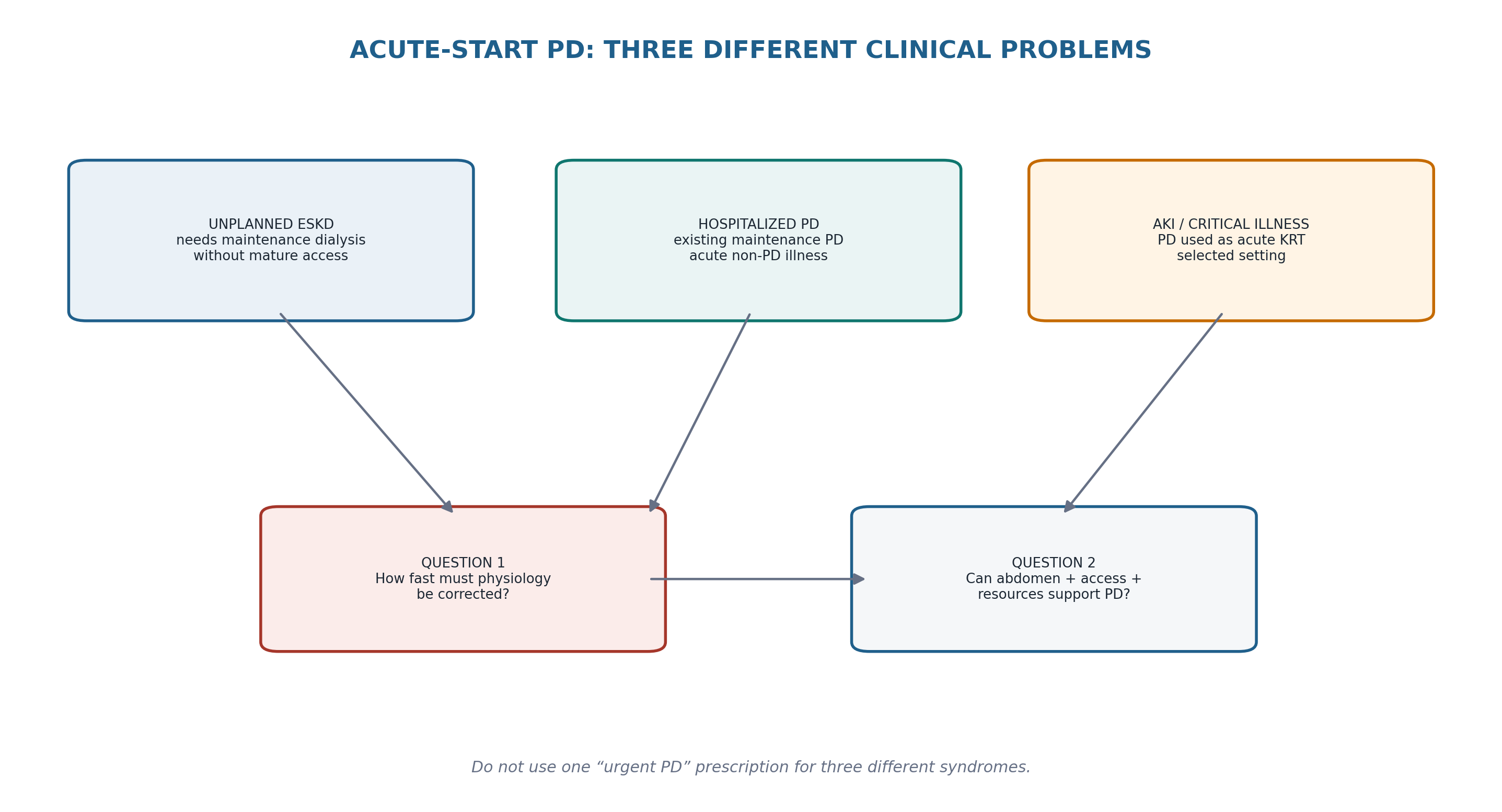
Urgent PD is often discussed as though it were a modality. It is better understood as a timing problem layered onto standard PD physiology. A patient may need maintenance dialysis before a newly placed catheter has fully healed; an established PD patient may be hospitalized with pneumonia or heart failure; or PD may be chosen as acute kidney replacement therapy for AKI. These situations share peritoneal transport, but differ in access maturity, physiologic urgency and treatment endpoint. [1–5]
Table 17.2 — Three acute-start contexts.
| Context | Primary goal | What makes it different |
|---|---|---|
| Urgent-start maintenance PD | Start long-term PD without waiting the elective healing interval | New catheter + leak/mechanical risk |
| Hospitalized established PD | Preserve chronic modality while treating acute illness | Hospital system and prescription adaptation |
| Acute PD for AKI | Provide temporary kidney replacement therapy | Critical-illness physiology + renal-recovery endpoint |
| TERMINOLOGY RULE Do not use “urgent-start PD” and “acute PD for AKI” interchangeably. One is an accelerated start of maintenance dialysis; the other is temporary KRT for an acute kidney insult. |
|---|
2. Definitions: use the break-in interval precisely
The ISPD 2019 access guideline defines the break-in period as the interval between catheter insertion and initiation of PD. It recommends at least 2 weeks before an elective start (1B). If PD must begin within 2 weeks, ISPD recommends a modified prescription using low-volume exchanges with the patient supine (1C). For leak prevention, the same guideline recommends a recumbent low-volume intermittent regimen with the peritoneal cavity dry during ambulatory periods. [1]
Table 17.3 — Timing language.
| Term | Practical meaning | Evidence caveat |
|---|---|---|
| Elective / conventional start | PD after an adequate planned healing interval; ISPD recommends ≥2 weeks | Allows routine progression to full prescription |
| Urgent start | Commonly PD within <2 weeks after catheter insertion | Definitions vary across studies/programs |
| Immediate / very early start | PD begun within hours to a few days in some programs | Feasible in selected cohorts; protocols are not universal |
| Acute PD | PD prescribed for AKI/critical illness | Different dose and monitoring framework |
| DO NOT AUTOMATE “<14 days” identifies a study/program category; it does not dictate a fixed initial fill volume, number of exchanges or automatic hospital admission. |
|---|
3. First decision: can PD correct the acute physiology fast enough?
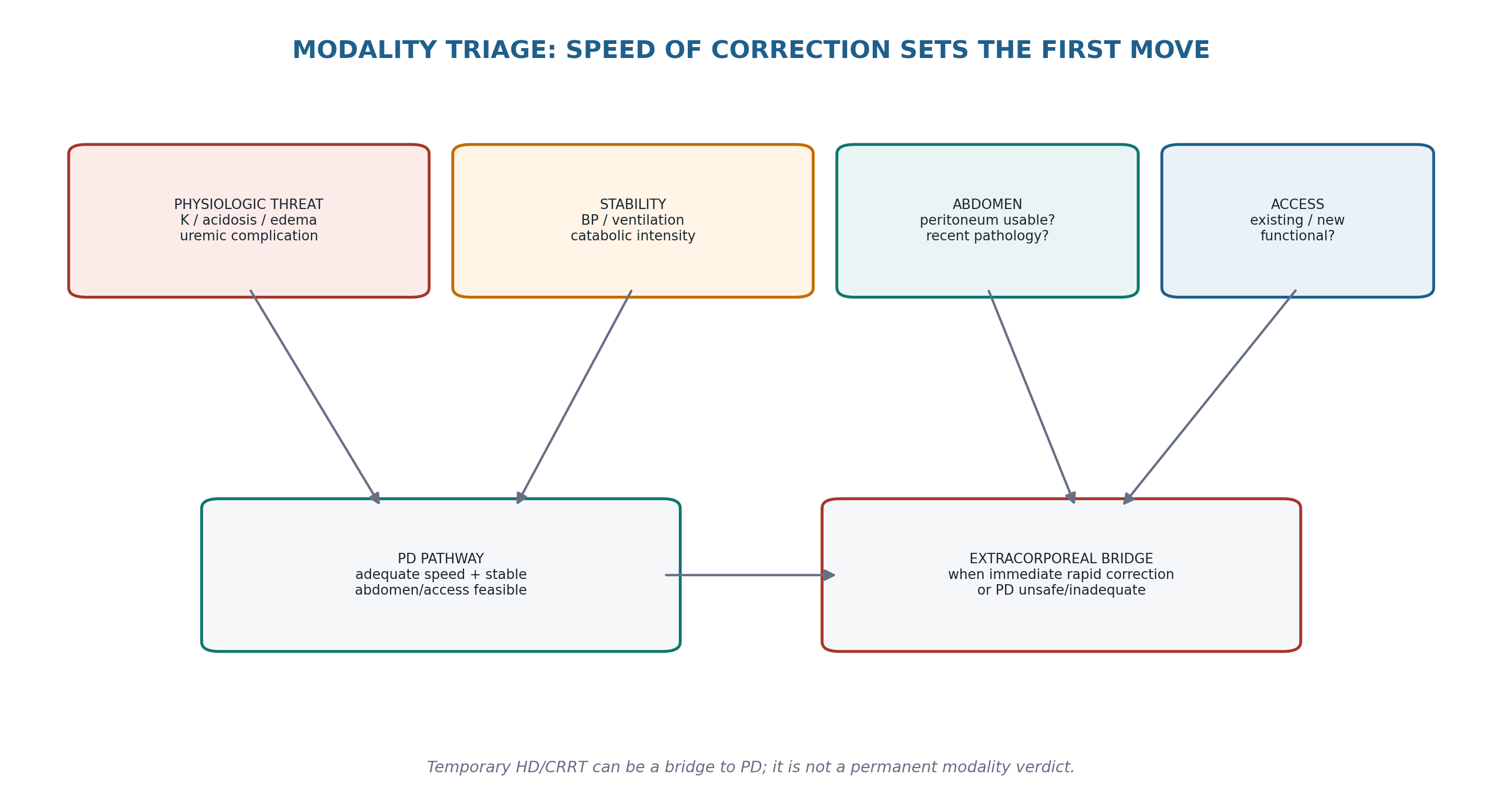
Urgent-start PD is appropriate for many late-presenting patients with ESKD, but some patients present with immediately life-threatening metabolic or cardiopulmonary instability. Reviews of urgent-start programs emphasize that severe refractory hyperkalemia, severe acidosis, marked pulmonary edema, uremic pericarditis or critical hemodynamic/respiratory instability may justify initial urgent extracorporeal dialysis. Once stabilized, the patient should be reevaluated for PD rather than being locked into HD because a temporary catheter was used. [4,12,13]
Table 17.4 — Triage by physiologic need.
| Finding | Clinical question | Direction |
|---|---|---|
| Hyperkalemia | Can medical therapy + PD correct K quickly enough? | If not, urgent extracorporeal KRT; reassess PD later |
| Severe metabolic acidosis | Is rapid buffering/solute removal required? | Choose modality by urgency and stability |
| Pulmonary edema / hypoxemia | Can PD generate adequate UF fast enough without delaying stabilization? | Bridge HD/CRRT if immediate removal is required |
| Uremic pericarditis / severe uremic syndrome | Is rapid reliable clearance required now? | Often extracorporeal bridge, then PD plan |
| Stable symptomatic uremia/volume overload | Can low-pressure PD meet need safely? | Urgent-start PD is reasonable when feasible |
| BRIDGE RULE A temporary HD/CRRT treatment can be the safest first step and still be part of a PD life plan. Acute stabilization and chronic modality choice are separate decisions. |
|---|
4. Access: urgent-start PD succeeds or fails before the first exchange
For acute PD in adults, ISPD recommends flexible peritoneal catheters where resources and expertise exist and recommends that insertion technique be chosen according to patient factors and local skills. Appropriately trained nephrologists can insert PD catheters with functional results comparable to surgical placement in suitable patients. For urgent-start maintenance PD, rapid access to competent catheter placement is a program requirement, not an optional convenience. [1,2,4]
Table 17.5 — Urgent access questions.
| Question | Why it matters | Action |
|---|---|---|
| Is the abdomen usable? | Acute bowel inflammation, compromised recent abdominal surgery or an uncorrected major abdominal-wall problem may make urgent PD unsafe | Alternate/bridge KRT and surgical review |
| Who can place the catheter safely now? | Delay converts a PD candidate into a CVC-dependent HD start | Use locally competent percutaneous, laparoscopic or surgical pathway |
| Is the exit site planned for long-term use? | Urgency should not create a poor chronic access | Apply Chapter 5 access principles |
| Is constipation/bladder distention addressed? | Early flow failure is often extrinsic | Bowel/bladder optimization before blaming catheter position |
| ACCESS RULE Urgent does not mean improvised chronic access. The catheter should still be planned as the patient’s long-term PD lifeline whenever that is the intended modality. |
|---|
5. Protect the new catheter: pressure is the modifiable risk
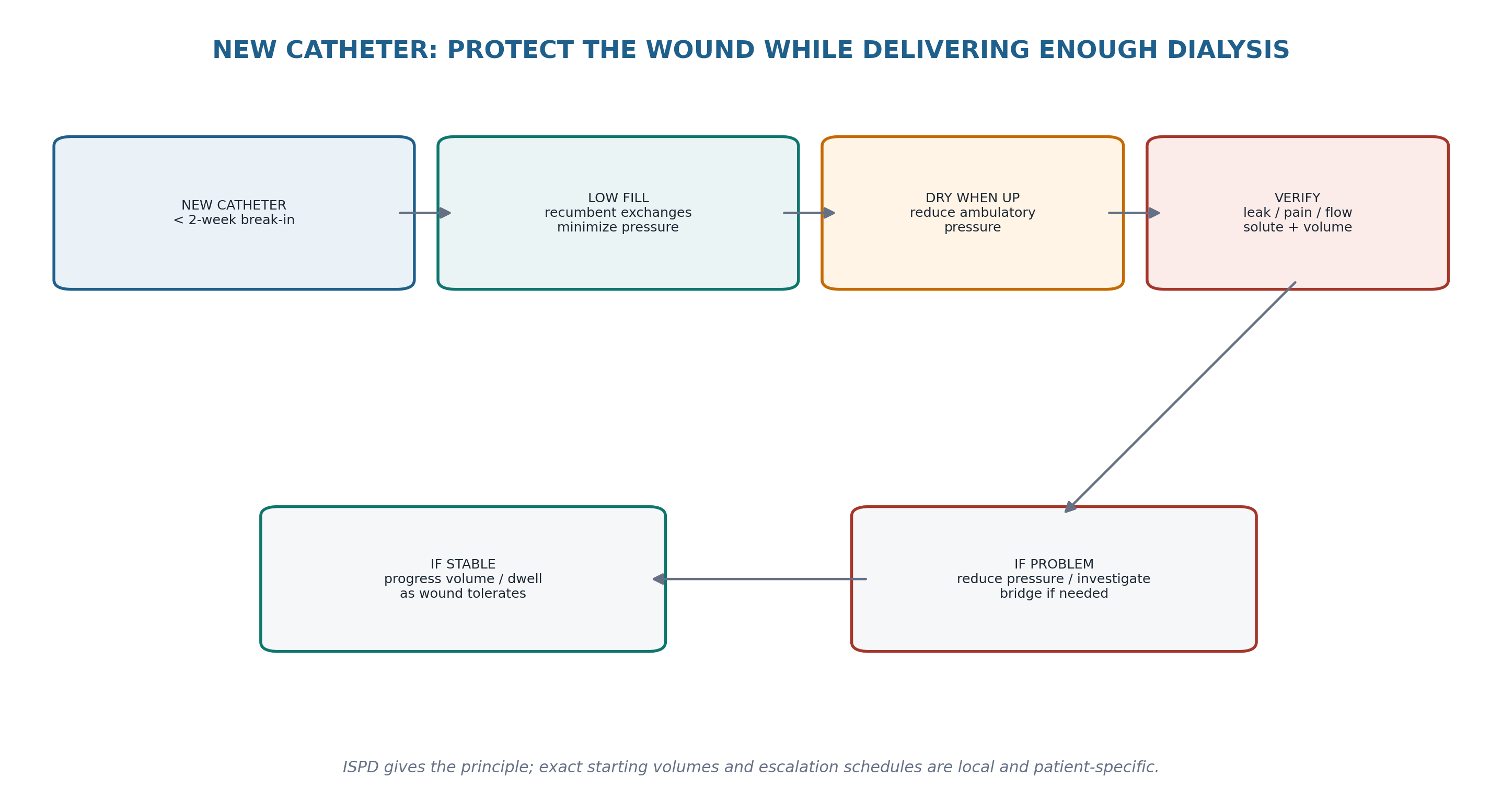
The principal early trade-off is mechanical: dialysis must be delivered before the catheter tract and cuffs have fully healed. ISPD therefore recommends low-volume supine/recumbent exchanges when the break-in period is shorter than 2 weeks. Contemporary meta-analyses find broadly similar infectious outcomes to conventional start, but a higher rate of mechanical events—especially dialysate leak—in urgent-start cohorts. [1,6–9]
Table 17.6 — Pressure-protection bundle.
| Lever | Mechanism | Bedside use |
|---|---|---|
| Low initial fill volume | Reduces intraperitoneal pressure | Start below routine full volume; individualize |
| Supine/recumbent exchanges | Reduces posture-related pressure | Especially important early after insertion |
| Dry abdomen while ambulatory | Avoids sustained upright pressure | ISPD leak-prevention strategy |
| Avoid constipation/straining | Reduces pressure spikes and catheter compression | Proactive bowel regimen |
| Gradual escalation | Lets wound tolerance declare itself | Increase only if no leak/pain/flow problem |
| Prompt leak response | Prevents enlarging tract defect | Reduce/hold PD and use Chapter 12 pathway |
| NUMERICAL HUMILITY ISPD gives the pressure principles but not one universal adult starting-volume ladder. Published programs use different volumes, insertion methods and escalation schedules. Use local urgent-start protocol, body habitus, wound integrity, respiratory tolerance and dialysis need. |
|---|
6. Build the urgent-start prescription around the failing physiology
A safe low-pressure prescription still has to work. The clinician should name the dominant problem—uremia, hyperkalemia, acidosis, fluid overload or all four—and then use exchange frequency, dwell time, solution osmotic strength and total treatment time to meet that problem while preserving the new tract. There is no evidence-based reason to copy a fixed center-specific urgent-start schedule into every adult. [1,4,5]
Table 17.7 — Problem → prescription lever → reassessment.
| Problem | Useful lever | Reassess |
|---|---|---|
| Predominant uremic symptoms | Increase effective exchange/dialysate exposure within pressure limits | Symptoms, urea trajectory, delivered treatment |
| Hyperkalemia | Shorter effective cycles can increase small-solute removal | Serum K and ECG/clinical urgency |
| Fluid overload | Increase osmotic gradient and/or treatment exposure as tolerated | Net balance, BP, oxygenation, leak risk |
| Acidosis | Increase effective solute clearance | Bicarbonate/pH trajectory |
| Pain/leak with acceptable labs | Reduce intraperitoneal pressure rather than chasing dose | Wound, symptoms, weight/labs |
| Inadequate correction despite safe maximal urgent PD | Do not persist with ineffective therapy | Temporary extracorporeal KRT |
| PRESCRIPTION RULE Urgent-start success is not “PD at any cost.” If the low-pressure prescription cannot safely correct the clinical problem, bridge therapy is appropriate. |
|---|
7. Early mechanical complications: expect them, localize them, do not catastrophize
Urgent-start PD has a reproducible signal for more early mechanical complications than conventional start, particularly leaks. Most reported events are managed conservatively and do not automatically require catheter removal. Catheter migration, flow dysfunction and early pericatheter leakage belong to the Chapter 12 mechanical-complication framework. [1,6–9]
Table 17.8 — First-week urgent-start problems.
| Problem | Common mechanism | Immediate response |
|---|---|---|
| Wet dressing / exit-site fluid | Pericatheter leak | Drain/reduce pressure; confirm source; peritoneal rest/bridge as needed |
| Genital/wall swelling | Boundary leak | Stop pressure escalation; Chapter 12 imaging pathway |
| Slow drain | Constipation, migration, kink, omentum | Bowel/bladder assessment → imaging if persistent |
| Inflow/drain pain | Tip irritation, suction, pressure, constipation | Modify mechanics; exclude peritonitis |
| Cloudy effluent | Peritonitis until excluded | Chapter 10 diagnostic pathway |
| New tunnel/exit-site purulence | Catheter-related infection | Chapter 11 pathway |
8. Urgent-start is a program, not a prescription sheet
Successful urgent-start programs require rapid modality education, catheter access, trained nursing, a place to deliver early exchanges, home assessment, supply coordination and a defined transition to home training. A medically feasible patient can still fail urgent-start PD if the system cannot place the catheter or safely deliver early treatment. [4]
Table 17.9 — Program elements that prevent default CVC-HD.
| Element | Operational question | Failure mode if absent |
|---|---|---|
| Same-day modality education | Can the patient receive unbiased choice despite late presentation? | Automatic HD default |
| Fast catheter pathway | Can access be placed promptly? | CVC placement while waiting |
| Early-exchange area | Can low-volume recumbent PD be supervised? | Unsafe improvised start |
| PD-trained staff | Can leaks, alarms and effluent abnormalities be recognized? | Unnecessary technique failure |
| Expedited home assessment | Is the home/support plan feasible? | Discharge delay or unsafe home start |
| Handoff to training | Who owns escalation after the first days? | Prescription drift and missed complications |
| SYSTEM PEARL Urgent-start PD is most reliable when the pathway is designed before the urgent patient arrives. |
|---|
9. Hospitalized maintenance-PD patient: verify before changing
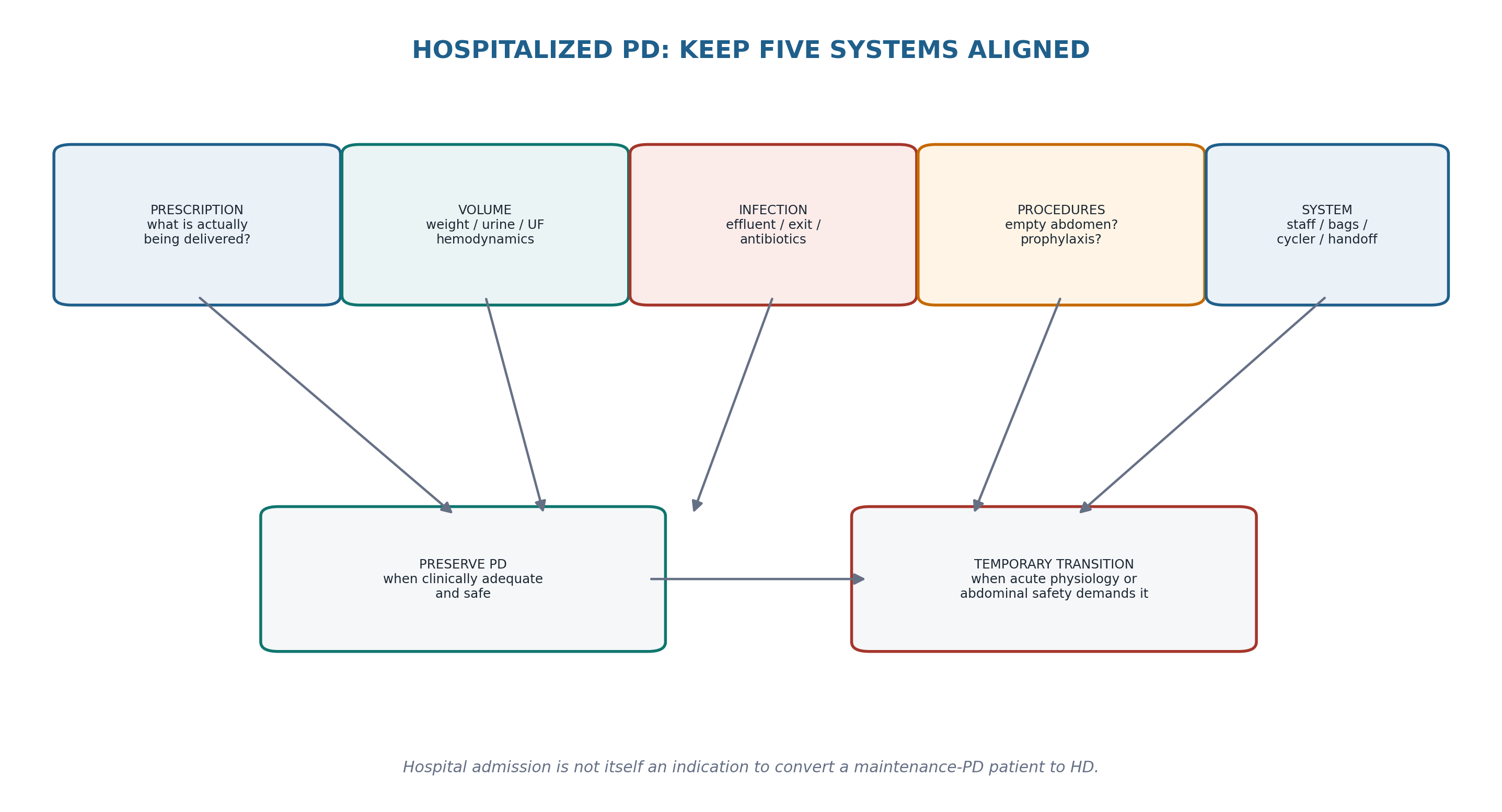
Hospitalization alone is not an indication to convert a maintenance-PD patient to HD. A 2023 PDI review highlights that unfamiliar staff, missing supplies and fragmented procedure planning can create unnecessary modality switches. The first inpatient order should therefore reconstruct what the patient actually does at home and why. [10,14]
Table 17.10 — Admission PD reconciliation.
| Domain | Verify on admission | Why |
|---|---|---|
| Prescription | CAPD/APD, fill volumes, dwell pattern, solutions, last fill, icodextrin | Prevents under/overdialysis |
| Access | Function, exit site, tunnel symptoms | Detects access problem early |
| Volume | Weight trend, edema, BP, urine, net UF | Defines inpatient fluid strategy |
| RKF | Urine output and recent trajectory | Changes total dialysis need |
| Glycemia | Diabetes plan + glucose-solution exposure | Acute illness may destabilize glucose |
| Medications | Renally cleared drugs, antibiotics, diuretics, bowel regimen | Prevents avoidable toxicity/volume/constipation problems |
| Home capability | Who normally performs PD? | Determines staff vs patient/caregiver role in hospital |
| INPATIENT RULE Do not rewrite a stable home prescription from memory. Reconstruct it, identify what the acute illness changes, then alter only the necessary levers. |
|---|
10. Inpatient prescription adaptation: acute illness changes goals
The maintenance prescription may need temporary adjustment for reduced oral intake, hyperglycemia, steroid therapy, loss of residual urine, intravenous fluids, sepsis, pulmonary congestion, immobilization or a procedure requiring an empty abdomen. The safest approach is daily clinical reassessment rather than a fixed “hospital PD” protocol. [10,15]
Table 17.11 — Common inpatient adaptations.
| Hospital problem | PD consideration | Reassessment endpoint |
|---|---|---|
| NPO / reduced intake | Avoid unnecessary osmotic intensity; monitor glucose and volume | Weight/BP/labs/UF |
| IV fluids / transfusion | Account for non-oral volume input | Net fluid balance and oxygenation |
| Steroids / infection hyperglycemia | Dialysate glucose adds metabolic load | Bedside glucose strategy |
| Loss of residual urine | Total KRT requirement rises | Urine + symptoms + biochemistry |
| Immobility/constipation | Drainage can deteriorate | Bowel function + flow |
| Pulmonary edema | Increase UF only if PD can do so rapidly enough | Oxygenation/hemodynamics/net balance |
| Hypotension/sepsis | Excessive UF can worsen perfusion | BP/lactate/perfusion and volume phenotype |
11. Procedures in hospital: empty abdomen + infection prevention
For colonoscopy and invasive gynecologic procedures, ISPD 2022 peritonitis guidance supports antibiotic prophylaxis. The inpatient review recommends carrying out these procedures without PD fluid in situ. Exact prophylactic antibiotic choice should follow the current ISPD/local protocol rather than be improvised from memory. [10,16]
Table 17.12 — Procedure preparation.
| Procedure issue | PD action | Safety note |
|---|---|---|
| Colonoscopy | Drain abdomen; give guideline-consistent prophylaxis | Avoid phosphate-containing bowel preparations in advanced kidney failure |
| Invasive gynecologic procedure | Drain abdomen; guideline-consistent prophylaxis | Does not refer to routine Pap smear |
| Other endoscopy/procedure | Decide whether cavity should be empty and whether prophylaxis applies | Use local procedural + PD protocol |
| Any systemic antibiotic course | Co-prescribe antifungal prophylaxis per ISPD peritonitis guidance | Cross-reference Chapter 10 |
| Post-procedure abdominal pain/cloudy bag | Do not dismiss as expected procedural pain | Urgent effluent assessment |
| PROCEDURE RULE The two errors to prevent are leaving an unnecessary dwell in place during a high-risk intra-abdominal procedure and forgetting peritonitis-prevention steps. |
|---|
12. Contrast and imaging: do not dialyze the scan
Necessary iodinated contrast can be administered cautiously to PD patients; the inpatient review notes no evidence that the PD prescription should be intensified simply to remove contrast. The important modifiable issue is avoiding volume depletion and using current radiology/nephrology contrast-risk guidance. Likewise, there is no routine evidence-based reason to switch a PD patient to HD solely to “clear” modern gadolinium contrast; agent selection should follow current radiology guidance. [10]
Table 17.13 — Imaging questions.
| Question | Reasoning | Direction |
|---|---|---|
| Does the study materially change care? | Residual kidney function still matters in PD | Use contrast when justified; minimize avoidable exposure |
| Is patient volume depleted? | Hypovolemia can threaten RKF and perfusion | Correct volume phenotype before elective contrast when appropriate |
| Should PD be intensified after iodinated contrast? | No evidence for extra dialysis solely for contrast clearance | Continue clinically indicated prescription |
| Should PD be converted to HD solely for gadolinium clearance? | Not routinely supported | Follow current agent-specific radiology guidance |
13. Surgery: distinguish abdominal contamination from non-abdominal surgery
Perioperative PD should be individualized. Non-abdominal surgery, including cardiac surgery, does not automatically require conversion to HD. Contemporary observational cardiac-surgery data show no outcome advantage to routine conversion and support efforts to maintain PD when feasible. Abdominal surgery is different: peritoneal entry, bowel contamination, drains, wound integrity and risk of dialysate leak determine when and how PD can resume. [10,17–20]
Table 17.14 — Perioperative PD reasoning.
| Situation | PD direction | Key condition |
|---|---|---|
| Non-abdominal surgery | Often continue/adapt PD | Hemodynamics and volume management permit |
| Cardiac surgery | Routine HD conversion is not evidence-based | Coordinate nephrology + cardiac surgery/ICU |
| Clean abdominal/laparoscopic surgery | PD may resume with low-pressure strategy in selected cases | Watertight closure; surgeon agreement; no contamination |
| Bowel perforation/peritonitis/major contamination | PD usually inappropriate during acute phase | Source control and temporary extracorporeal KRT |
| Hernia repair | Low-pressure postoperative PD can sometimes avoid interim HD | Use Chapter 12 pressure principles |
| Abdominal drain communicating with peritoneum | Leak/infection risk | Individual surgical-nephrology plan |
| SURGERY RULE The operative diagnosis—not the word “surgery”—determines whether the peritoneum is available for dialysis. |
|---|
14. Critical illness and mechanical ventilation: PD can be continued selectively
Critical-care teams often convert maintenance-PD patients reflexively to extracorporeal therapy. Recent reviews argue for a more selective approach. PD can be continued in many critically ill patients, but respiratory mechanics, intra-abdominal pressure, required solute/UF intensity, proning, abdominal pathology and nursing expertise must be considered. Lower fill volumes can be used when abdominal pressure or ventilatory mechanics are a concern. [15,21]
Table 17.15 — ICU PD suitability.
| Factor | Favors continuing PD | Favors extracorporeal KRT |
|---|---|---|
| Hemodynamics | Stable or benefits from gentle continuous removal | Need for precisely titratable rapid volume management |
| Ventilation | Acceptable respiratory mechanics with reduced fills | Severe pressure-related ventilatory compromise |
| Abdomen | Intact usable peritoneum | Recent major abdominal surgery, bowel ischemia/perforation, compartment syndrome |
| Metabolic demand | PD can meet clearance need | Severe hypercatabolism/rapid life-threatening correction needed |
| Access | Functional catheter | Unresolvable leak/flow failure/infection |
| Staff/system | PD-trained ICU team and supplies | No safe delivery capability |
| ICU RULE The correct question is not “Is the patient intubated?” It is “Can this PD prescription achieve the physiologic goal without worsening abdominal/respiratory mechanics?” |
|---|
15. Acute PD for AKI: use the ISPD acute-KRT framework
ISPD 2020 acute-PD guidance states that PD should be considered a suitable modality for AKI in all settings (1B). Flexible catheters are preferred where resources and expertise exist. In the first 24–48 hours, short cycle times of about 1–2 hours may be required to correct uremia, hyperkalemia, fluid overload or metabolic acidosis; cycle times can often be extended to 4–6 hours once those problems are controlled. Dextrose concentration and cycle duration are adjusted to the fluid-removal need. [2]
Table 17.16 — Acute-PD anchors from ISPD 2020.
| Parameter | Guideline direction | Clinical meaning |
|---|---|---|
| Modality | PD is a suitable AKI KRT modality (1B) | Do not reserve PD only for chronic dialysis |
| Access | Flexible catheter preferred when available (1B) | Durable, lower-complication access |
| Cycle time | Shorter early cycles for urgent metabolic/volume correction; longer once controlled | Match speed to physiology |
| Fluid overload | Increase osmotic strength and/or shorten cycles; neutral balance once euvolemic | Avoid permanent hypertonic escalation |
| Monitoring | Daily urea/creatinine/K/bicarbonate where resources permit; adequacy when clinically indicated | Acute prescription is dynamic |
| Stopping acute PD | Consider interruption when kidney recovery is evident clinically and biochemically | AKI endpoint is renal recovery, not chronic technique maintenance |
ISPD also discusses delivered Kt/V targets for acute PD, but these are acute-KRT dose concepts derived from specific trials and should not be transplanted into chronic-PD adequacy or into every hospital order. Use them when managing acute PD as a formal AKI KRT program, not as a universal urgent-start-maintenance target. [2]
| AKI DISTINCTION Urgent-start maintenance PD protects a healing catheter while beginning lifelong therapy. Acute PD for AKI may require far more intensive cycling because the endpoint is rapid correction and kidney recovery. |
|---|
16. Acute clinical scenario matrix: decide by mechanism
Table 17.17 — Acute scenario → first PD question.
| Scenario | First question | Direction |
|---|---|---|
| Late-presenting ESKD + stable uremia | Can low-pressure urgent-start PD meet need? | Urgent-start pathway |
| Refractory hyperkalemia + instability | Is PD fast enough right now? | Bridge HD/CRRT if not |
| Pulmonary edema | Can PD remove fluid quickly and safely enough? | Intensify PD only if timely; otherwise bridge |
| Sepsis + hypotension in established PD | Is congestion or depletion dominant? | Avoid reflex hypertonic PD; reassess hemodynamics |
| Pneumonia/intubation | Does fill volume worsen ventilation? | Lower-volume PD if otherwise feasible |
| Abdominal sepsis/perforation | Is the peritoneum safe to use? | Source control + extracorporeal KRT |
| Cloudy effluent in hospital | Peritonitis? | Chapter 10 immediate pathway |
| New poor drain after opioid use | Constipation/immobility? | Bowel + catheter troubleshooting before modality switch |
| Post-cardiac surgery | Can PD continue with coordinated ICU plan? | Do not automatically convert to HD |
17. Discharge and transition: prevent the hospital from becoming technique failure
An acute admission can disrupt PD training, supplies, medications, home support and patient confidence. Discharge planning should therefore reconcile the current prescription against the preadmission prescription, document temporary changes, reset target weight/volume strategy, verify catheter and exit-site status, ensure antimicrobial/antifungal plans are complete, and define who will reassess the patient after discharge. Transitions to and from PD are common and should be anticipated as part of the dialysis life plan. [14,22]
Table 17.18 — Discharge checklist after urgent/inpatient PD.
| Item | Question before discharge | Output |
|---|---|---|
| Prescription | Which temporary hospital changes remain necessary? | Written final PD order |
| Access | Any leak, flow problem, exit/tunnel issue? | Resolved pathway/follow-up |
| Volume | What is the new clinical target weight/diuretic plan? | Home monitoring plan |
| RKF | Did urine output change during illness? | Dose/volume reassessment trigger |
| Medications | Any new renally cleared drugs/antibiotics? | Dose + antifungal plan |
| Training | Did illness or hospitalization impair competency? | Retraining/assistance |
| Supplies/cycler | Are home materials and program settings ready? | No treatment gap |
| Backup modality | Was temporary HD used and is access still present? | Removal/transition plan when safe |
18. Major clinical algorithms
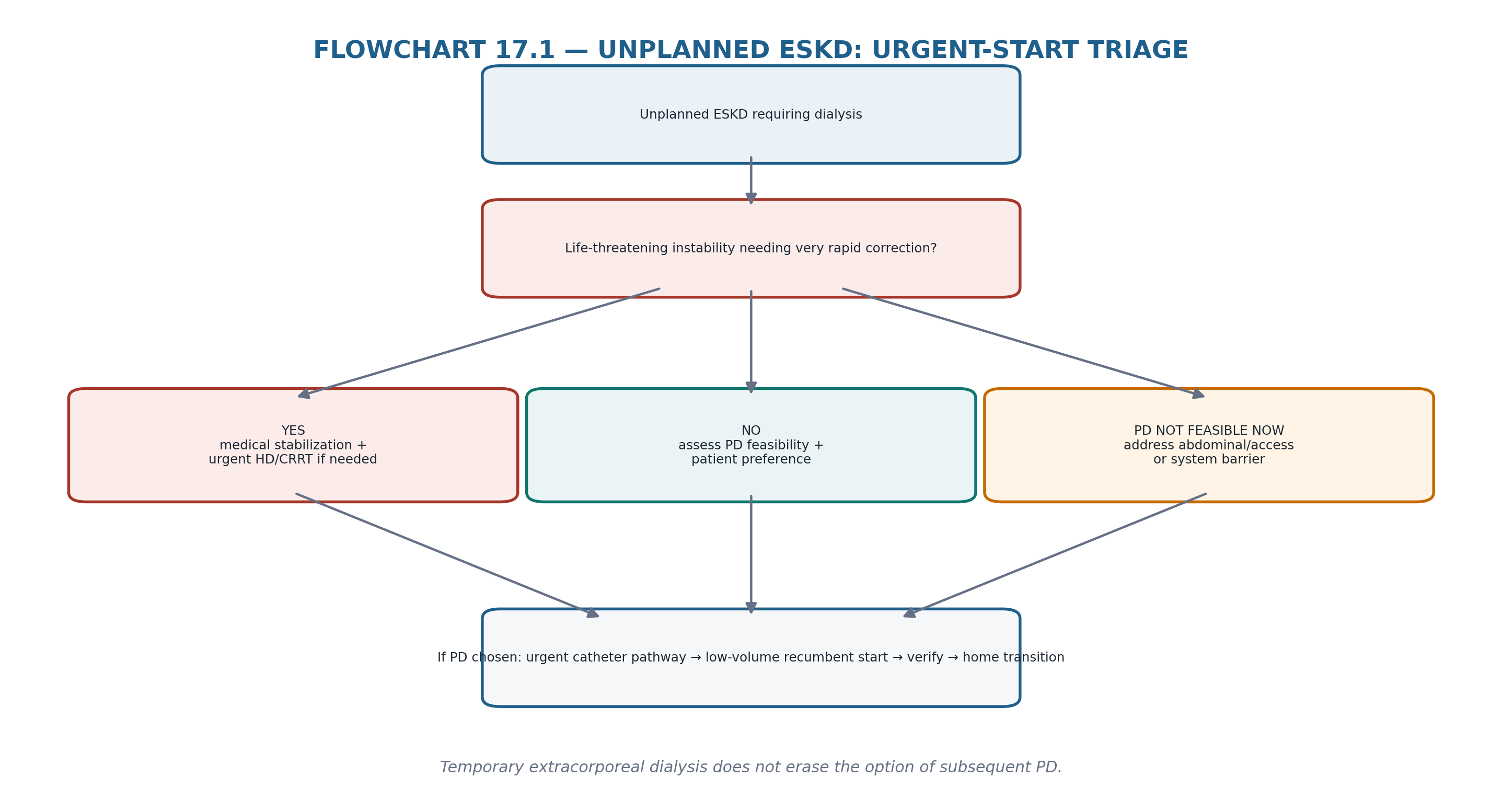
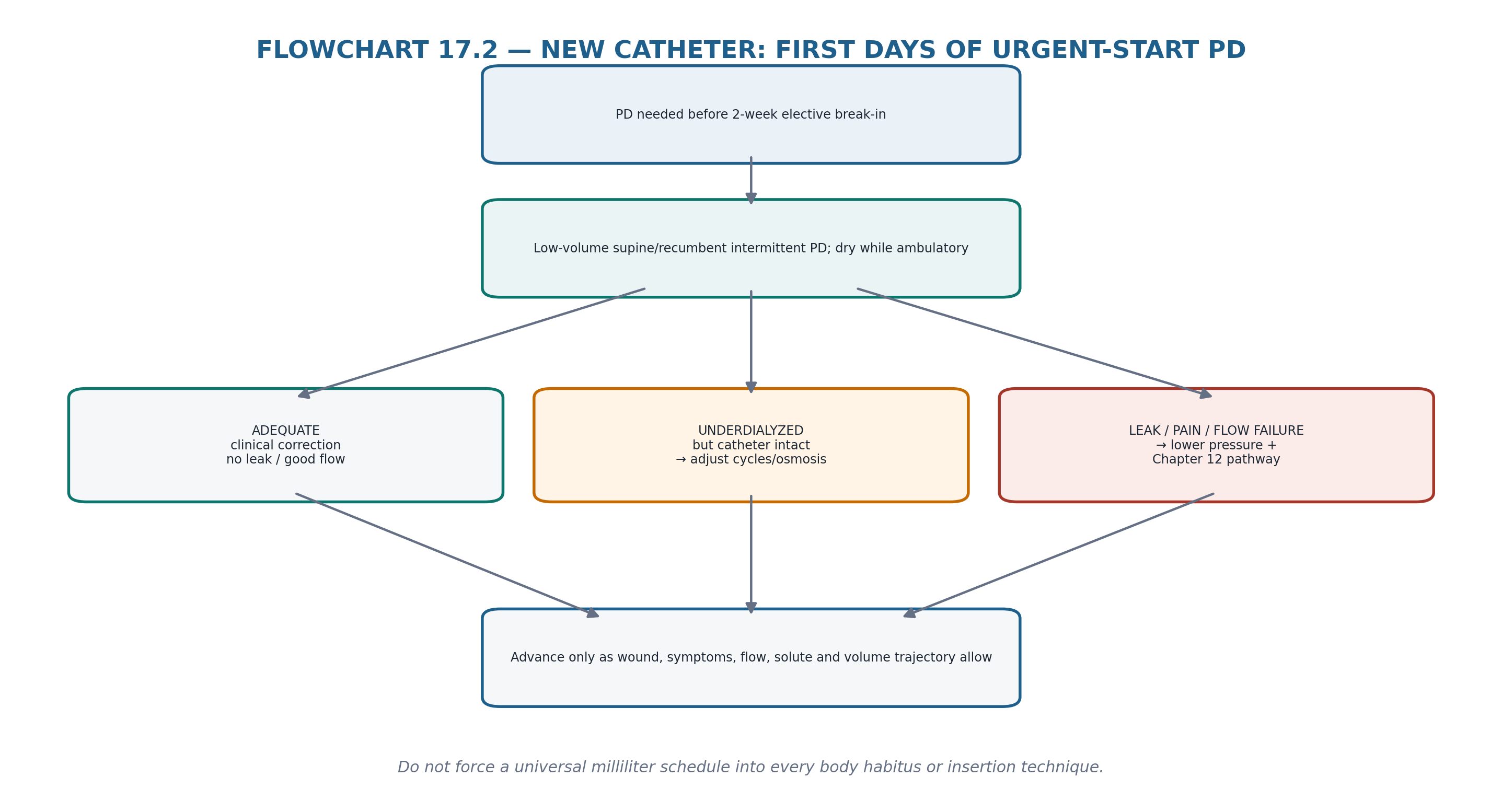
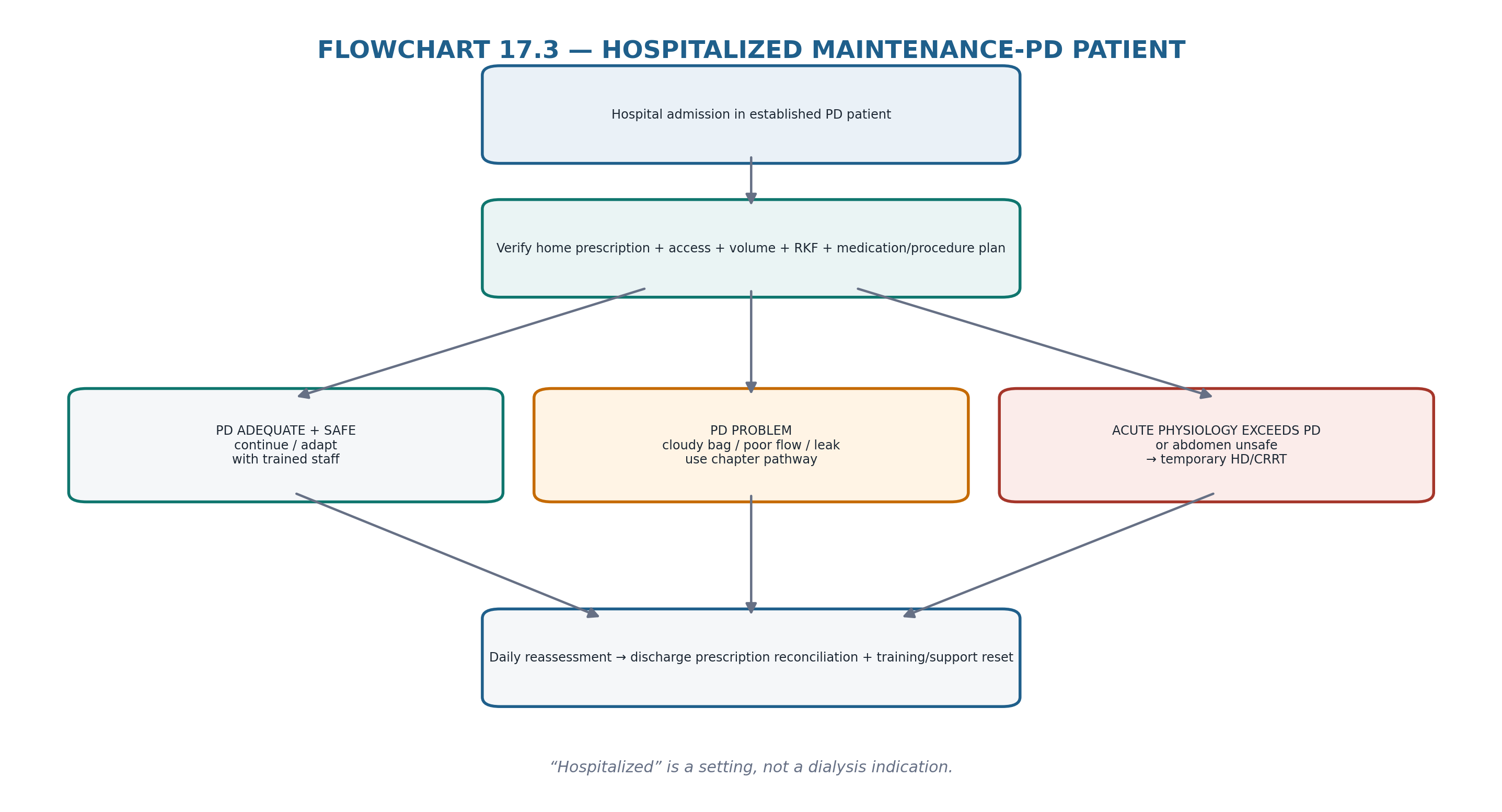
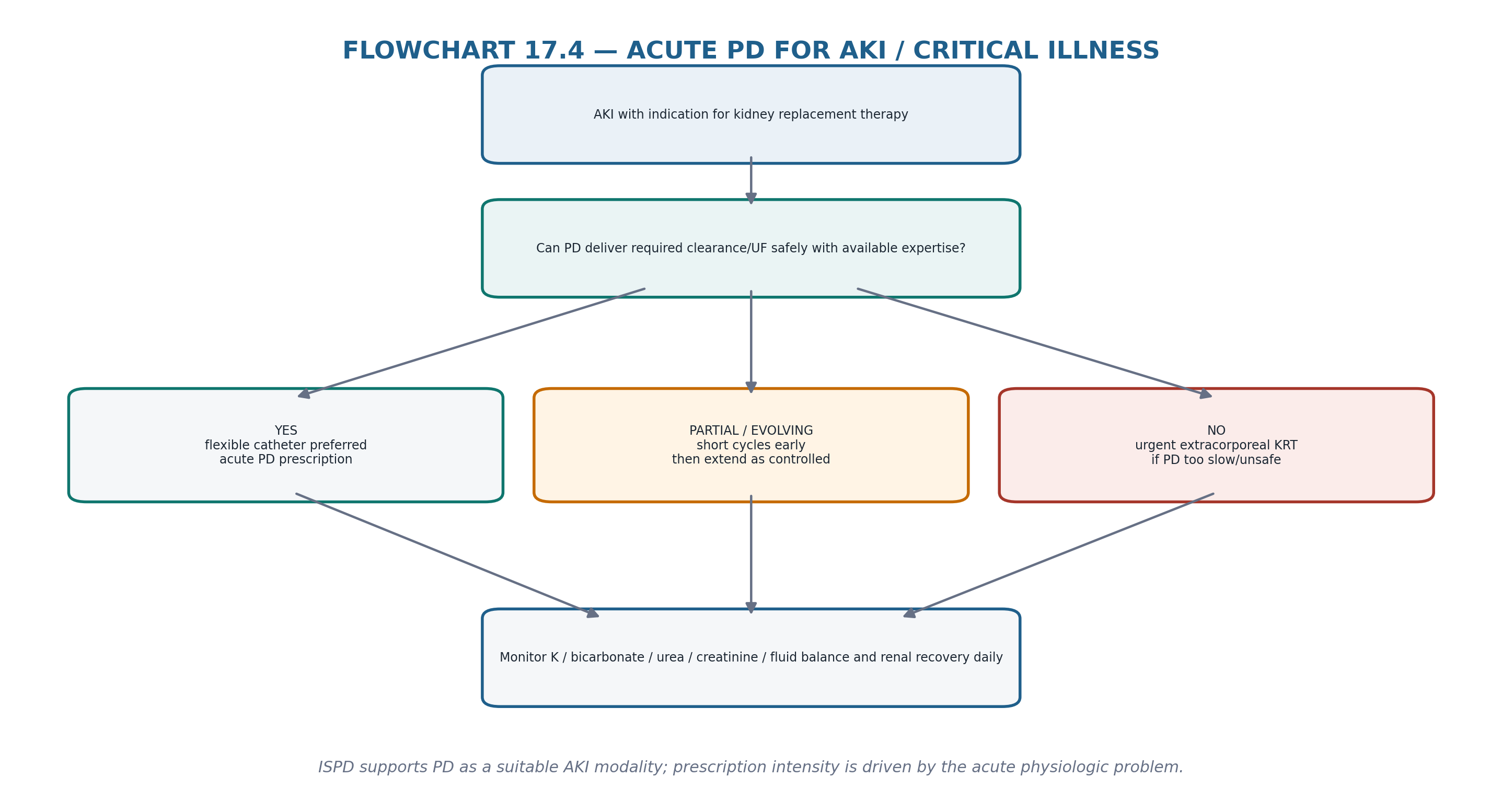
19. Retention tables: pattern recognition
Table 17.19 — If you see this, think this first.
| Finding | First hypothesis | Immediate move |
|---|---|---|
| PD needed 3 days after catheter insertion | Urgent-start pressure problem | Low-volume recumbent PD; dry when ambulatory |
| Wet dressing after first exchanges | Early pericatheter leak | Drain/reduce pressure; Chapter 12 pathway |
| Stable hospital admission for pneumonia | PD can usually continue | Reconcile prescription and adapt only if needed |
| Cloudy effluent after colonoscopy | Peritonitis risk | Immediate Chapter 10 assessment |
| Severe pulmonary edema despite PD | Acute UF need may exceed current PD | Escalate/bridge rather than persist ineffectively |
| Intubation with rising airway pressures after fill | Intra-abdominal/respiratory interaction | Reduce fill/drain and reassess mechanics |
| Cardiac surgery planned | No automatic HD conversion | Coordinate perioperative PD plan |
| Iodinated contrast CT required | Do not “dialyze the contrast” reflexively | Use justified contrast + euvolemia; routine PD |
| AKI improving with urine recovery | Acute PD may no longer be needed | Trial interruption when clinically appropriate |
Table 17.20 — What not to confuse.
| Do not confuse | With | Correction |
|---|---|---|
| Urgent-start maintenance PD | Acute PD for AKI | Different endpoint and dose framework |
| Hospital admission | Indication for HD | Preserve PD if safe/adequate |
| New catheter | Need to wait 2 weeks at all costs | Urgent low-volume supine PD is guideline-supported |
| High leak risk | High infection risk | Urgent start primarily increases mechanical complications |
| Temporary HD bridge | Permanent PD failure | Reassess PD after stabilization |
| More dextrose | Better acute volume therapy automatically | Check hemodynamics, sodium, leak and speed needed |
| Abdominal surgery | Permanent PD contraindication | Depends on contamination and peritoneal integrity |
| Contrast exposure | Need for extra PD | No evidence for extra dialysis solely to clear contrast |
20. Clinical pearls
1. Urgent-start PD is a timing strategy for maintenance dialysis; acute PD for AKI is a different therapeutic framework.
2. ISPD recommends at least 2 weeks before elective PD when possible—but explicitly supports earlier low-volume supine PD when needed.
3. The excess complication signal in urgent start is mechanical, especially leak, not a consistent increase in peritonitis.
4. A patient can receive one or more urgent HD treatments and still transition to PD as originally intended.
5. The safest early prescription minimizes pressure while still correcting the clinical problem.
6. There is no universal adult urgent-start fill-volume ladder supported across all programs.
7. Hospitalization is a reason to reconcile PD, not to erase it.
8. Constipation, immobility and opioids are common inpatient causes of poor drainage.
9. Colonoscopy and invasive gynecologic procedures require PD-specific peritonitis-prevention planning.
10. Antifungal prophylaxis should accompany antibiotic courses in PD patients according to ISPD peritonitis guidance.
11. Do not intensify PD merely to remove iodinated contrast.
12. Cardiac surgery does not automatically require conversion from PD to HD.
13. Mechanical ventilation is not itself a contraindication to PD; respiratory mechanics and intra-abdominal pressure matter.
14. For acute PD in AKI, cycle time is a clinical lever: short early when rapid correction is needed, longer once controlled.
15. Discharge after an acute admission is a modality-transition event and deserves a formal handoff.
21. Common pitfalls — and the correction
Table 17.21 — Pitfall → why it fails → correction.
| Pitfall | Why it fails | Correction |
|---|---|---|
| “New catheter means no PD for 2 weeks” | Delays feasible urgent PD and often creates CVC-HD default | Use ISPD low-volume supine urgent-start strategy |
| Starting full routine fills immediately | Raises pressure before tract healing | Low-volume recumbent start + gradual escalation |
| Using one urgent-start protocol for everyone | Body habitus, wound, modality and urgency differ | Individualize within local protocol |
| Persisting with PD despite life-threatening inadequate correction | Delays definitive stabilization | Temporary extracorporeal KRT |
| Converting every hospitalized PD patient to HD | Creates unnecessary access/procedure risk | Continue/adapt PD when safe |
| Ignoring home prescription details | Causes under/overdialysis and medication mismatch | Formal inpatient reconciliation |
| Forgetting abdomen should be empty for selected procedures | Raises procedural/infection issues | Drain + guideline prophylaxis |
| Treating post-op abdominal pain as routine | Can miss leak/peritonitis/surgical abdomen | Mechanism-based assessment |
| Extra PD after contrast solely for clearance | No supporting evidence | Dialyze for clinical indication, not contrast removal |
| Assuming cardiac surgery requires HD | Not supported by observational outcomes | Plan perioperative PD with ICU/surgical team |
| Copying chronic Kt/V logic into acute AKI PD | Different trial framework and endpoint | Use acute-PD guideline dosing/monitoring |
| Discharging on an undocumented temporary prescription | Creates home treatment error | Explicit discharge PD order + follow-up |
22. Mini-cases: decisions, not trivia
| Case 1 — Late presenter, stable A 58-year-old with advanced CKD presents with nausea and edema. Dialysis is needed, but potassium and oxygenation are stable. He chooses PD and has no abdominal contraindication. DECISION: Urgent-start PD is reasonable. Arrange expedited catheter insertion, then a low-volume recumbent prescription rather than default CVC-HD. |
|---|
| Case 2 — Late presenter, unstable A patient wants PD but arrives with severe refractory hyperkalemia, marked pulmonary edema and escalating oxygen requirement. DECISION: Stabilize first with the fastest reliable KRT available—often urgent HD/CRRT—then return to the PD plan once stable. |
|---|
| Case 3 — Wet dressing on day 2 A new urgent-start patient develops clear fluid at the catheter incision after walking with dialysate in the abdomen. DECISION: Suspect an early leak. Drain, reduce pressure, keep dry ambulatory, and use the Chapter 12 leak pathway; do not simply increase dressing changes. |
|---|
| Case 4 — Pneumonia admission An established APD patient is admitted with pneumonia. The non-nephrology team proposes temporary HD “because she is in hospital.” DECISION: Hospitalization alone is not an indication. Reconcile home PD, volume, urine and acute changes; continue/adapt PD if adequate and safe. |
|---|
| Case 5 — Colonoscopy A PD patient is scheduled for inpatient colonoscopy after GI bleeding. DECISION: Coordinate PD-specific preparation: empty abdomen and current guideline-consistent prophylaxis; if pain/cloudy effluent follows, assess immediately for peritonitis. |
|---|
| Case 6 — Intubated patient A maintenance-PD patient is mechanically ventilated for severe pneumonia. Airway pressures rise when large fills are used. DECISION: Drain/reduce fill volume and reassess respiratory mechanics. Intubation itself does not mandate HD, but PD must not worsen ventilation or fail metabolic goals. |
|---|
| Case 7 — Cardiac surgery A stable PD patient is scheduled for CABG. The surgical team wants preemptive conversion to HD. DECISION: Routine conversion is not evidence-based. Build a coordinated perioperative PD plan; convert only for a specific clinical reason. |
|---|
| Case 8 — AKI in ICU A patient without prior CKD develops AKI with oliguria, acidosis and fluid overload in a unit experienced with acute PD. DECISION: This is acute PD for AKI, not urgent-start maintenance PD. Use the ISPD acute-PD cycle/monitoring framework and reassess daily for recovery. |
|---|
23. Active recall
MUST MEMORIZE
Table 17.22 — Non-negotiable recall.
| Question | Answer |
|---|---|
| ISPD elective break-in recommendation? | At least 2 weeks before elective PD start when possible. |
| Urgent start before 2 weeks? | Low-volume exchanges in the supine/recumbent position. |
| Ambulatory period early after urgent start? | Keep cavity dry when possible to reduce leak risk. |
| Main excess complication of urgent start? | Mechanical complications, particularly leaks. |
| Hospital admission means automatic HD? | No. Continue/adapt PD when safe and adequate. |
| Colonoscopy/invasive gynecologic procedure? | Empty abdomen + guideline-consistent antibiotic prophylaxis. |
| Systemic antibiotics in PD? | Use ISPD-recommended antifungal prophylaxis. |
| Extra PD after contrast solely for clearance? | No evidence-based indication. |
| PD in AKI? | ISPD considers PD a suitable KRT modality. |
| Acute PD cycle time early in severe metabolic/volume problems? | Short cycles may be needed; extend once controlled. |
USE AS REFERENCE
Exact adult urgent-start starting fill volumes and escalation schedules: local protocol + patient factors.
Procedure-specific antimicrobial regimen: current ISPD/local antimicrobial guidance.
Post-abdominal-surgery PD restart timing: operation-specific surgical/nephrology plan.
Acute-PD Kt/V dose calculations: ISPD acute-AKI guideline and local ICU protocol.
Contrast/gadolinium agent selection: current radiology/nephrology guidance.
ICU proning, ventilation and intra-abdominal-pressure management: critical-care protocol and individual mechanics.
24. Flashcards: spaced repetition
Table 17.23 — Flashcards.
| Front | Back |
|---|---|
| What is the break-in period? | Time from PD catheter insertion to initiation of PD. |
| What does ISPD recommend before elective PD? | At least a 2-week break-in when possible. |
| How should urgent PD start before 2 weeks? | Low-volume supine/recumbent intermittent exchanges, with dry ambulatory periods to reduce leak risk. |
| Why low volume? | To reduce intraperitoneal pressure on the healing tract. |
| Why does upright posture matter? | It increases intraperitoneal pressure and leak stress. |
| What is the main early urgent-start trade-off? | More mechanical complications, especially leaks. |
| Does urgent start clearly increase peritonitis? | Meta-analyses generally do not show a clear increase versus conventional start. |
| Can urgent HD be used before PD? | Yes—as stabilization/bridge therapy without abandoning the long-term PD plan. |
| What is the first inpatient PD task? | Reconcile the actual home prescription and access/volume/RKF status. |
| Does NPO status require stopping PD? | No; adapt prescription and glucose/volume plan as needed. |
| What often causes new inpatient drain failure? | Constipation, immobility, bladder distention or catheter mechanics. |
| What should be done before colonoscopy? | Drain the abdomen and use guideline-consistent prophylaxis. |
| What accompanies systemic antibiotic therapy in PD? | Antifungal prophylaxis per ISPD guidance. |
| Should PD be intensified just to clear iodinated contrast? | No. |
| Does cardiac surgery mandate HD? | No; perioperative PD can often be maintained. |
| Does intubation mandate HD? | No; assess respiratory mechanics and PD adequacy. |
| What is acute PD for AKI? | PD used as temporary kidney replacement therapy for an acute kidney insult. |
| How are acute-PD cycle times chosen? | By the urgency of uremia, K, acidosis and fluid overload. |
| When can acute PD cycles lengthen? | After the acute metabolic/volume problems are controlled. |
| What is the discharge risk after hospitalization? | Unreconciled prescription/support changes causing technique failure or treatment error. |
25. Rapid differential / troubleshooting
Table 17.24 — Acute PD troubleshooting matrix.
| Presentation | Think first | Do now | Escalation |
|---|---|---|---|
| Poor drainage after admission | Constipation/immobility/bladder/catheter | Bowel/bladder + position + Chapter 12 checks | Imaging/revision if persistent |
| New clear fluid at wound | Pericatheter leak | Drain/reduce pressure | Peritoneal rest/bridge if significant |
| Cloudy effluent | Peritonitis | Cell count/culture + Chapter 10 treatment | Source control if refractory |
| Dyspnea during fills | Overload vs pressure/pleural issue | Drain, examine volume, chest assessment | Bridge KRT if PD cannot meet need |
| Rising K despite PD | Insufficient small-solute clearance / catabolism | Check delivery; shorten cycles if appropriate | HD/CRRT if urgent/refractory |
| Hypotension with high-dextrose inpatient PD | Over-removal / sepsis / low effective volume | Reassess hemodynamics and UF intensity | Critical-care support |
| Post-op abdominal pain | Expected pain vs leak/peritonitis/surgical complication | Focused exam, effluent and surgical assessment | Hold PD/bridge when peritoneum unsafe |
| Unexpected hyperglycemia | Acute illness + dialysate glucose | Review solution + diabetes plan | Specialist diabetes input |
| Repeated alarms in unfamiliar ward | Setup/system/staff issue | PD-trained review and cycler check | Move to trained unit if unsafe |
26. Final revision sheet
| CORE CONCEPT Acute PD care is a matching problem: clinical clock + abdominal safety + access maturity + dialysis speed + hospital capability + long-term modality goal. |
|---|
One-minute revision
Table 17.25 — One-minute chapter summary.
| Domain | Memory anchor |
|---|---|
| Urgent start | <2-week start can be done; protect the healing tract |
| Elective start | ≥2-week break-in recommended when possible |
| Pressure | Low volume + recumbent + dry ambulatory early |
| Triage | If PD is too slow for the immediate threat, bridge |
| Mechanical risk | Leak is the classic excess early complication |
| Hospitalization | Reconcile and preserve PD when safe |
| Procedures | Empty abdomen + correct prophylaxis for high-risk procedures |
| Antibiotics | Remember antifungal prophylaxis |
| Contrast | No extra PD solely to remove contrast |
| Surgery | Peritoneal integrity determines feasibility |
| ICU | Ventilation does not automatically preclude PD |
| AKI | PD is a valid acute KRT modality; cycle intensity follows physiology |
| Transition | Discharge/handoff is part of technique survival |
| TEN TAKE-HOME RULES 1) Separate urgent-start ESKD from acute-PD AKI. 2) Use the 2-week elective break-in recommendation correctly. 3) Low-volume recumbent PD is the early-start safety core. 4) Keep the abdomen dry when ambulatory early after insertion. 5) Expect leaks more than infections. 6) Use HD/CRRT as a bridge when immediate correction demands it. 7) Do not convert maintenance PD solely because of hospitalization. 8) Procedures and antibiotics require PD-specific infection prevention. 9) Surgery/ICU decisions are anatomy-and-physiology based. 10) Reconcile the final prescription before discharge. |
|---|
Table 17.26 — One-minute bedside synthesis.
| If you see… | Think… | Do now… |
|---|---|---|
| New catheter + dialysis needed now | Urgent-start pressure strategy | Low-volume recumbent PD |
| Severe unstable hyperK/edema | PD may be too slow now | Stabilize with fastest reliable KRT |
| Wet wound | Leak | Drain/reduce pressure |
| Hospital pneumonia | PD can often continue | Reconcile/adapt prescription |
| Colonoscopy | Peritonitis prevention | Drain + prophylaxis |
| Cardiac surgery | No automatic HD conversion | Coordinate perioperative PD |
| Intubation | Assess mechanics, not label | Reduce fills if needed; verify adequacy |
| AKI with PD program available | Acute PD is valid KRT | Short cycles early if needed + daily monitoring |
| Discharge after temporary HD | Transition hazard | Restore PD plan + remove unnecessary access when safe |
| FINAL MENTAL MODEL CONTEXT → URGENCY → ABDOMEN → ACCESS → PRESSURE → PRESCRIPTION → HOSPITAL SYSTEM → VERIFY → TRANSITION. |
|---|
Rapid oral viva
Define the catheter break-in period and state the ISPD elective recommendation.
Explain why urgent-start PD uses low-volume recumbent exchanges.
Describe when temporary HD/CRRT is a bridge rather than a modality failure.
Build the admission reconciliation for an established PD patient.
Explain how you would prepare a PD patient for colonoscopy.
Describe why iodinated contrast does not require extra PD solely for clearance.
Explain whether PD must be stopped for cardiac surgery.
Describe how mechanical ventilation changes—but does not automatically prohibit—PD.
Distinguish urgent-start maintenance PD from acute PD for AKI.
Explain how acute-PD cycle time changes as hyperkalemia/acidosis/volume overload improve.
| SAFETY BOUNDARY This chapter teaches decision architecture. Exact emergency-dialysis thresholds, urgent-start fill-volume ladders, catheter-insertion technique, procedure-specific antibiotic doses, antifungal regimens, acute-PD dosing calculations, vasopressor/ventilator targets, contrast-agent selection, post-surgical restart timing and temporary-HD access management require current local protocols and specialist judgment. Life-threatening hyperkalemia, acidosis, hypoxemic pulmonary edema, shock, abdominal catastrophe or other instability must not be delayed to preserve a preferred modality. |
|---|
27. Selected authoritative references
1. Crabtree JH, Shrestha BM, Chow KM, et al. Creating and maintaining optimal peritoneal dialysis access in the adult patient: 2019 update. Perit Dial Int. 2019;39(5):414–436. https://doi.org/10.3747/pdi.2018.00232. PMID: 31028108.
2. Cullis B, Al-Hwiesh A, Kilonzo K, et al. ISPD guidelines for peritoneal dialysis in acute kidney injury: 2020 update (adults). Perit Dial Int. 2021;41(1):15–31. https://doi.org/10.1177/0896860820970834. PMID: 33267747.
3. Brown EA, Blake PG, Boudville N, et al. International Society for Peritoneal Dialysis practice recommendations: Prescribing high-quality goal-directed peritoneal dialysis. Perit Dial Int. 2020;40(3):244–253. https://doi.org/10.1177/0896860819895364. PMID: 32063219.
4. Rajora N, Shastri S, Pirwani G, Saxena R. How To Build a Successful Urgent-Start Peritoneal Dialysis Program. Kidney360. 2020;1(10):1165–1177. https://doi.org/10.34067/KID.0002392020. PMID: 35368794.
5. Htay H, Johnson DW, Craig JC, Teixeira-Pinto A, Hawley CM, Cho Y. Urgent-start peritoneal dialysis: is it ready for prime time? Curr Opin Nephrol Hypertens. 2019;28(6):631–638. PMID: 31436551.
6. Xieyi G, Xiaohong T, Xiaofang W, Zi L. Urgent-start peritoneal dialysis in chronic kidney disease patients: a systematic review and meta-analysis compared with planned peritoneal dialysis and with urgent-start hemodialysis. Perit Dial Int. 2021;41(2):179–193. https://doi.org/10.1177/0896860820918710. PMID: 32319854.
7. Xu Y, Jiang W. Comparison of unplanned/urgent-start versus conventional-start peritoneal dialysis: a systematic review and meta-analysis. Semin Dial. 2024;37(3):200–210. https://doi.org/10.1111/sdi.13198. PMID: 38477178.
8. He J, Wu B, Zhang Y, et al. Prognosis of urgent initiation of peritoneal dialysis: a systematic review and meta-analysis. Ren Fail. 2024;46(1):2312533. https://doi.org/10.1080/0886022X.2024.2312533. PMID: 38391179.
9. Duan P, Zhang H, Zhang Y. The effect of urgent-start peritoneal dialysis and urgent-start hemodialysis on clinical outcomes in patients with chronic kidney disease: an updated systematic review and meta-analysis. Int Urol Nephrol. 2024;56(7):2301–2312. https://doi.org/10.1007/s11255-024-03999-6. PMID: 38441869.
10. Albakr RB, Bargman JM. Care of the hospitalised patient receiving peritoneal dialysis: Your questions answered. Perit Dial Int. 2023;43(1):5–12. https://doi.org/10.1177/08968608221125714. PMID: 36113128.
11. Wu J, Cao Y, Wang T. A comparison of clinical outcomes in urgent-start hemodialysis versus urgent-start peritoneal dialysis in end-stage renal disease patients: a systematic review and meta-analysis. Blood Purif. 2025;54(9-10):565–575. https://doi.org/10.1159/000547049. PMID: 40555200.
12. See EJ, Johnson DW, Hawley CM, et al. Urgent-start peritoneal dialysis and patient outcomes: a systematic review and meta-analysis. Nephrology (Carlton). 2019. PMID: 30915761.
13. Blake PG, Jain AK. Urgent Start Peritoneal Dialysis: Defining What It Is and Why It Matters. Clin J Am Soc Nephrol. 2018;13(8):1278–1279. PMCID:PMC6086705.
14. Desbiens LC, Nadeau-Fredette AC. Transitions to and from peritoneal dialysis: your questions answered. Perit Dial Int. 2026;46(2):85–94. https://doi.org/10.1177/08968608251343768. PMID: 40455013.
15. Al Sahlawi M, Zhao J, McCullough K, et al. Peritoneal Dialysis in Critically Ill Patients: Time for a Critical Reevaluation? Clin J Am Soc Nephrol. 2023. PMID: 36754063.
16. Li PKT, Chow KM, Cho Y, et al. ISPD peritonitis guideline recommendations: 2022 update on prevention and treatment. Perit Dial Int. 2022;42(2):110–153. https://doi.org/10.1177/08968608221080586. PMID: 35264029.
17. Kumar VA, Ananthakrishnan S, Rasgon SA, Yan E, Burchette R, Dewar K. Comparing cardiac surgery in peritoneal dialysis and hemodialysis patients: perioperative outcomes and two-year survival. Perit Dial Int. 2012;32(2):137–141. PMID: 21965618.
18. Bassil E, et al. Cardiac Surgery Outcomes in Patients Receiving Hemodialysis Versus Peritoneal Dialysis. Kidney Med. 2024. PMID: 38435071.
19. Bargman JM. Reducing intra-abdominal pressure in peritoneal dialysis patients to avoid transient hemodialysis. Semin Dial. 2018;31(2):209–212. https://doi.org/10.1111/sdi.12676. PMID: 29383761.
20. Aziz F, Chaudhary K. Peritoneal Dialysis in Patients with Abdominal Surgeries and Abdominal Complications. Adv Perit Dial. 2017;33:40–46. PMID: 29668430.
21. Peritoneal dialysis and its impact on intra-abdominal pressure and respiratory mechanics in the critically ill patient: Can PD take the pressure? Perit Dial Int. 2025. PMID: 39654405.
22. Brenner & Rector’s The Kidney. 12th ed. Elsevier; 2024. Chapters on peritoneal dialysis, interventional nephrology and acute kidney injury.
SOURCE NOTE ISPD guideline status and contemporary urgent-start/inpatient evidence were checked 3 September 2026. This chapter intentionally does not impose a universal adult urgent-start starting fill volume, escalation schedule, emergency-dialysis laboratory cutoff, post-surgical restart interval, ICU ventilator threshold or procedure-specific antibiotic dose. Those details vary by insertion technique, clinical urgency, body habitus, abdominal pathology, local antimicrobial policy, critical-care context and program capability. Current local protocols and specialist judgment take precedence.