Applied Nephrology Master Series
Chapter 18
Remote Monitoring, Connected Cyclers and the Future of Peritoneal Dialysis
Connected APD | Remote Monitoring | Alert Triage | Digital Care | Multimodal Sensing | Clinical Decision Support | Adaptive PD
| CHAPTER MISSION Convert digital PD from a device feature into a bedside care system: know what connected cyclers actually measure, distinguish monitoring from management, interpret remote signals within goal-directed PD, build safe alert workflows, recognize where evidence supports benefit, and define the safeguards required before data-driven treatment adaptation. |
|---|
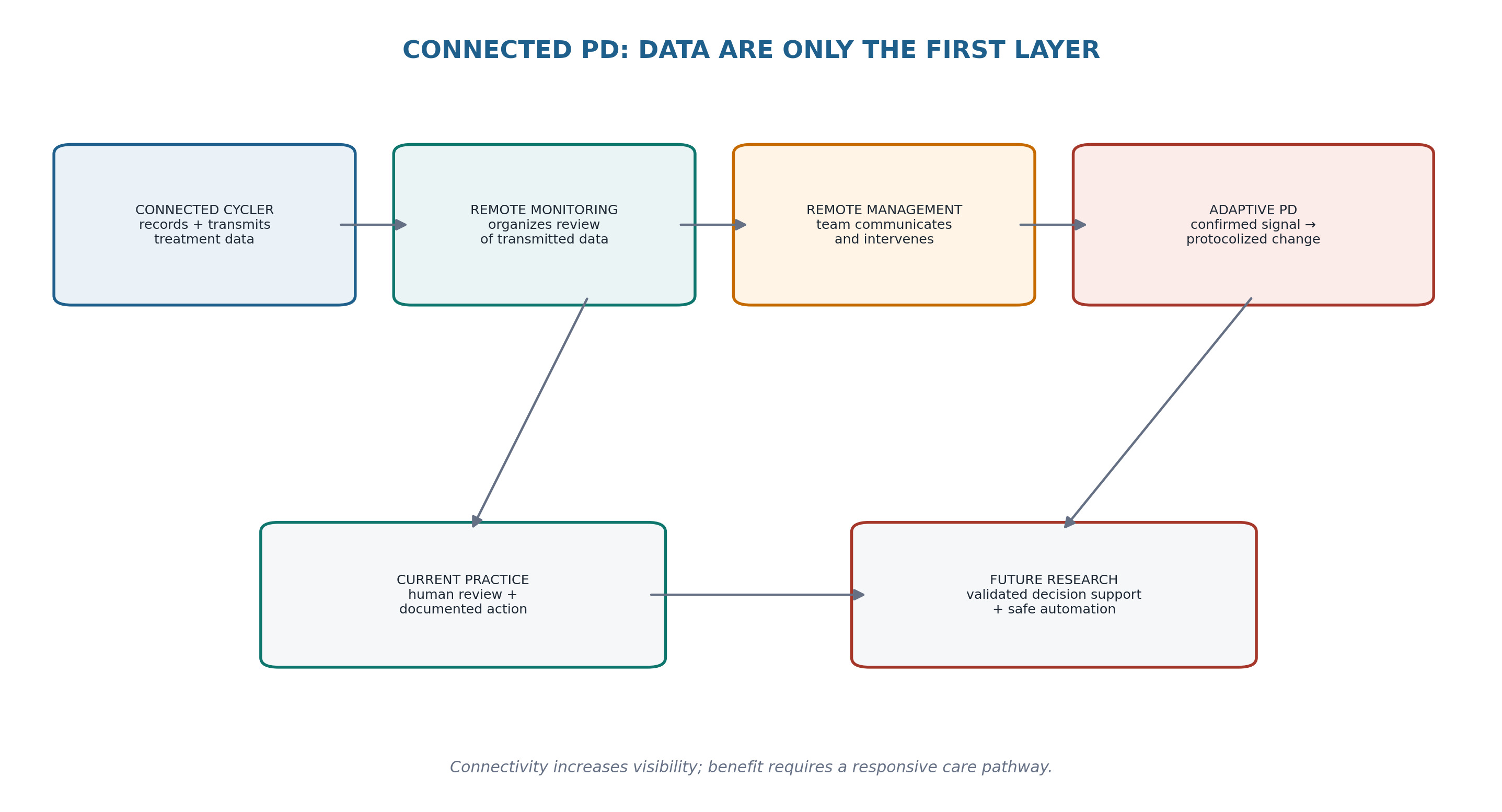
| MASTER PRINCIPLE DATA TRANSMISSION IS NOT TREATMENT. A remote signal becomes clinical care only after data-quality validation, contextual interpretation, accountable human review, appropriate action and reassessment. |
|---|
0. One-page chapter map
Table 18.1 — The eight decisions that govern digital PD.
| Decision | Core question | Bedside output |
|---|---|---|
| 1. Define | Connected cycler, RPM, remote management or adaptive pathway? | Correct intervention named |
| 2. Acquire | Which treatment and patient data are available? | Signal inventory |
| 3. Validate | Are data complete, plausible and correctly attributed? | Trusted information |
| 4. Interpret | What mechanism could explain the trend? | Clinical hypothesis |
| 5. Prioritize | Is the issue routine, time-sensitive or urgent? | Triage level |
| 6. Act | Who owns the alert and what response is allowed? | Accountable intervention |
| 7. Reassess | Did the patient and treatment trajectory improve safely? | Closed clinical loop |
| 8. Govern | Are burden, equity, privacy, cost and model performance measured? | Sustainable digital service |
Learning outcomes
Distinguish connected APD, remote patient monitoring, remote patient management, telehealth, adaptive PD and closed-loop treatment.
Interpret cycler data—treatment time, fills, drains, dwell behavior, ultrafiltration, alarms, bypasses and completion—without treating any single variable as a diagnosis.
Build a remote volume-status pathway that verifies measurement quality and integrates residual kidney function, intake, symptoms and PD prescription.
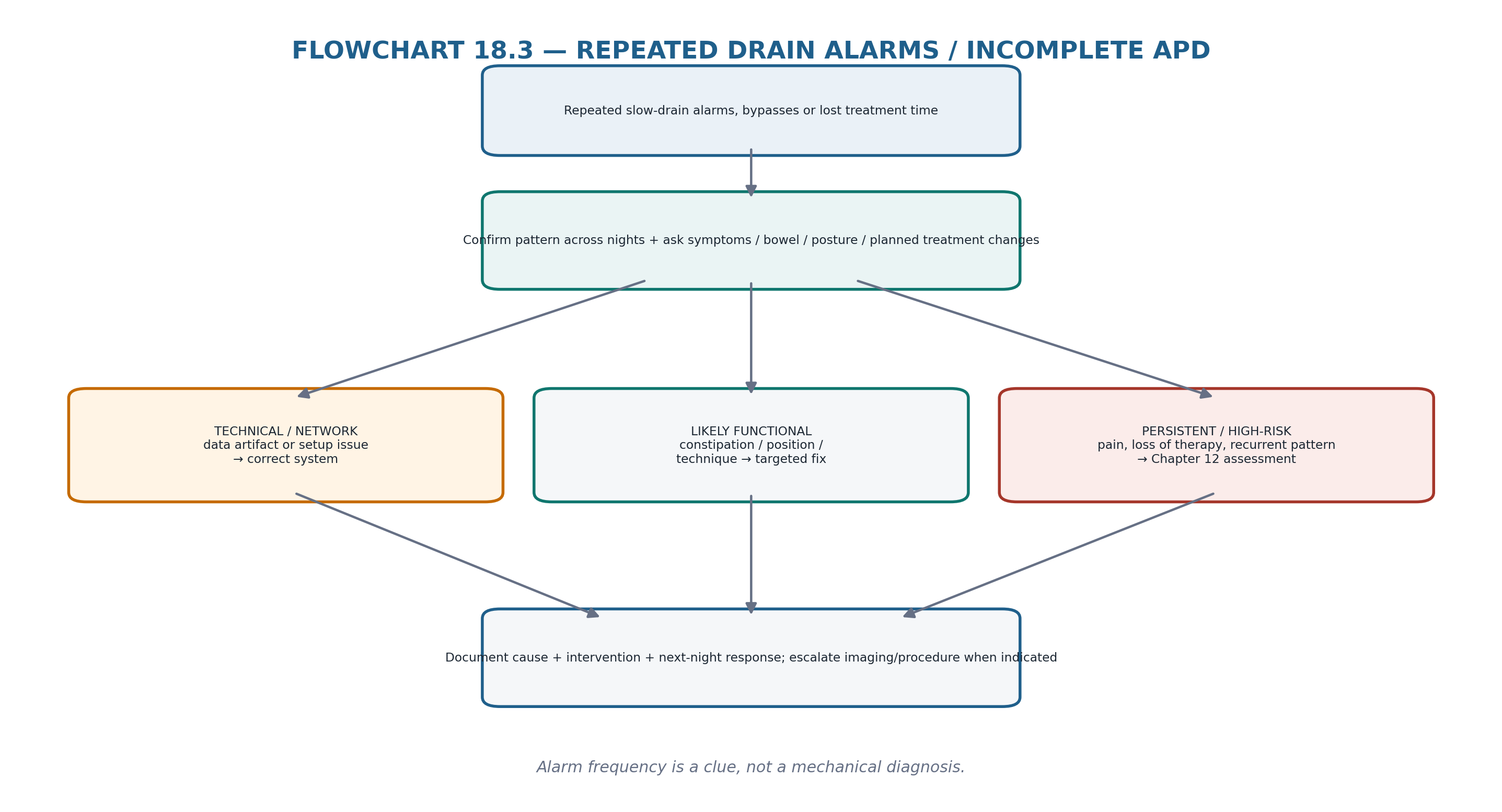
Use repeated drain alarms and incomplete treatments to trigger mechanism-based catheter troubleshooting rather than reflex prescription escalation.
Apply current randomized and real-world evidence without overstating observational or composite-endpoint results.
Explain why remote monitoring benefit depends on staffing, response pathways and patient/caregiver participation rather than connectivity alone.
Design alert ownership, escalation, documentation and after-hours safety rules.
Differentiate adjunctive technologies such as bioimpedance, lung ultrasound and effluent sensing from validated treatment triggers.
Assess AI/ML models by calibration, external validation and clinical utility—not discrimination alone.
Define a human-governed adaptive-PD pathway and explain why fully autonomous prescription change remains investigational.
| EVIDENCE POSTURE ISPD goal-directed prescribing remains the clinical frame. Randomized evidence now includes the 2025 cluster trial of RM-enabled APD and a 2025 app-based fluid-management trial; smaller RCTs support patient satisfaction, workflow and selected quality-of-life effects. Systematic reviews and large observational cohorts generally favor hospitalization or time-on-PD outcomes but remain heterogeneous. A 2026 nationwide Taiwan cohort strengthens real-world evidence yet cannot establish causality. AI, effluent sensing and closed-loop adaptation remain emerging or investigational. [1–12] |
|---|
1. Core concept: home therapy is continuous, clinic assessment is episodic
PD is delivered every day, but conventional follow-up samples the therapy intermittently. Between visits, treatment can shorten, drainage can deteriorate, ultrafiltration can drift, urine output can decline, symptoms can evolve, and the patient or caregiver can struggle with a regimen that looked acceptable at the last clinic encounter. Connected systems reduce this information gap by making parts of treatment delivery visible between visits. The clinical challenge then shifts from “Can we see the data?” to “Can we recognize a meaningful change early enough to improve a patient-important outcome?” [1–4]
Table 18.2 — Visibility does not equal diagnosis.
| Remote finding | What it directly shows | What it does NOT prove |
|---|---|---|
| Low delivered UF | Cycler-measured net fluid removal fell | That the patient is volume overloaded |
| Slow drains | Drain duration/flow changed | That the catheter migrated |
| Lost treatment time | Prescribed exposure was not delivered | Why treatment was incomplete |
| Weight increase | Body weight rose | That the gain is extracellular fluid |
| Missed upload | No data reached the platform | That the patient missed PD |
| Repeated alarms | The machine encountered recurrent events | That the cause is patient behavior |
| BEDSIDE TRANSLATION Connected data are excellent at describing WHAT happened to treatment delivery. They are often weaker at explaining WHY it happened. |
|---|
2. Definitions: separate technology from care
Table 18.3 — Digital-PD terminology.
| Term | Operational meaning | Clinical responsibility |
|---|---|---|
| Connected cycler | Device stores and transmits treatment data | Makes treatment visible |
| Remote patient monitoring (RPM) | Remote review of transmitted device and/or patient data | Identifies patterns requiring assessment |
| Remote patient management | RPM plus communication, clinical intervention and follow-up | Turns information into care |
| Telehealth | Broader remote communication/consultation/education | May or may not include device data |
| Adaptive PD | Confirmed information triggers a prespecified, governed treatment adaptation | Requires protocol + clinician accountability |
| Closed-loop PD | Sensing, decision and treatment change occur with minimal case-by-case human approval | Investigational |
These labels should not be used interchangeably. A connected device can upload data without any organized review. A remote-monitoring program can review data but fail to act in time. An adaptive pathway requires explicit confirmation, response rules, responsibility and reassessment. Fully closed-loop prescription change represents a substantially higher safety and governance threshold than current routine RPM. [3,4]
| TERMINOLOGY RULE When evaluating evidence, ask what the intervention actually contained: connectivity, home measurements, nurse review, clinician feedback, prescription modification, education, or all of them together. |
|---|
3. What a connected APD cycler can show
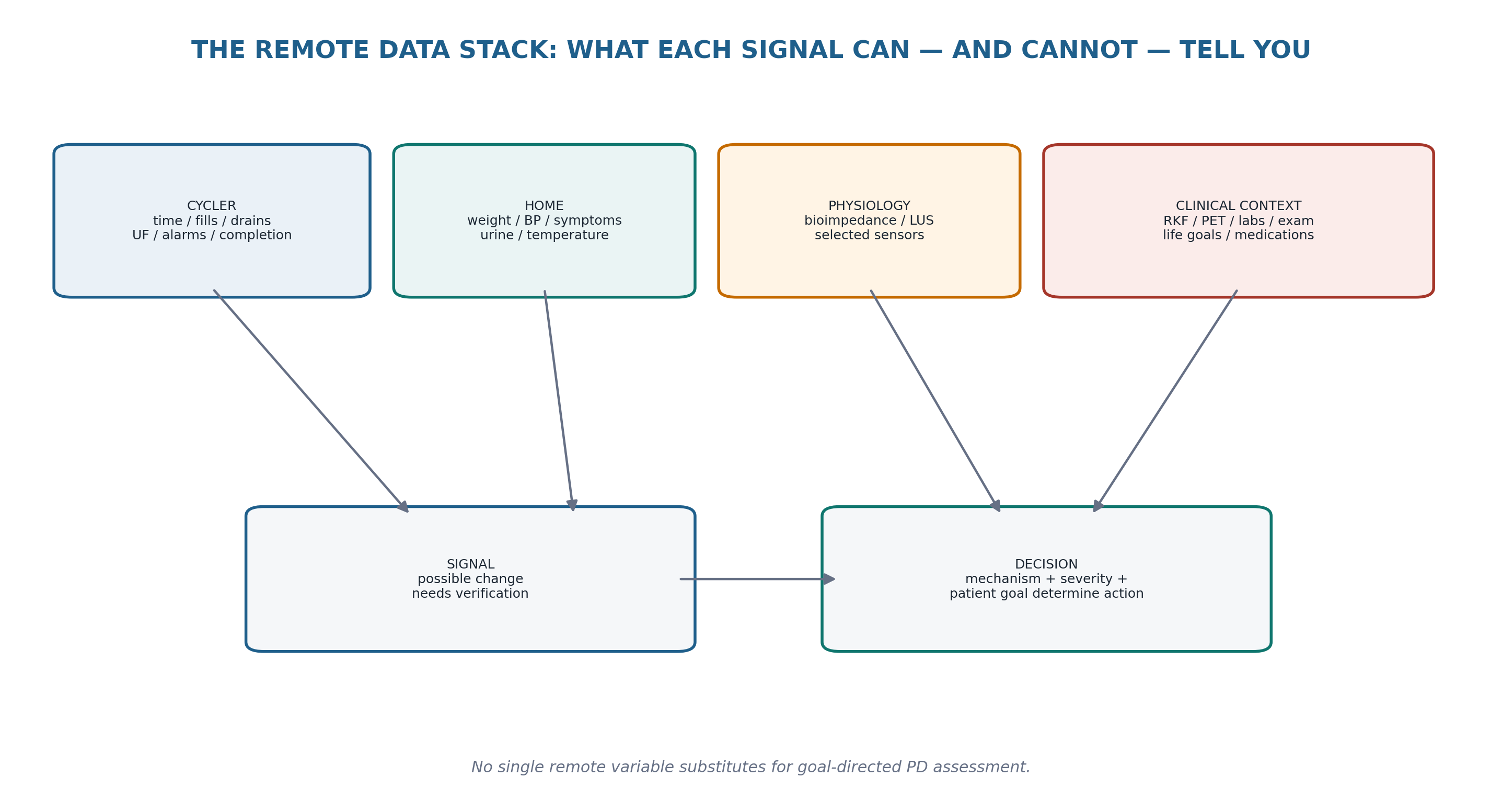
Table 18.4 — Connected-cycler data dictionary.
| Data stream | Useful clinical question | Common interpretive trap |
|---|---|---|
| Prescribed vs delivered time | Was planned treatment completed? | Assuming shortened therapy is intentional nonadherence |
| Fill volumes | Were programmed fills delivered? | Ignoring manual/daytime exchanges not captured |
| Drain volumes / profiles | Is outflow becoming slower or incomplete? | Calling every slow drain catheter migration |
| Dwell duration | Are alarms shortening effective dwell exposure? | Treating clock time as equivalent to transport adequacy |
| Ultrafiltration | Is delivered UF trending down? | Equating low UF with clinical hypervolemia |
| Bypass / lost dwell / lost volume | Is the cycler aborting or shortening therapy? | Ignoring position, constipation or setup problems |
| Alarm frequency/type | Is there a recurring treatment barrier? | Treating alert count as severity |
| Treatment completion | Was the session finished? | Ignoring data-transfer failure or planned deviations |
| MEASUREMENT RULE The platform should preserve the distinction between prescribed, delivered and clinically effective therapy. |
|---|
4. Data quality comes before clinical interpretation
Remote care can fail before physiology is considered. Connectivity loss, incorrect device clock, duplicate records, scale calibration, blood-pressure technique, undocumented manual exchanges, caregiver-entered values, recent hospitalization or a changed prescription can create a false trajectory. Missingness itself may be informative, but it must first be classified as technical, operational, social or clinical. [3,13]
Table 18.5 — Data-quality checklist before acting.
| Check | Question | If abnormal |
|---|---|---|
| Identity | Is this the correct patient and device? | Stop; correct attribution before action |
| Connectivity | Are expected nights uploaded? | Check network/device before labeling missed treatment |
| Prescription version | Does platform order match current clinical order? | Reconcile version and effective date |
| Completeness | Are manual exchanges/home measures missing? | Obtain missing context |
| Plausibility | Is the value physiologically/device plausible? | Repeat/verify measurement |
| Timing | Did acute illness, travel or admission alter the routine? | Interpret within event timeline |
| Technique | Were weight/BP measured consistently? | Retrain or remeasure |
| DO NOT AUTOMATE A data-quality failure must not become a treatment change. No adaptive pathway is safer than the data on which it acts. |
|---|
5. The most useful remote target: treatment delivery and adherence barriers
Connected APD can identify shortened sessions, lost treatment time, repeated bypasses and missing treatment completion. This improves the accuracy of the question “What was delivered?” compared with relying on recall alone. However, a discrepancy should trigger curiosity rather than blame. Causes include alarms, pain, sleep disruption, caregiving responsibilities, electricity/network problems, misunderstanding, deliberate shared decisions, work/travel constraints, depression, cognitive decline or machine setup difficulty. [4,14]
Table 18.6 — Incomplete treatment: remote differential.
| Pattern | Possible cause | Best first response |
|---|---|---|
| Repeated early termination | Alarm burden, sleep intolerance, symptoms | Ask what happened; inspect alarm sequence |
| No upload but patient reports treatment | Connectivity/platform failure | Verify device locally |
| Frequent bypass drain | Poor outflow, constipation, posture | Chapter 12 troubleshooting |
| Shortened cycles after prescription change | New intolerance or program error | Reconcile prescription + symptoms |
| Irregular missed nights | Life burden / support problem | Nonjudgmental barrier assessment |
| Progressive loss of delivered time | Mechanical or caregiver decline | Escalate early before technique loss |
| CLINICAL PEARL The most actionable remote “adherence” intervention is often solving the barrier that made the prescribed treatment unlivable. |
|---|
6. Remote volume management: detect trajectories, not magic thresholds
Volume overload is a plausible high-value target because useful signals already exist: body weight, blood pressure, symptoms, urine output, delivered ultrafiltration, glucose/icodextrin use and prescription changes. The 2025 CKD-PD app randomized trial showed that monitored hydration metrics led to substantially more early clinical interventions for overhydration and fewer all-cause and volume-overload hospitalizations, without a significant survival or technique-failure difference. No universal remote threshold for weight, BP or UF has been validated across PD populations. [6]
Table 18.7 — Remote volume signal → confirmation.
| Signal | Required context | Potential response |
|---|---|---|
| Weight rising over days | Scale quality, edema, intake, constipation, nutrition | Clinical review of sodium/fluid and prescription |
| BP rising | Technique, pain, medications, autonomic status | Confirm pattern; integrate volume phenotype |
| Delivered UF falling | Drain function, glucose exposure, membrane transport, recent prescription | Chapter 8 mechanism assessment |
| Urine falling | Collection reliability, diuretics, acute illness | Quantify RKF; reassess total therapy |
| Dyspnea / orthopnea report | Oxygenation, cardiac/lung cause, hydrothorax | Urgent assessment when clinically indicated |
| Repeated hypertonic use | Why stronger solutions are needed | Investigate sodium intake, RKF loss, membrane/flow/leak problems |
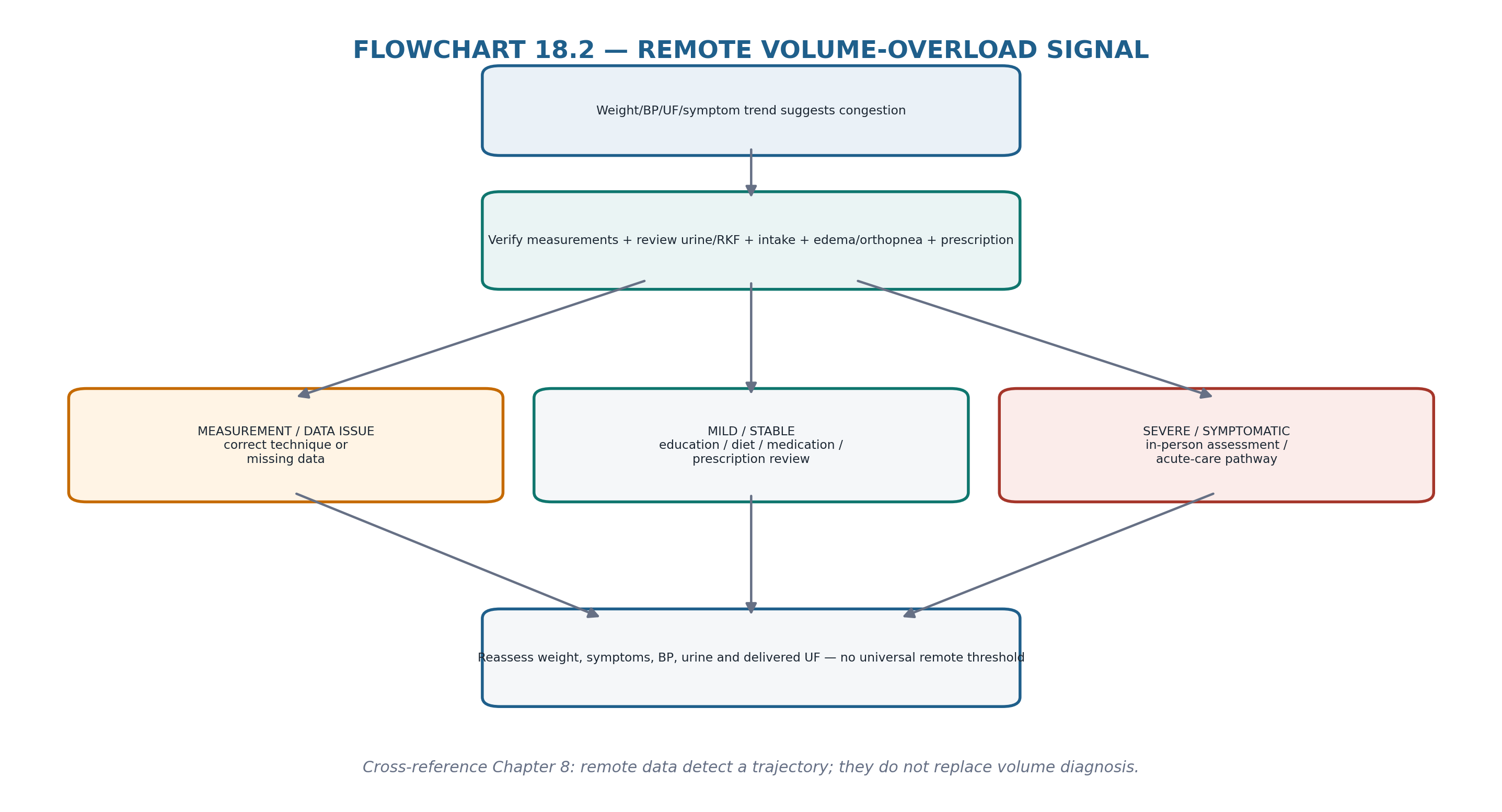
| CROSS-REFERENCE Use Chapter 8 for definitive volume, sodium and ultrafiltration-failure reasoning. Remote monitoring changes WHEN the problem may be recognized—not the underlying physiology. |
|---|
7. Drain alarms and catheter dysfunction: remote pattern recognition
Repeated slow-drain alerts, initial-drain variance, bypasses, reduced effective dwell time and lost therapy volume can reveal evolving mechanical dysfunction before the next clinic visit. A 2026 observational study found that one alarm phenotype—marked initial-drain variance—was associated with later loss from PD, but such thresholds are platform- and study-specific and should not be generalized as universal clinical cutoffs. Alarm data are best used to prioritize assessment for constipation, posture, catheter position, fibrin, kinking, omental entrapment or other causes. [15]
Table 18.8 — Alarm phenotype → bedside hypothesis.
| Remote pattern | Think first | Next step |
|---|---|---|
| Longer drain time only | Constipation/posture/low flow | Bowel + position review |
| Lost treatment time + slow drains | Repeated mechanical interruption | Chapter 12 structured pathway |
| Low UF + slow drains | Incomplete drainage can mimic UF failure | Correct flow before changing osmotic prescription |
| Alarms after new prescription | Fill/drain intolerance or programming issue | Review change timing and settings |
| Sudden multiple alarm types | Setup/power/device problem | Technical check before medical escalation |
| Persistent pattern with pain | Mechanical or intra-abdominal problem | Clinical assessment; image/procedure as indicated |
8. Peritonitis and catheter infection: monitoring can accelerate contact, not replace diagnosis
Cloudy effluent, pain, fever, exit-site abnormalities, altered drainage or a future turbidity sensor should prompt rapid communication and the established diagnostic pathway. Current ISPD peritonitis criteria and catheter-related infection definitions remain the standard; a negative device signal cannot exclude infection in a symptomatic patient. Emerging optical effluent sensing has shown the possibility of pre-symptomatic detection, but false alerts and unproven outcome impact currently limit routine treatment-directed use. [16–18]
Table 18.9 — Digital infection signals.
| Signal | What it can do | What must still happen |
|---|---|---|
| Patient photo of cloudy effluent | Accelerate recognition/contact | Effluent cell count/differential/culture per Chapter 10 |
| Exit-site photo | Support remote triage and follow-up | Direct exam/culture/ultrasound when indicated per Chapter 11 |
| Cycler UF/drain change | Nonspecific early clue | Do not diagnose peritonitis from cycler data |
| Optical/turbidity sensor | May identify abnormal effluent earlier | Clinical validation; symptoms and ISPD testing still govern |
| Temperature/symptom entry | Adds context | Assess severity and alternative infection source |
| SAFETY BOUNDARY A negative sensor or “normal” cycler night must never overrule new abdominal pain, cloudy effluent or systemic illness. |
|---|
9. Randomized evidence: what has actually been shown?
Table 18.10 — Key randomized evidence.
| Study | Intervention | What improved | What did not establish |
|---|---|---|---|
| Jung et al., 2021 | Multicenter RPM-APD vs traditional APD | Selected patient/staff satisfaction and some clinical/process measures | Definitive mortality/technique benefit |
| Uchiyama et al., 2022 | Randomized crossover connected RPM | Treatment satisfaction, convenience, resource use; more prescription modification | Hard-outcome benefit; very small sample |
| Paniagua et al., 2025 | 21-hospital cluster-RCT RM-APD | CV/fluid/insufficient-dialysis composite and several secondary outcomes; fewer deaths/hospitalizations observed | First broad composite endpoint was not significantly different; connectivity alone not isolated |
| Anutrakulchai et al., 2025 | CKD-PD app + monitored hydration metrics | More timely overhydration interventions; fewer hospitalizations | Survival or technique-failure benefit |
| Cely et al., 2026 | MyPD mobile app pilot RCT | Engagement and usability | Outcome-proven disease-modifying effect |
The Paniagua trial materially strengthened the field but should be taught with precision. It cluster-randomized 21 hospitals and enrolled 801 patients. Its first broad composite endpoint did not significantly differ, whereas a second cardiovascular/fluid-overload/insufficient-dialysis composite favored RM-APD and several secondary outcomes were also favorable. The intervention included organized clinical review and response, so the trial evaluates a remote-care pathway rather than “connectivity” in isolation. [5]
| TRIAL INTERPRETATION Do not summarize the 2025 cluster trial as “all endpoints positive.” The evidence is stronger when the exact endpoints and care-pathway components are kept visible. |
|---|
10. Observational evidence: useful, but confounding remains
Earlier multicenter and single-center cohorts repeatedly associated RPM with fewer hospitalizations, fewer unplanned visits, better technique retention or lower resource use. Meta-analyses also report favorable pooled associations. Yet remote monitoring is not randomly distributed: programs differ in staffing, training, patient selection, platform access and contemporaneous quality improvement. These factors can produce healthy-user, center and treatment-era effects. [8–12,19–22]
A 2026 nationwide Taiwan study of 2,477 incident APD patients associated RPM-enabled APD with lower all-cause mortality, less transfer to HD and fewer hospitalizations compared with an earlier conventional-APD era. The scale is important, but the nonconcurrent eras and observational design prevent a causal conclusion. [7]
Table 18.11 — How to read RPM evidence.
| Design | Strength | Main limitation |
|---|---|---|
| Individual RCT | Best control of patient-level confounding | Often small and short |
| Cluster RCT | Tests real program-level workflow | Few clusters; contamination/attention effects |
| Contemporary cohort | Real-world effectiveness | Selection and residual confounding |
| Historical-era cohort | Large implementation signal | Treatment-era changes confound effect |
| Meta-analysis | Summarizes direction/heterogeneity | Can pool dissimilar telehealth interventions |
| Cost model | Policy planning | Highly assumption- and setting-dependent |
11. Bioimpedance, lung ultrasound and home sensors: adjuncts, not remote prescriptions
Bioimpedance can quantify body-water compartments and reveal subclinical overhydration. PD randomized data show improvement in hydration measures with bioimpedance-guided care without consistent evidence of improved survival or technique outcomes. Lung ultrasound identifies B-lines and pulmonary congestion but B-lines are not specific for cardiogenic volume excess; PD-specific remote acquisition and action thresholds are not validated. Weight, BP, oxygen saturation, activity and symptom tools add context but inherit measurement error, adherence and specificity limitations. [23–25]
Table 18.12 — Multimodal sensing maturity.
| Technology | Best current role | Why not a stand-alone trigger |
|---|---|---|
| Home weight/BP | Trend and context | Nonspecific; technique matters |
| Bioimpedance | Body-water phenotype | Physiologic improvement ≠ proven hard-outcome benefit |
| Lung ultrasound | Pulmonary-congestion phenotype | B-lines have multiple causes; remote acquisition variable |
| Wearables/activity | Functional trajectory / acute illness context | Device and behavior dependent |
| Pulse oximetry | Acute respiratory context | Not specific for fluid overload |
| Effluent optical sensing | Early abnormal-effluent signal | False alerts; clinical impact not yet proven |
12. Remote prescription modification: the order must remain traceable
Some connected platforms allow a clinician to modify device settings remotely. This is operationally powerful because a validated change can reach the cycler without requiring the patient to reprogram a complex prescription. The clinical order nevertheless requires the same safeguards as any dialysis prescription: correct patient, indication, effective date, version control, authorization, patient/caregiver communication, confirmation that the device received the change, and a defined reassessment endpoint. [3,4]
Table 18.13 — Remote prescription-change safety.
| Before change | During change | After change |
|---|---|---|
| Confirm problem and mechanism | Use authorized clinical workflow | Verify transmission and applied settings |
| Confirm patient/device identity | Record exact prescription version | Confirm patient/caregiver understanding |
| Review BP/volume/RKF/symptoms | Avoid simultaneous untraceable changes | Review next treatment data |
| Define expected benefit + harm | Keep rollback/override path | Document response and adverse effects |
| VERSION-CONTROL RULE A remote prescription is not complete when the clinician clicks “send.” It is complete when the correct patient receives the intended settings and the clinical response is verified. |
|---|
13. Alert architecture: every signal needs an owner
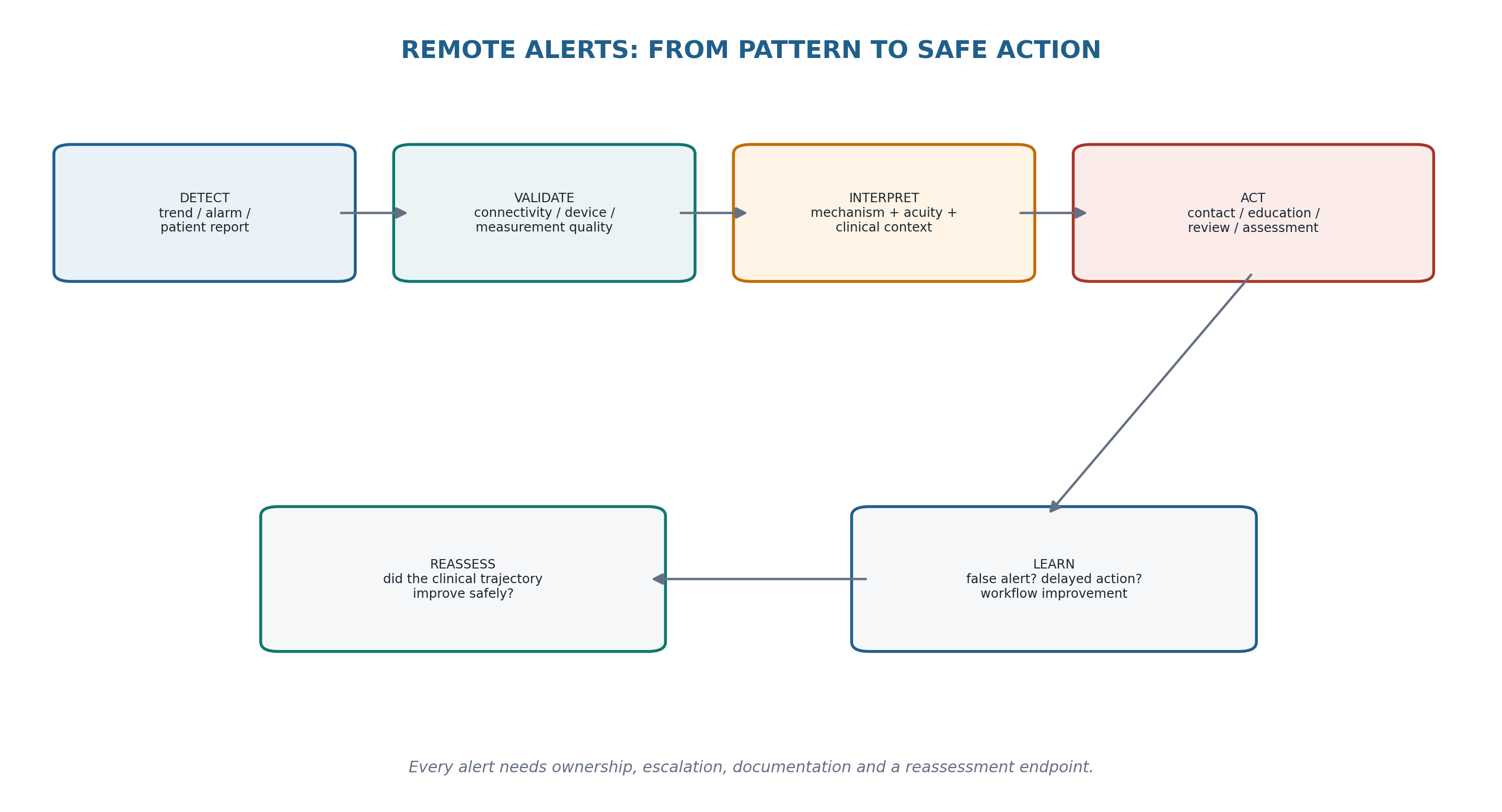
Table 18.14 — Minimum alert-governance fields.
| Field | Question the program must answer | Failure if absent |
|---|---|---|
| Owner | Which role reviews this alert? | Nobody assumes responsibility |
| Review cadence | When is the dashboard actually checked? | Patient assumes 24/7 surveillance |
| Severity tier | Which patterns are routine vs urgent? | Alert overload or delayed escalation |
| Response protocol | What confirmation/action is allowed? | Inconsistent care |
| After-hours plan | What happens outside staffed review? | Unsafe false reassurance |
| Documentation | Where are contact/action/outcome recorded? | No audit trail |
| Reassessment | When is response evaluated? | Open loop |
| Escalation | When does remote care become in-person/ED care? | Remote management beyond safe limits |
| ALERT-FATIGUE RULE More alerts do not equal safer care. Low-value, duplicate or non-actionable alerts consume the same finite attention needed for high-risk events. |
|---|
14. Digital equity: inability to connect is not nonadherence
Remote care can reduce travel and improve access, but it can also create a new eligibility barrier. Broadband reliability, electricity, device ownership, language, literacy, vision, hearing, dexterity, cognition, caregiver availability and technical confidence determine whether a digital pathway is usable. Programs should maintain alternatives—telephone, paper, community or clinic review, store-and-forward images, professional assistance—rather than making connectivity a prerequisite for safe PD. [26,27]
Table 18.15 — Equity screen for digital PD.
| Barrier | How it appears | Adaptation |
|---|---|---|
| Unreliable connectivity | Missing uploads / delayed data | Offline fallback + telephone pathway |
| Language/literacy | Low app use / misunderstood alerts | Translated/simple interface + teach-back |
| Visual/dexterity limitation | Difficulty entering data or operating device | Care-partner/assisted workflow |
| Cognitive impairment | Inconsistent tasks / alarm response | Simplify + professional/family assistance |
| Financial/resource barrier | Device/data-plan burden | Program-funded access where feasible |
| Rural distance | Hard in-person escalation | Local network + defined emergency pathway |
| EQUITY RULE Digital monitoring should expand supportability, not redefine the least connected patients as “poor candidates” for PD. |
|---|
15. Economics and workload: count the work moved, not only visits avoided
Economic studies suggest that RPM can be cost-effective in some health systems and may reduce travel, in-person visits and hospital use. A 2023 Polish model estimated an ICER below its national willingness-to-pay threshold; a 2025 Korean home-care analysis also favored cost-effectiveness. Such conclusions depend on platform price, staffing, hospitalization effect, reimbursement and geography. Digital care can save patient travel while increasing nurse review, messaging and alert triage. Both sides of the ledger should be measured. [28,29]
Table 18.16 — Digital-PD workload ledger.
| Potential saving | Potential new workload | Measure both |
|---|---|---|
| Fewer routine trips | Dashboard review time | Patient + staff time |
| Fewer urgent visits | Alert triage/messages | Visits avoided vs contacts created |
| Earlier troubleshooting | More detected low-grade issues | Time to resolution + alert burden |
| Remote prescription change | Version control/documentation | Number of safe changes + errors |
| Patient reassurance | Expectation of continuous surveillance | Patient experience + anxiety |
16. AI and prediction models: prediction is not intervention
Machine-learning studies in PD now target mortality, technique loss, peritonitis and other outcomes. A 2024 systematic review found heterogeneous, mainly retrospective studies with limited external validation. More recent work is beginning to use temporal validation and platform-derived alarm features. These advances can improve prioritization research, but a model that predicts risk does not establish which action helps the patient. Clinical use requires calibration, transportability, decision utility, subgroup performance, model-drift monitoring and prospective impact evaluation. [30–33]
Table 18.17 — Model maturity ladder.
| Stage | Required evidence | Clinical status |
|---|---|---|
| Development | Internal discrimination + calibration | Research |
| Temporal validation | Performance in later patients | Still research |
| External validation | Different center/platform/population | Candidate tool |
| Silent prospective phase | Real-time predictions without changing care | Safety/feasibility testing |
| Impact trial | Model-guided care vs comparator | Tests clinical utility |
| Post-implementation monitoring | Drift, overrides, subgroup harms, outcomes | Required for sustained use |
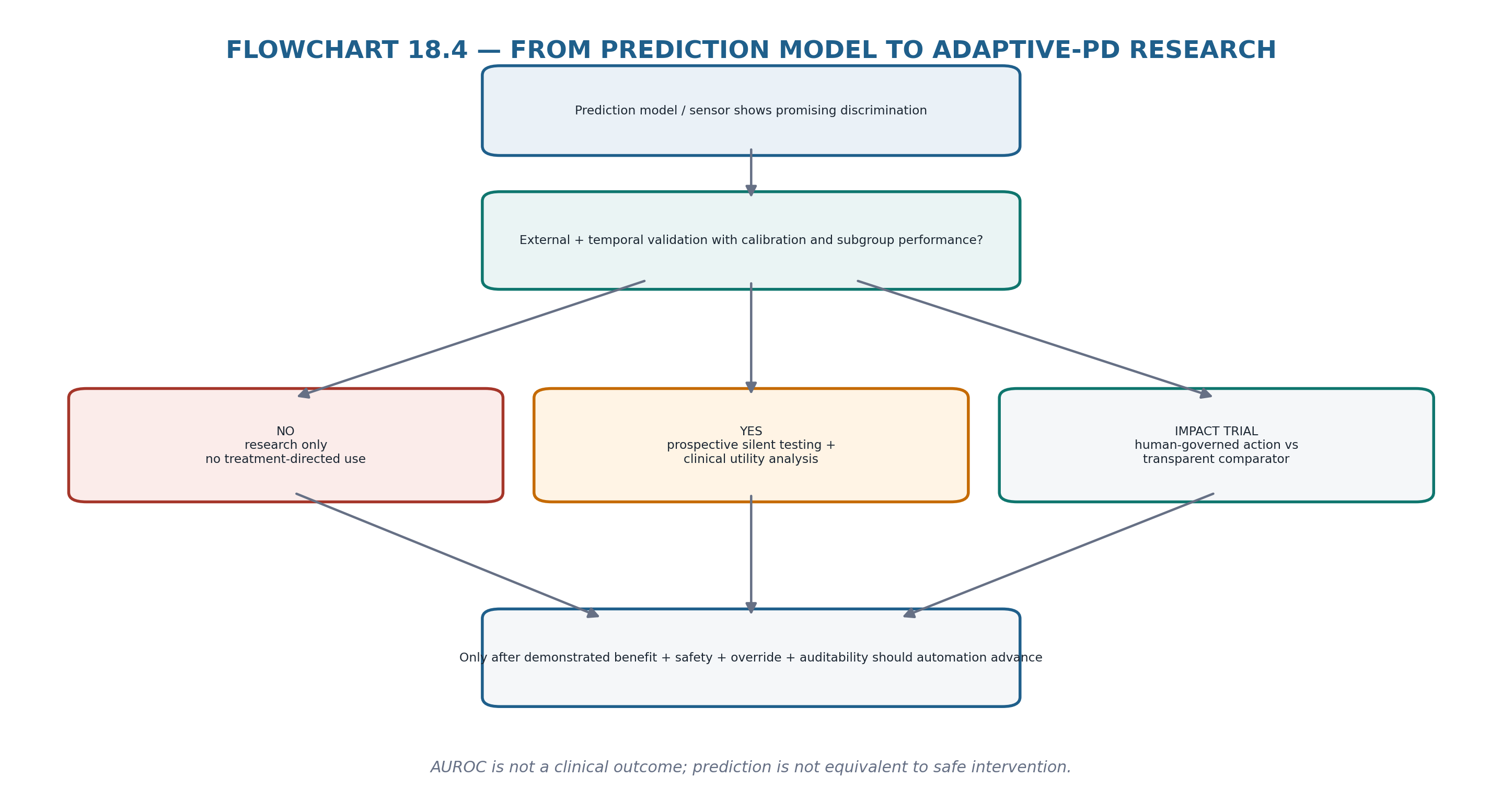
| AI RULE An AUROC is not a treatment effect. No prediction model should bypass the clinical question: “What action improves this patient’s outcome?” |
|---|
17. Adaptive PD: the future is a governed learning loop
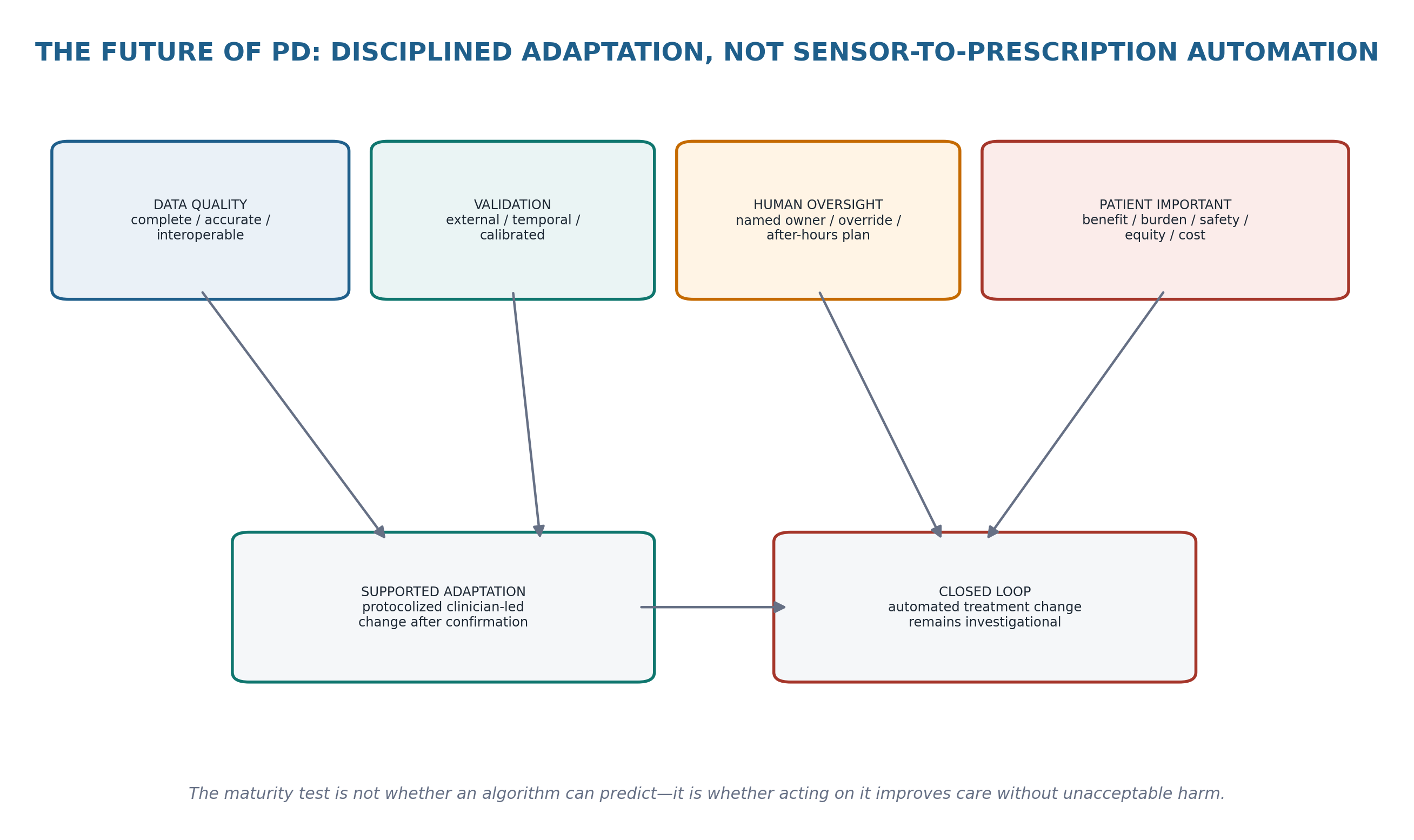
Adapted APD already exists as a prescription concept: cycles can use different dwell durations and fill volumes to individualize therapy. Digital “adaptive PD” is a broader idea—using confirmed longitudinal information to select or adjust therapy within a predefined pathway. The safest near-term form is clinician-governed adaptation, not autonomous control. [34,35]
Table 18.18 — Human-governed adaptive-PD pathway.
| Step | Required question | Safety gate |
|---|---|---|
| Acquire | What new information was captured? | Data completeness |
| Validate | Is the signal real? | Technical/measurement check |
| Interpret | Which PD mechanism explains it? | Clinical context |
| Prioritize | How urgent and consequential is it? | Severity rules |
| Act | What evidence-based response is appropriate? | Named clinician/protocol |
| Reassess | Did benefit occur without harm? | Defined endpoint |
| Learn | Should threshold/workflow change? | Audit + CQI |
| Automate later? | Has prospective benefit and safety been proven? | Override + auditability + equity |
| FUTURE BOUNDARY Closed-loop treatment belongs in a research framework until control limits, failure modes, human override, auditability and patient-important benefit are prospectively demonstrated. |
|---|
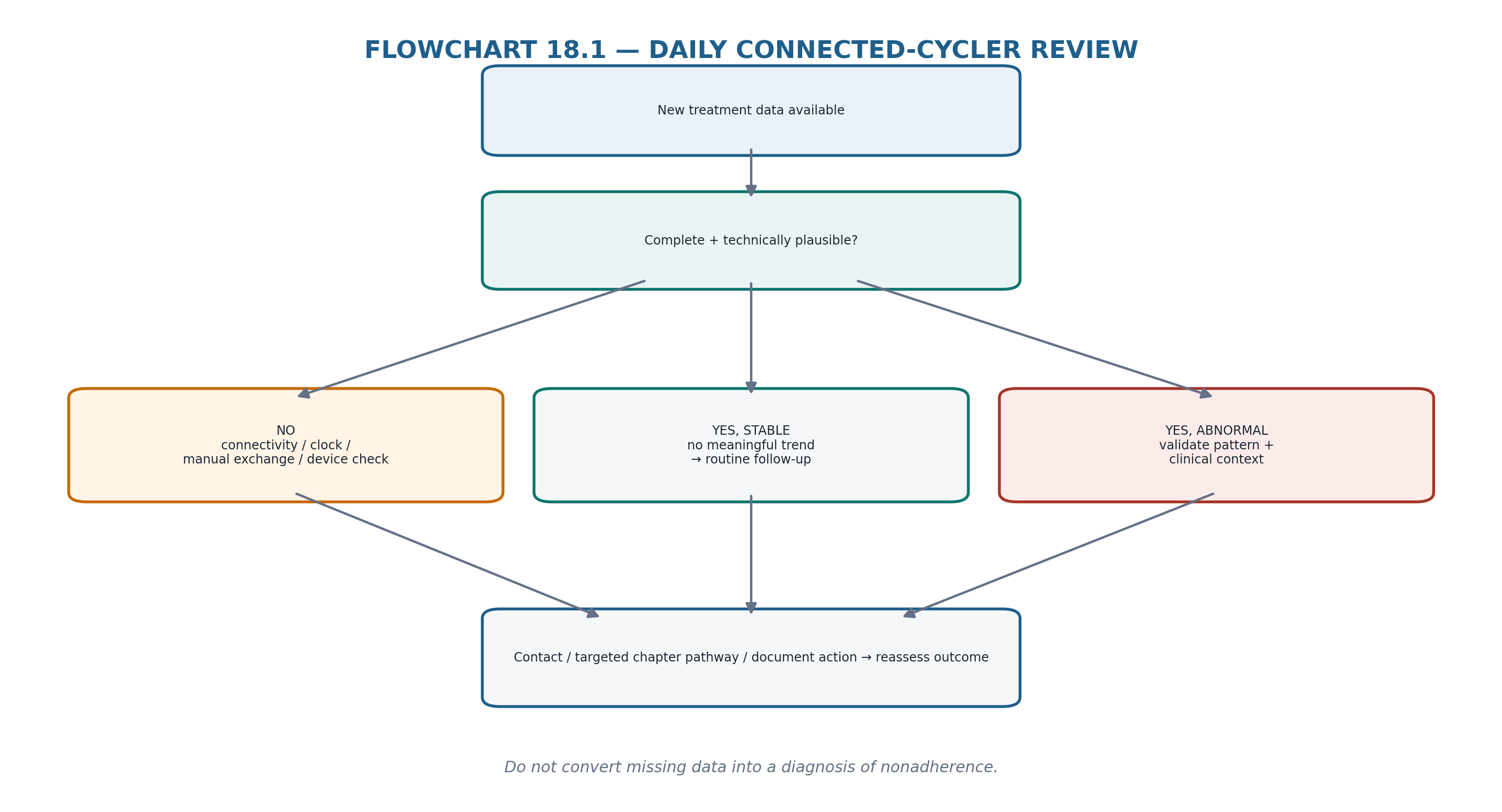
18. Major clinical algorithms
19. Retention tables: pattern recognition
Table 18.19 — If you see this remotely, think this first.
| Remote pattern | First hypothesis | Immediate next step |
|---|---|---|
| Three nights of low UF | Data/drain/prescription/volume issue—not a diagnosis | Verify data + Chapter 8 phenotype |
| Progressively longer drains | Constipation/posture/catheter mechanics | Bowel + Chapter 12 review |
| No upload for 2 nights | Connectivity or treatment gap | Contact; do not label nonadherence |
| Frequent early terminations | Alarm burden, symptoms or life burden | Ask cause; inspect event sequence |
| Weight ↑ + BP ↑ + urine ↓ | Possible congestion + RKF loss | Confirm measurements + clinical review |
| Cloudy-effluent photo | Possible peritonitis | Immediate Chapter 10 pathway |
| New exit-site photo abnormality | Possible ESI | Chapter 11 assessment |
| Model flags high risk | Risk estimate only | Verify applicability; no automatic treatment change |
Table 18.20 — What not to confuse.
| Do not confuse | With | Correction |
|---|---|---|
| Connected cycler | Remote management | Data upload ≠ clinical response |
| Delivered UF | Euvolemia | Integrate weight, urine, symptoms and cardiovascular context |
| Missing data | Nonadherence | Check connectivity and workflow |
| Alarm count | Diagnosis | Localize mechanism |
| Prediction | Clinical utility | Test whether model-guided action improves outcomes |
| Bioimpedance/LUS abnormality | Prescription order | Adjunctive phenotype only |
| Remote prescription capability | Autonomous care | Clinical order still requires governance |
| Digital access | PD eligibility | Provide non-digital alternatives |
20. Clinical pearls
1. The best connected-cycler question is often “What was actually delivered last night?”
2. Remote monitoring is a surveillance process; remote patient management adds action.
3. Low UF on a cycler is not synonymous with volume overload.
4. A missed upload can be a modem problem, not a missed dialysis session.
5. Repeated drain alarms can reveal a mechanical trajectory before the clinic visit.
6. There is no validated universal remote weight, BP or UF threshold for prescription change.
7. The 2025 cluster trial tested a care pathway with organized response—not connectivity alone.
8. The CKD-PD app RCT supports timely fluid-management intervention, not autonomous fluid prescriptions.
9. A photo can accelerate triage; it does not replace effluent culture or tunnel assessment when indicated.
10. Every alert needs a named owner and after-hours safety statement.
11. Digital equity is a clinical safety issue, not only an access issue.
12. Prediction models need calibration, external validation and impact trials before treatment-directed use.
13. Remote prescription changes require version control and post-change verification.
14. The future target is disciplined adaptation with human override, not sensor-to-prescription automation.
21. Common pitfalls — and the correction
Table 18.21 — Pitfall → why it fails → correction.
| Pitfall | Why it fails | Correction |
|---|---|---|
| Treating a dashboard as a diagnosis | Signals are often nonspecific | Validate and phenotype clinically |
| Calling missing data nonadherence | Connectivity and workflow failures are common | Contact and verify first |
| Acting on one-night low UF | Normal variability / drain artifact | Use trends + clinical context |
| Using universal alert cutoffs | Thresholds vary by platform/population and are unvalidated | Local validation + severity pathway |
| Assuming RPM benefit is device effect | Studies bundle team review and intervention | Describe intervention components |
| Ignoring alert burden | Too many alerts degrade attention | Measure false/duplicate alerts and review time |
| Remote-only peritonitis management | Diagnosis requires effluent assessment and microbiology | Use Chapter 10 pathway |
| Automatic dose escalation when urine falls | RKF loss needs quantification and whole-patient reassessment | Measure before changing |
| Deploying ML after internal AUROC only | Poor transportability/calibration can harm | External validation + impact trial |
| Making digital access mandatory | Excludes vulnerable patients | Offer assisted/non-digital pathways |
22. Mini-cases: decisions, not trivia
Case 1 — Low UF trend
| Scenario | Decision |
|---|---|
| A connected APD patient shows falling UF for four nights and 1.8-kg weight gain. BP is slightly higher, urine output is lower, and no drain alarms are present. | Verify weight technique and intake, assess edema/orthopnea and quantify RKF. Use Chapter 8 volume/UF reasoning before changing osmotic strength. |
Case 2 — “Nonadherence” alert
| Scenario | Decision |
|---|---|
| No cycler data upload for 48 hours. The patient says both treatments were completed normally. | Treat this first as a connectivity/data-quality problem. Confirm device logs locally before documenting missed therapy. |
Case 3 — Slow drains
| Scenario | Decision |
|---|---|
| A patient has rising drain times and repeated bypass alerts but stable weight and UF. They report constipation. | Treat constipation and review posture. If the pattern persists, use Chapter 12 catheter-dysfunction evaluation. |
Case 4 — Cloudy photo
| Scenario | Decision |
|---|---|
| A CAPD patient sends a photo of newly cloudy effluent through the clinic app but reports little pain. | Remote contact accelerates care; it does not lower the diagnostic threshold. Initiate Chapter 10 effluent testing/treatment pathway promptly. |
Case 5 — Remote prescription
| Scenario | Decision |
|---|---|
| A clinician increases fill volume remotely after low clearance. The next morning the patient reports abdominal pressure and new genital swelling. | Stop assuming the change was successful because it transmitted. Reassess for pressure-related leak (Chapter 12), revert/modify safely and document the outcome. |
Case 6 — High-risk AI score
| Scenario | Decision |
|---|---|
| A research model flags imminent peritonitis risk despite normal symptoms and clear effluent. | Do not prescribe antibiotics from a risk score. Confirm model validation status; use enhanced observation/research protocol only if prospectively approved. |
Case 7 — Digital exclusion
| Scenario | Decision |
|---|---|
| An older patient on assisted APD has repeated missing home BP/weight because the caregiver cannot use the app. | Redesign the monitoring pathway—telephone or paper reporting, professional assistance, simplified data capture—rather than declaring the patient unsuitable for PD. |
Case 8 — Composite trial claim
| Scenario | Decision |
|---|---|
| A trainee says “the 2025 RCT proved RPM reduces everything—death, admissions and adverse events.” | Correct the evidence: the first broad composite was not significantly different; the second CV/fluid/efficiency composite and several secondary outcomes favored RM-APD. |
23. Active recall
1. What is the difference between a connected cycler and remote patient management?
2. Which APD data can be reviewed remotely?
3. Why is low delivered UF not equivalent to clinical hypervolemia?
4. What are the first three checks before acting on a remote alert?
5. How should missing data be classified before calling it nonadherence?
6. Which chapter should a persistent slow-drain alert ultimately enter?
7. What did the 2025 Paniagua cluster trial show—and what did its first composite not show?
8. What did the 2025 CKD-PD app trial primarily demonstrate?
9. Why can a negative effluent sensor never exclude symptomatic peritonitis?
10. What minimum fields make an alert system governable?
11. What is the maturity ladder from ML development to clinical impact?
12. Why does a remotely transmitted prescription require version control?
13. What should a digital-equity screen include?
14. What distinguishes human-governed adaptive PD from closed-loop PD?
15. What evidence would be required before autonomous prescription change becomes routine?
MUST MEMORIZE
| Concept | Memory anchor |
|---|---|
| Connected cycler | Makes treatment visible |
| RPM | Organizes remote review |
| Remote management | Adds contact + intervention |
| Adaptive PD | Confirmed signal → governed change → reassessment |
| Closed loop | Investigational automation |
| Low UF | Signal, not volume diagnosis |
| Missing upload | Check connectivity first |
| Alarm governance | Owner + timing + action + escalation + documentation |
| AI model | Validation + calibration + utility + impact |
| Equity | Alternative pathway must exist |
USE AS REFERENCE: exact platform alarm definitions; device-specific remote-programming steps; locally validated thresholds; regulatory/privacy requirements; staffing/after-hours arrangements; current product manuals.
24. Flashcards: spaced repetition
| Q: Connected cycler vs RPM? | Answer |
|---|---|
| A: The cycler records/transmits; RPM organizes remote review of those data. |
| Q: RPM vs remote management? | Answer |
|---|---|
| A: Remote management adds communication, clinical action and follow-up. |
| Q: Most direct cycler question? | Answer |
|---|---|
| A: What treatment was actually delivered? |
| Q: Low UF means overload? | Answer |
|---|---|
| A: No. It requires clinical volume phenotyping. |
| Q: Missing upload means missed treatment? | Answer |
|---|---|
| A: Not until connectivity/device/local logs are checked. |
| Q: Repeated drain alarms suggest? | Answer |
|---|---|
| A: A mechanical/functional trend requiring Chapter 12 localization. |
| Q: Can a photo diagnose peritonitis? | Answer |
|---|---|
| A: No; it can accelerate contact and effluent testing. |
| Q: Universal remote threshold for weight/UF? | Answer |
|---|---|
| A: No validated universal threshold. |
| Q: 2025 cluster RCT key nuance? | Answer |
|---|---|
| A: Broad composite not significantly different; CV/fluid/efficiency composite and several secondary outcomes favored RM-APD. |
| Q: CKD-PD app trial? | Answer |
|---|---|
| A: More timely overhydration interventions and fewer hospitalizations; no significant survival/technique difference. |
| Q: Why alert owner? | Answer |
|---|---|
| A: Unowned alerts create false surveillance and delayed action. |
| Q: AI AUROC enough? | Answer |
|---|---|
| A: No—calibration, external validation, clinical utility and impact are required. |
| Q: Remote prescription safety? | Answer |
|---|---|
| A: Identity, authorization, version control, confirmation, patient understanding, reassessment. |
| Q: Digital equity principle? | Answer |
|---|---|
| A: Connectivity should expand support—not become a PD eligibility barrier. |
| Q: Closed-loop PD today? | Answer |
|---|---|
| A: Investigational. |
25. Rapid differential / troubleshooting
Table 18.22 — Remote abnormality troubleshooting.
| Problem | Common cause | Important alternative | Next step |
|---|---|---|---|
| No data | Network/device issue | Missed treatment / hospitalization | Verify contact + local device log |
| Low UF | Drain artifact / prescription | Congestion / membrane change / leak | Clinical volume + Chapter 8 review |
| High weight | Salt/water gain | Scale error / nutrition / constipation | Repeat + symptoms + urine + BP |
| Slow drains | Constipation/posture | Migration/omentum/kink | Chapter 12 pathway |
| Lost treatment time | Alarms/setup | Symptoms/treatment burden | Inspect sequence + patient interview |
| Frequent alerts | Poor thresholds/workflow | True recurrent clinical problem | Audit value + prioritize |
| Cloudy photo | Peritonitis | Blood/fibrin/other mimic | Chapter 10 immediate assessment |
| Exit-site photo change | ESI/trauma/dermatitis | Tunnel disease | Chapter 11 pathway |
| High model risk | Statistical risk | Model miscalibration/drift | Do not treat automatically; verify evidence |
26. Final revision sheet
| CORE CONCEPT Digital PD is a clinical pathway, not a dashboard. Acquire → validate → interpret → prioritize → act → reassess → learn. |
|---|
One-minute revision
Connected APD shows delivered treatment between visits.
RPM adds remote review; remote management adds intervention.
No single remote metric replaces goal-directed PD assessment.
Validate identity, connectivity, prescription version and measurement quality before acting.
Volume signals require weight/BP/symptoms/urine/RKF/prescription context.
Drain alarms enter a catheter-mechanics differential, not an automatic prescription change.
Peritonitis and ESI still require current ISPD diagnostic/source-control pathways.
Randomized evidence supports selected benefits of organized remote-care pathways, not data transmission alone.
Every alert needs ownership, response timing, escalation and documentation.
Prediction models need external validation and impact trials.
Digital equity and caregiver burden are part of safety.
Closed-loop prescription change remains investigational.
TEN TAKE-HOME RULES
1. Name the digital intervention precisely.
2. Validate the data before interpreting physiology.
3. Interpret trends, not isolated numbers.
4. Use remote data to enter the correct clinical chapter pathway.
5. Never equate missing data with nonadherence without verification.
6. Treat alerts as work requiring ownership, not as decoration.
7. Remote prescription changes need the same traceability as clinic orders.
8. Separate randomized evidence from observational association.
9. Demand external validation and clinical utility from AI/ML.
10. Advance from monitoring to adaptation only with human oversight, safety measurement and reassessment.
| FINAL MENTAL MODEL A connected PD system becomes valuable when it reduces the time between meaningful change and safe clinical action. The future is not “more data”; it is better governed decisions. |
|---|
Rapid oral viva
Table 18.23 — Viva prompts.
| Prompt | One-line answer |
|---|---|
| What does a connected cycler add? | A near-daily record of treatment delivery. |
| What makes RPM clinically active? | Organized human review linked to response. |
| Best use of low-UF alert? | Trigger verification and volume/UF phenotyping. |
| Can RPM prevent peritonitis by itself? | Not proven; it may accelerate recognition/contact. |
| What did randomized evidence improve? | Selected fluid/CV, hospitalization, satisfaction and process outcomes depending on intervention. |
| Why not automate prescription change? | Signals are nonspecific and action safety is not prospectively established. |
| What makes AI clinically credible? | External validation + calibration + utility + impact trial + monitoring. |
| Digital-equity safeguard? | Maintain usable non-digital/assisted pathways. |
| SAFETY BOUNDARY Acute symptoms, severe dyspnea, hypotension, suspected peritonitis, tunnel infection, major leak or surgical abdomen must bypass routine dashboard workflow and enter direct clinical assessment. |
|---|
27. Selected authoritative references
1. Brown EA, Blake PG, Boudville N, et al. International Society for Peritoneal Dialysis practice recommendations: Prescribing high-quality goal-directed peritoneal dialysis. Perit Dial Int. 2020;40(3):244–253. https://doi.org/10.1177/0896860819895364. PMID: 32063219.
2. Chow JSF, Brunier G, Figueiredo AE, et al. Teaching peritoneal dialysis: A position paper for the International Society for Peritoneal Dialysis. Perit Dial Int. 2025;45(6):327–343. https://doi.org/10.1177/08968608251375512. PMID: 40966019.
3. Li L, Perl J. Can Remote Patient Management Improve Outcomes in Peritoneal Dialysis? Contrib Nephrol. 2019;197:113–123. https://doi.org/10.1159/000496306. PMID: 34569512.
4. Crepaldi C, Giuliani A, Milan Manani S, et al. Remote Patient Management in Peritoneal Dialysis: Impact on Clinician's Practice and Behavior. Contrib Nephrol. 2019;197:44–53. https://doi.org/10.1159/000496317. PMID: 34569511.
5. Paniagua R, Ramos A, Avila M, et al. Remote monitoring of automated peritoneal dialysis reduces mortality, adverse events and hospitalizations: a cluster-randomized controlled trial. Nephrol Dial Transplant. 2025;40(3):588–597. https://doi.org/10.1093/ndt/gfae188. PMID: 39165115.
6. Anutrakulchai S, Tatiyanupanwong S, Kananuraks S, et al. Effect of the Chronic Kidney Disease-Peritoneal Dialysis (CKD-PD) App on Improvement of Overhydration Treatment in Patients on Peritoneal Dialysis: Randomized Controlled Trial. J Med Internet Res. 2025;27:e70641. https://doi.org/10.2196/70641. PMID: 40397925.
7. Chung MC, Yu TM, Cheng BC, et al. Remote Patient Monitoring-Enabled Automated Peritoneal Dialysis and Clinical Outcomes: A Nationwide Real-World Cohort Study from Taiwan. Clin J Am Soc Nephrol. 2026. https://doi.org/10.2215/CJN.0000001112. PMID: 42447366.
8. Jung HY, Jeon Y, Kim YS, et al. Outcomes of Remote Patient Monitoring for Automated Peritoneal Dialysis: A Randomized Controlled Trial. Nephron. 2021;145(6):702–710. https://doi.org/10.1159/000518364. PMID: 34515160.
9. Uchiyama K, Morimoto K, Washida N, et al. Effects of a remote patient monitoring system for patients on automated peritoneal dialysis: a randomized crossover controlled trial. Int Urol Nephrol. 2022;54(10):2673–2681. https://doi.org/10.1007/s11255-022-03178-5. PMID: 35362819.
10. Biebuyck GK, Neradova A, de Fijter CWH, Jakulj L. Impact of telehealth interventions added to peritoneal dialysis-care: a systematic review. BMC Nephrol. 2022;23(1):292. https://doi.org/10.1186/s12882-022-02869-6. PMID: 35999512.
11. Nygard HT, Nguyen L, Berg RC. Effect of remote patient monitoring for patients with chronic kidney disease who perform dialysis at home: a systematic review. BMJ Open. 2022;12(12):e061772. https://doi.org/10.1136/bmjopen-2022-061772. PMID: 36600376.
12. Ali H, Mohamed MM, Fulop T, Hamer R. Outcomes of Remote Patient Monitoring in Peritoneal Dialysis: A Meta-Analysis and Review of Practical Implications for COVID-19 Epidemics. ASAIO J. 2023;69(4):e142-e148. https://doi.org/10.1097/MAT.0000000000001891. PMID: 36867191.
13. Dazzarola MP, et al. Integrating algorithm-driven analytics and clinical decision support in remote monitoring in automated peritoneal dialysis: patient and clinician experiences. Blood Purif. 2026. https://doi.org/10.1159/000552265.
14. Chang MY, Chi PJ, Wang HH, et al. Evaluation of the Impact of Remote Monitoring Using the Sharesource Connectivity Platform on Adherence to Automated Peritoneal Dialysis in 51 Patients. Med Sci Monit. 2023;29:e939523. https://doi.org/10.12659/MSM.939523. PMID: 37020409.
15. Huang KC, Chao JY, Liu KH, et al. Prognostic Value of Remote Monitoring Alarms for Technique Failure in Automated Peritoneal Dialysis. Blood Purif. 2026 Apr 2:1–9. https://doi.org/10.1159/000551828. PMID: 41926476.
16. Li PKT, Chow KM, Cho Y, et al. ISPD peritonitis guideline recommendations: 2022 update on prevention and treatment. Perit Dial Int. 2022;42(2):110–153. https://doi.org/10.1177/08968608221080586. PMID: 35264029.
17. Chow KM, Li PKT, Cho Y, et al. ISPD Catheter-related Infection Recommendations: 2023 Update. Perit Dial Int. 2023;43(3):201–219. https://doi.org/10.1177/08968608231172740. PMID: 37232412.
18. Mehrotra R, Williamson DE, Betts CR, et al. A Prospective Clinical Study to EvaluAte the AbiliTy of the CloudCath System to Detect Peritonitis During In-Home Peritoneal Dialysis (CATCH). Kidney Int Rep. 2024;9(4):929–940. https://doi.org/10.1016/j.ekir.2024.01.033. PMID: 38765568.
19. Sanabria M, Buitrago G, Lindholm B, et al. Remote patient monitoring program in automated peritoneal dialysis: impact on hospitalizations. Perit Dial Int. 2019;39(5):472–478. https://doi.org/10.3747/pdi.2018.00287.
20. Corzo L, Wilkie M, Vesga JI, et al. Technique failure in remote patient monitoring program in patients undergoing automated peritoneal dialysis: a retrospective cohort study. Perit Dial Int. 2022;42(3):288–296. https://doi.org/10.1177/0896860820982223.
21. Chaudhuri S, Han H, Muchiutti C, et al. Remote treatment monitoring on hospitalization and technique failure rates in peritoneal dialysis patients. Kidney360. 2020;1(3):191–202. https://doi.org/10.34067/KID.0000302019.
22. Milan Manani S, Baretta M, Giuliani A, et al. Remote monitoring in peritoneal dialysis: benefits on clinical outcomes and on quality of life. J Nephrol. 2020;33(6):1301–1308. https://doi.org/10.1007/s40620-020-00812-2.
23. Tian N, Yang X, Guo Q, et al. Bioimpedance Guided Fluid Management in Peritoneal Dialysis: A Randomized Controlled Trial. Clin J Am Soc Nephrol. 2020;15(5):685–694. https://doi.org/10.2215/CJN.06480619. PMID: 32349977.
24. Kharat A, Tallaa F, Lepage MA, Trinh E, Suri RS, Mavrakanas TA. Volume Status Assessment by Lung Ultrasound in End-Stage Kidney Disease: A Systematic Review. Can J Kidney Health Dis. 2023;10:20543581231217853. https://doi.org/10.1177/20543581231217853. PMID: 38148768.
25. Morelle J, Stachowska-Pietka J, Öberg C, Gadola L, La Milia V, Yu Z, et al. ISPD recommendations for the evaluation of peritoneal membrane dysfunction in adults: classification, measurement, interpretation and rationale for intervention. Perit Dial Int. 2021;41(4):352–72. https://doi.org/10.1177/0896860820982218. PMID: 33563110.
26. Oliver MJ, Abra G, Bechade C, et al. Assisted peritoneal dialysis: Position paper for the ISPD. Perit Dial Int. 2024;44(3):160–170. https://doi.org/10.1177/08968608241246447. PMID: 38712887.
27. World Health Organization. Global strategy on digital health 2020-2027. WHO; current digital-health implementation framework.
28. Augustynska J, Lichodziejewska-Niemierko M, Naumnik B, et al. Automated Peritoneal Dialysis With Remote Patient Monitoring: Clinical Effects and Economic Consequences for Poland. Value Health Reg Issues. 2024;40:53–62. https://doi.org/10.1016/j.vhri.2023.09.011. PMID: 37976660.
29. Kim K, Kim TH, Shin J, et al. Home care program with telemonitoring for patients undergoing peritoneal dialysis in South Korea: a cost-utility analysis. Kidney Res Clin Pract. 2025;44(4):651–663. https://doi.org/10.23876/j.krcp.24.246. PMID: 40264373.
30. Mushtaq MM, Mushtaq M, Ali H, et al. Artificial intelligence and machine learning in peritoneal dialysis: a systematic review of clinical outcomes and predictive modeling. Int Urol Nephrol. 2024;56(12):3857–3867. https://doi.org/10.1007/s11255-024-04144-z. PMID: 38970709.
31. Wang Q, Luo Q, Ding Y, Wan S, Zhang Y, Xiong F. Prediction of Imminent Peritoneal Dialysis-Associated Peritonitis Using Time-Updated Electronic Health Records and Machine Learning: A Temporal Validation Study. J Inflamm Res. 2026;19:595197. https://doi.org/10.2147/JIR.S595197. PMID: 42022267.
32. Zhao Z, Li Y, Quan Q, Wang H, Zhang W, Zhang X. Risk prediction models for peritoneal dialysis-associated peritonitis: a systematic review and meta-analysis. Int Urol Nephrol. 2026;58(3):967–979. https://doi.org/10.1007/s11255-025-04795-6. PMID: 40975843.
33. Collins GS, Moons KGM, Dhiman P, et al. TRIPOD+AI statement: updated guidance for reporting clinical prediction models that use regression or machine learning methods. BMJ. 2024;385:e078378. https://doi.org/10.1136/bmj-2023-078378.
34. Current clinical practice in adapted automated peritoneal dialysis (aAPD)-A prospective, non-interventional study. PLoS One. 2021;16(12):e0258440. https://doi.org/10.1371/journal.pone.0258440. PMID: 34882678.
35. Slon-Roblero MF, Sanchez-Alvarez JE, Bajo-Rubio MA. Personalized peritoneal dialysis prescription-beyond clinical or analytical values. Clin Kidney J. 2024;17(Suppl 1):i44-i52. https://doi.org/10.1093/ckj/sfae080. PMID: 38846417.
36. Quinn RR, Johnson DW, Mehrotra R, et al. 2026 ISPD Position Statement on tracking and reporting loss from PD therapy. Perit Dial Int. 2026. https://doi.org/10.1177/08968608261461639. PMID: 42307417.
37. Cely J, Doria C, Dazzarola MP, et al. Engagement and usability of a mobile health app for peritoneal dialysis patients: a pilot randomized controlled trial. Perit Dial Int. 2026;46(3):223–232. https://doi.org/10.1177/08968608251339578. PMID: 40398855.
| SOURCE NOTE Guideline status and key digital-PD evidence were checked 3 September 2026. Commercial platform capabilities, alarm labels, remote-programming functions, connectivity requirements and regulatory/privacy obligations vary by device, jurisdiction and software version; current manufacturer documentation and local governance take precedence for operational details. No universal remote alert threshold or fully autonomous PD prescription algorithm is endorsed in this chapter. |
|---|